JO WILSON: OF LINE AND EDGES
JO WILON: OF LINE AND EDGES
JAMES CLAYDEN
06.05.26 - 30.05.26
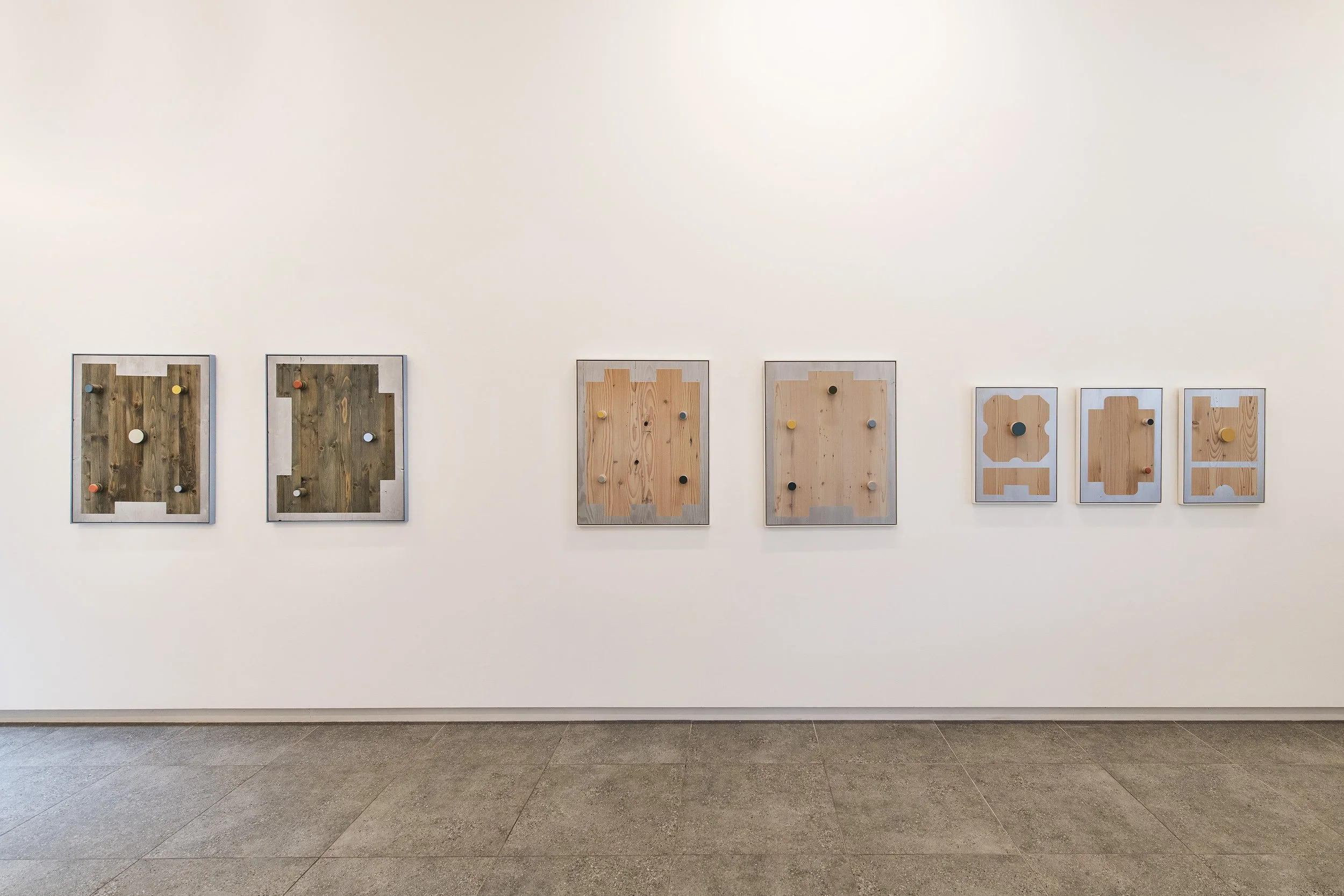
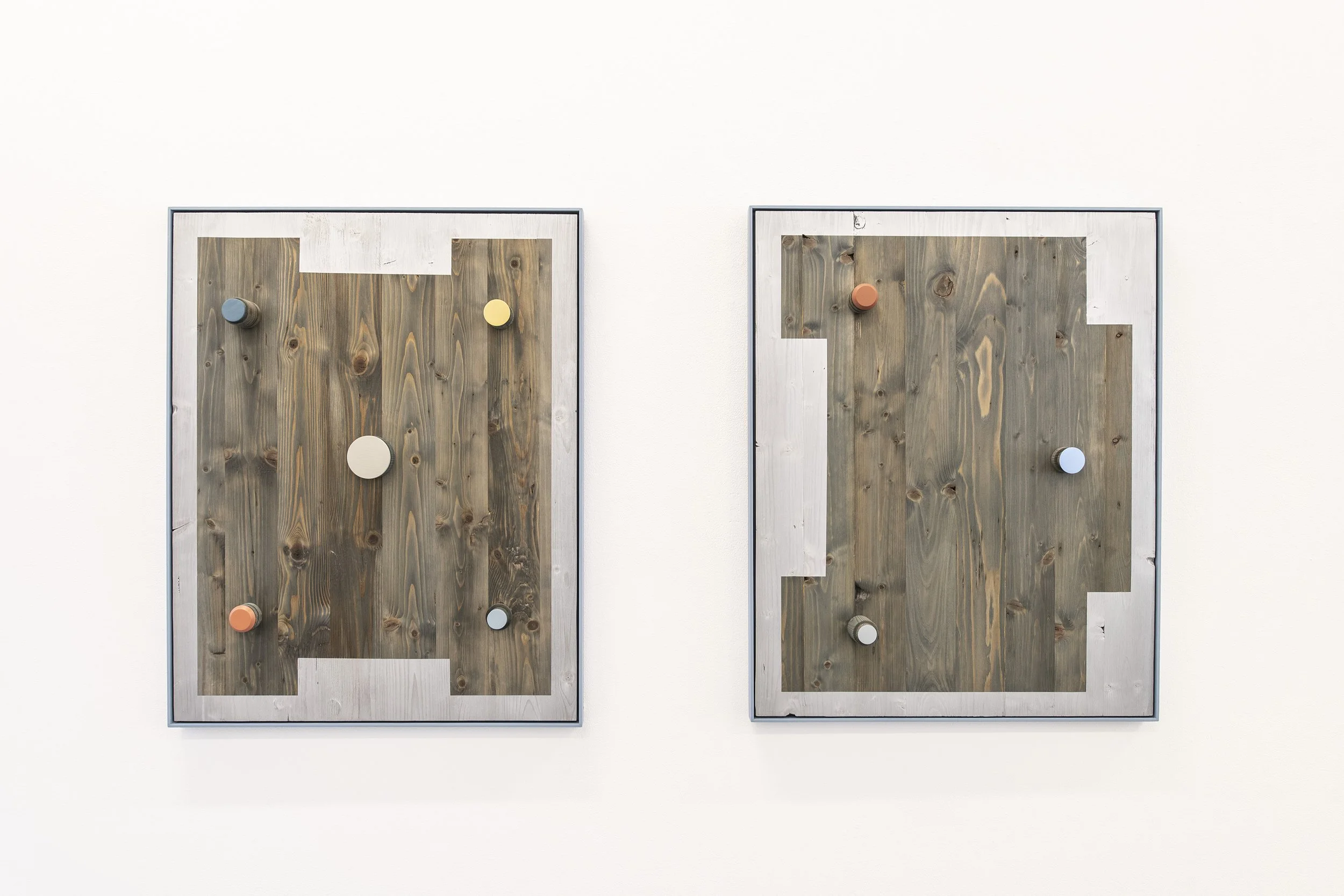
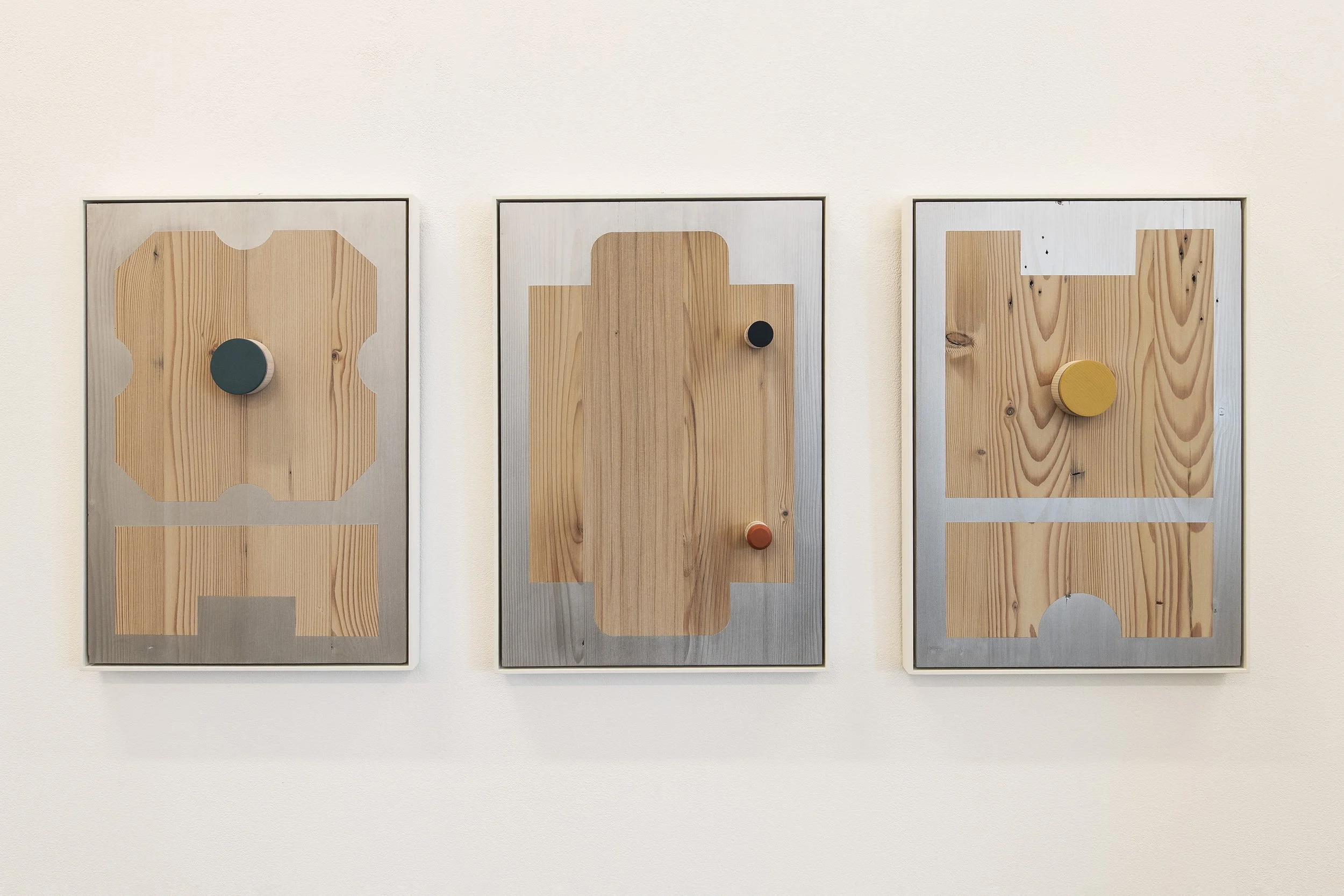
Installation images
The Cool Arrangement
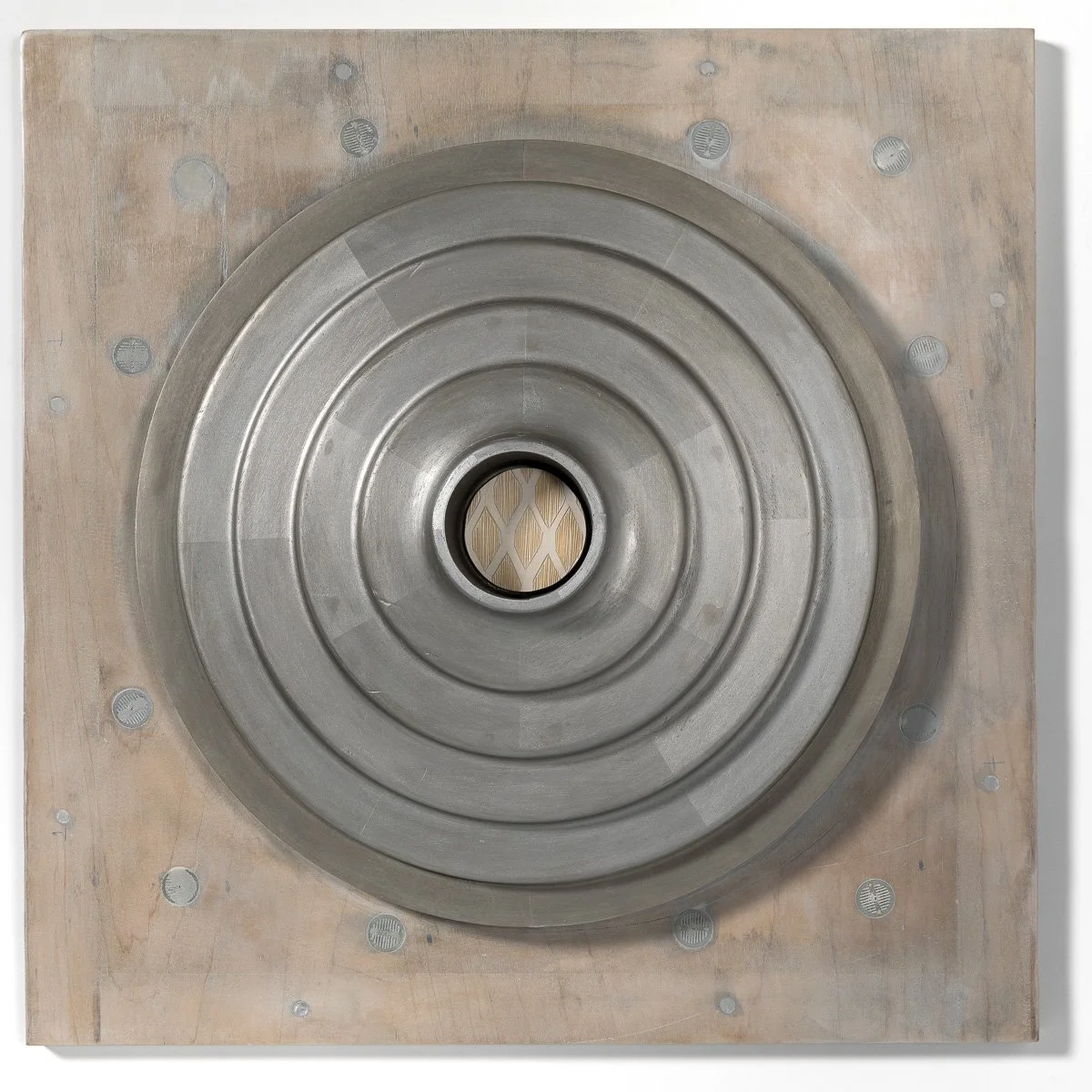
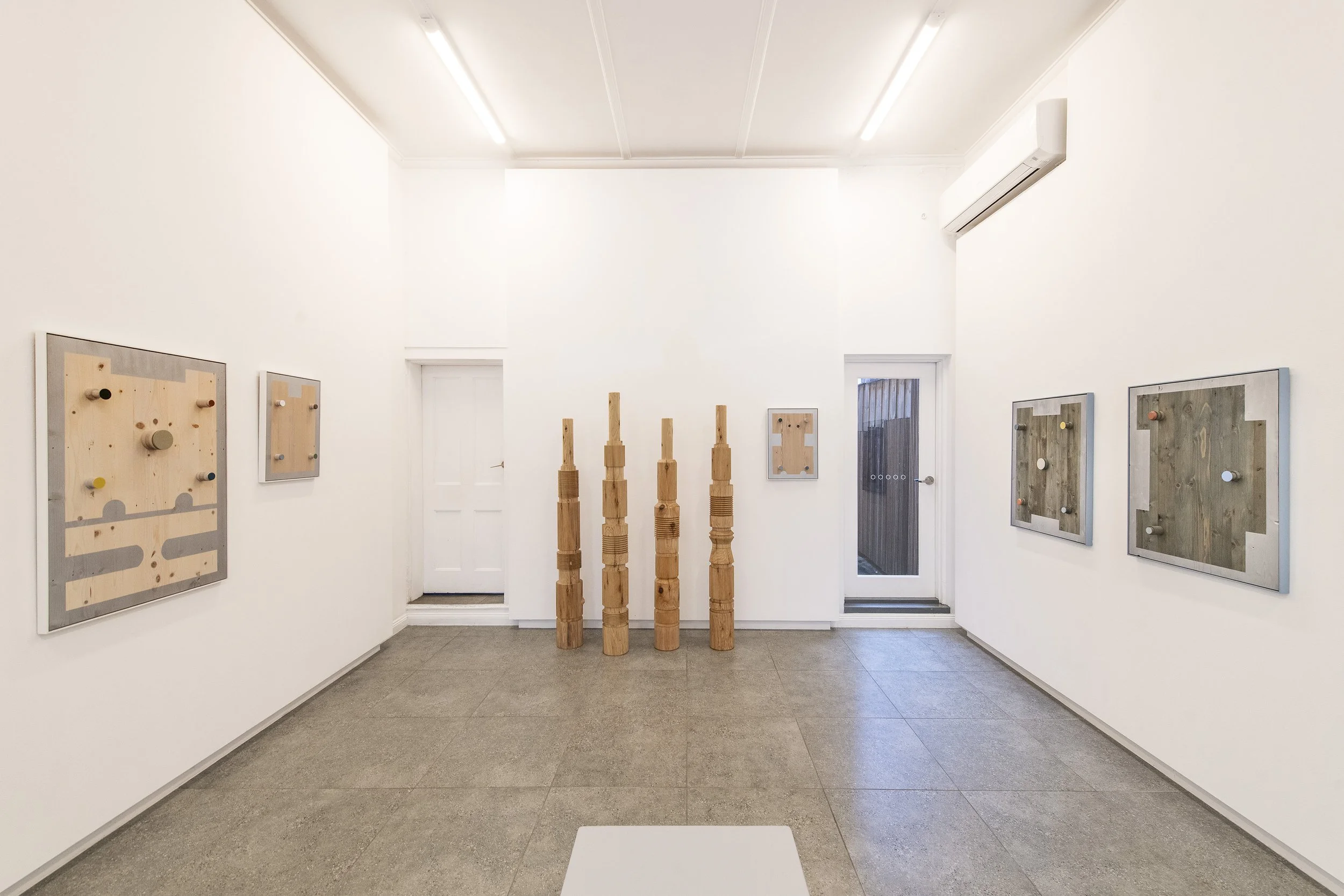
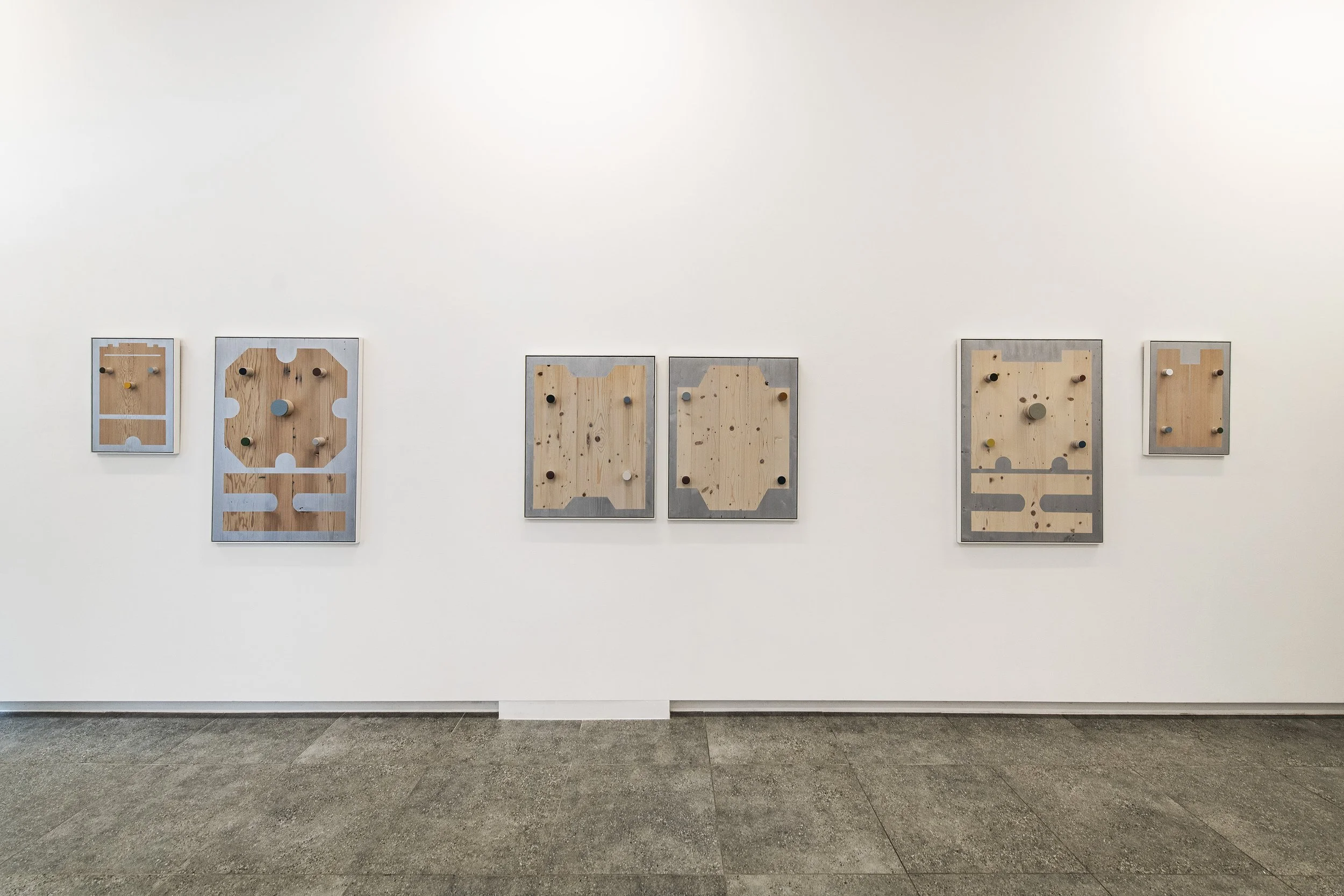
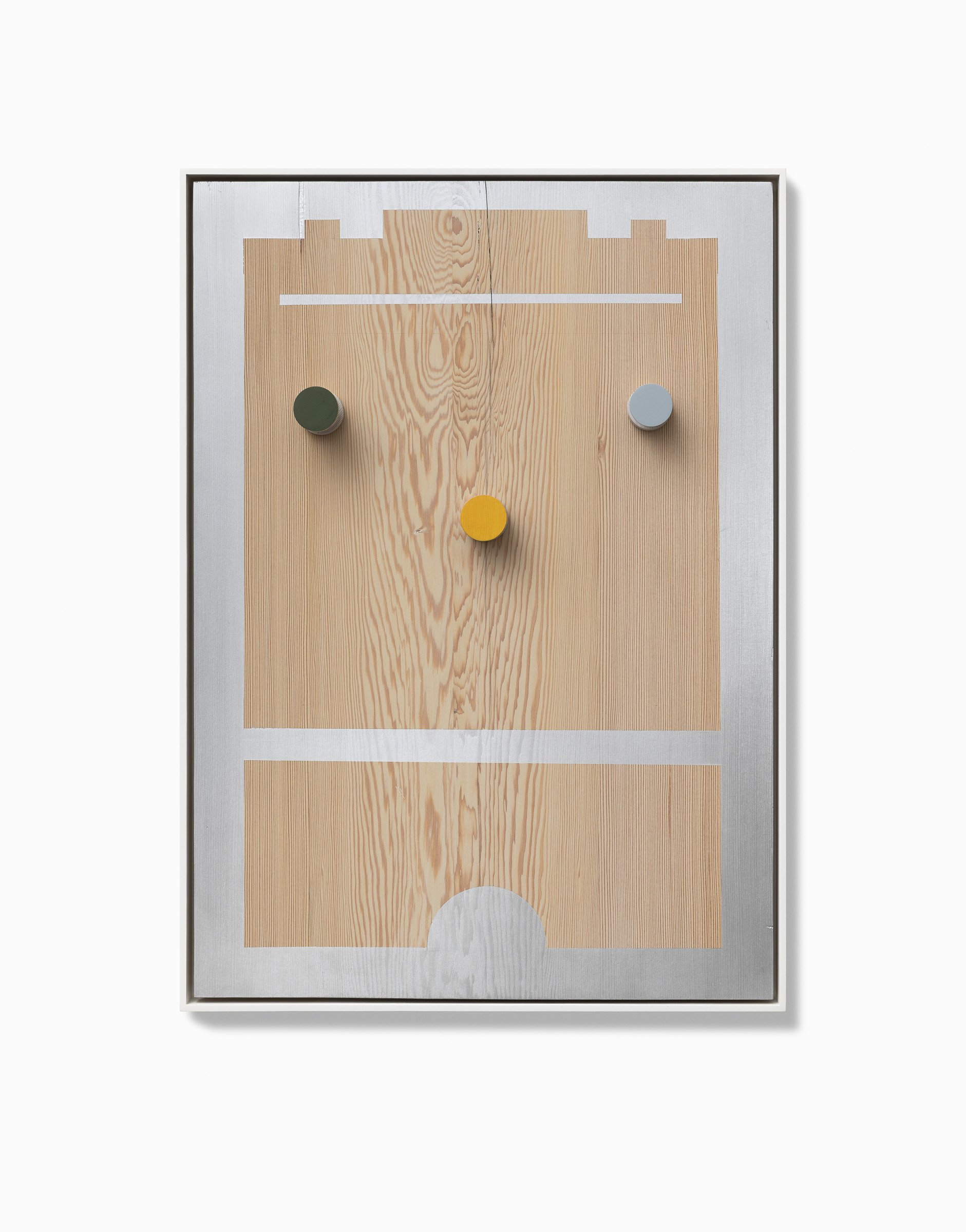
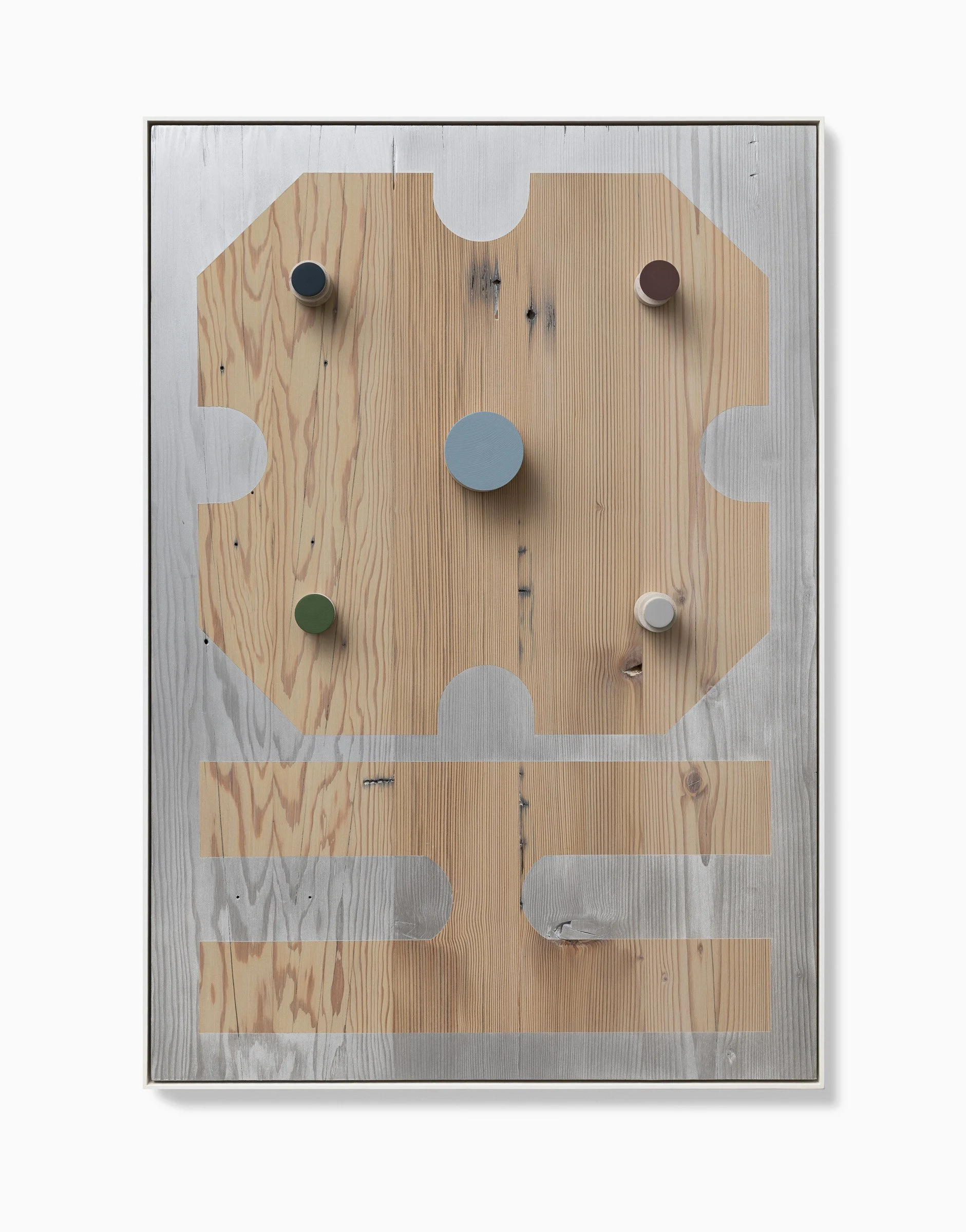
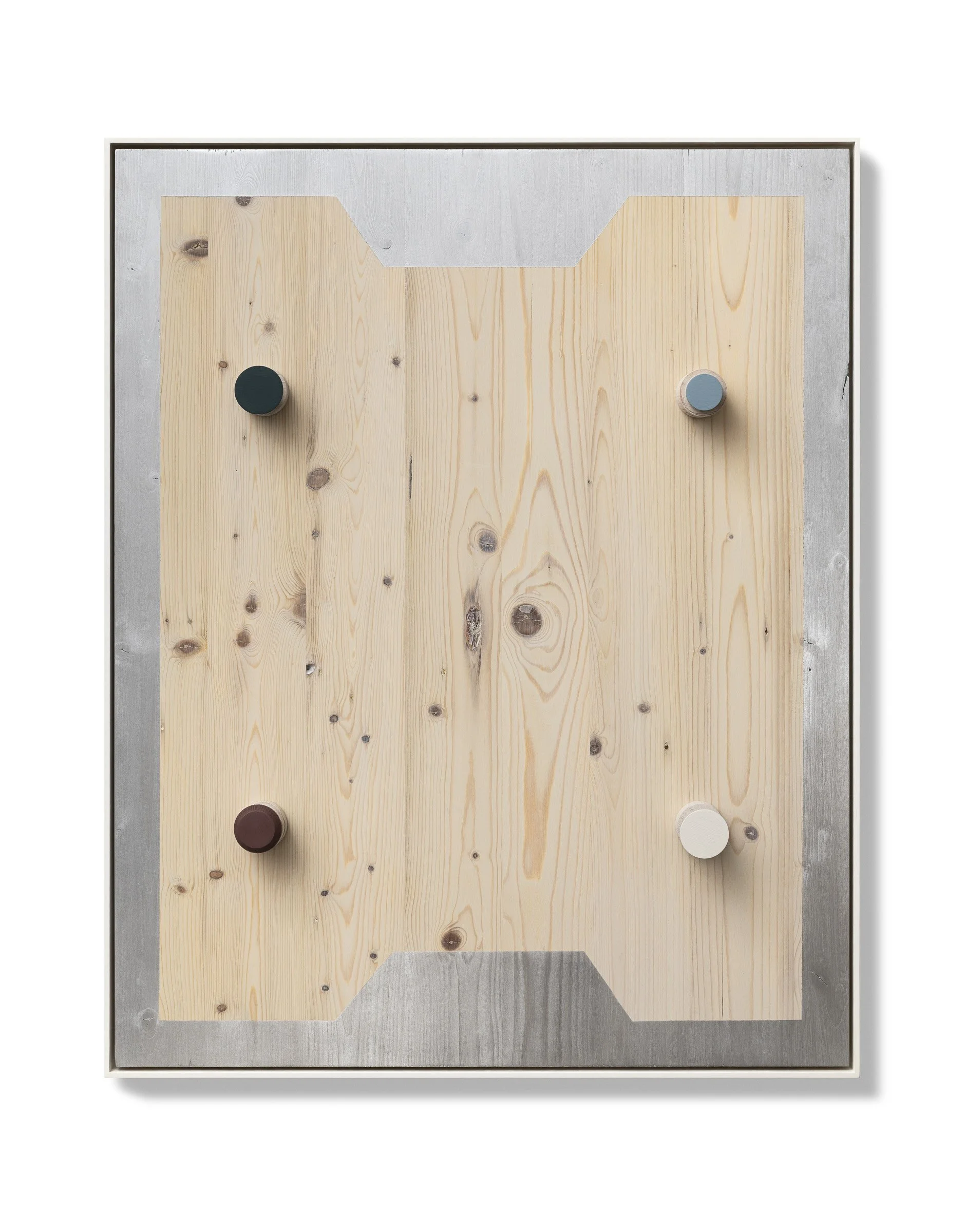
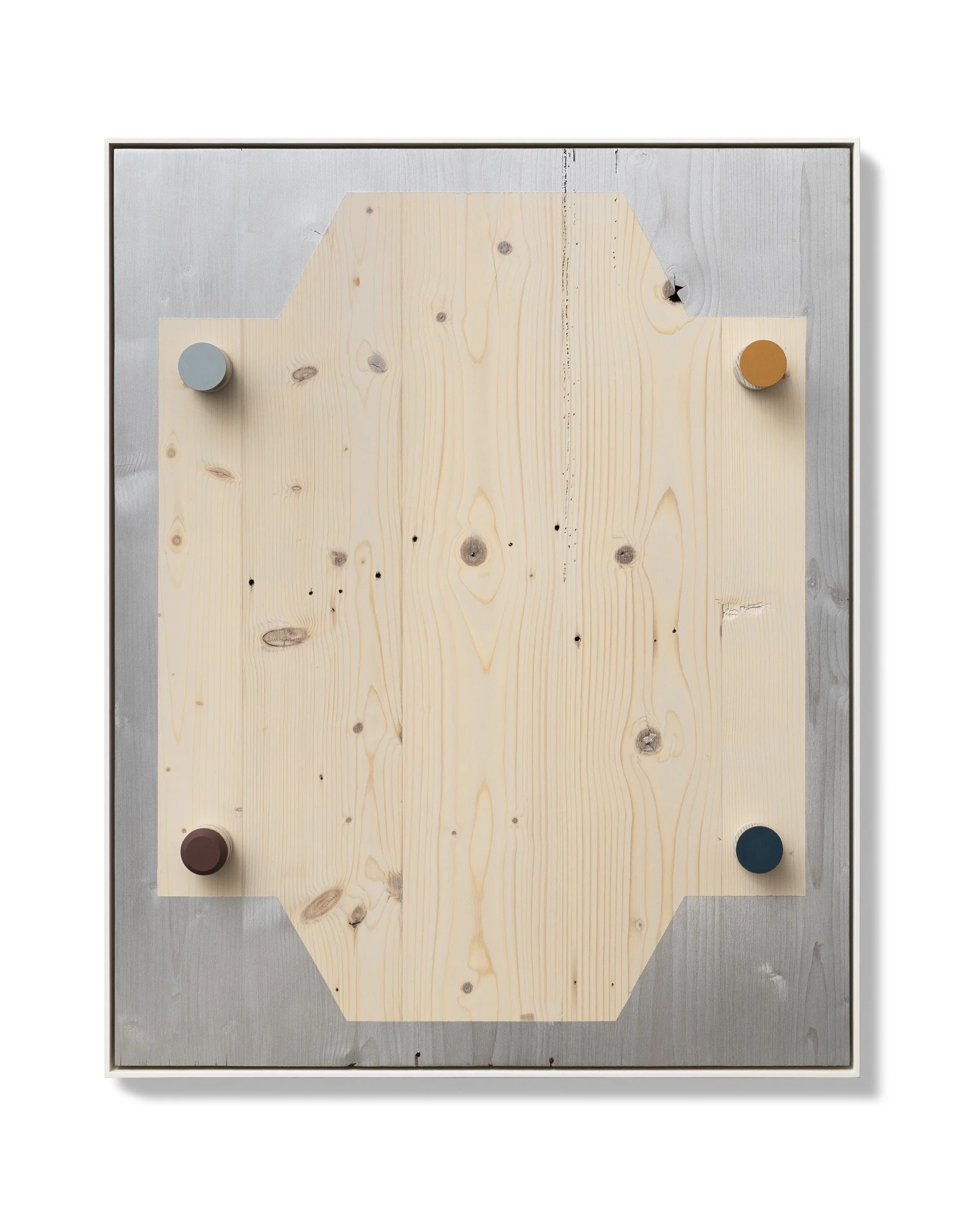
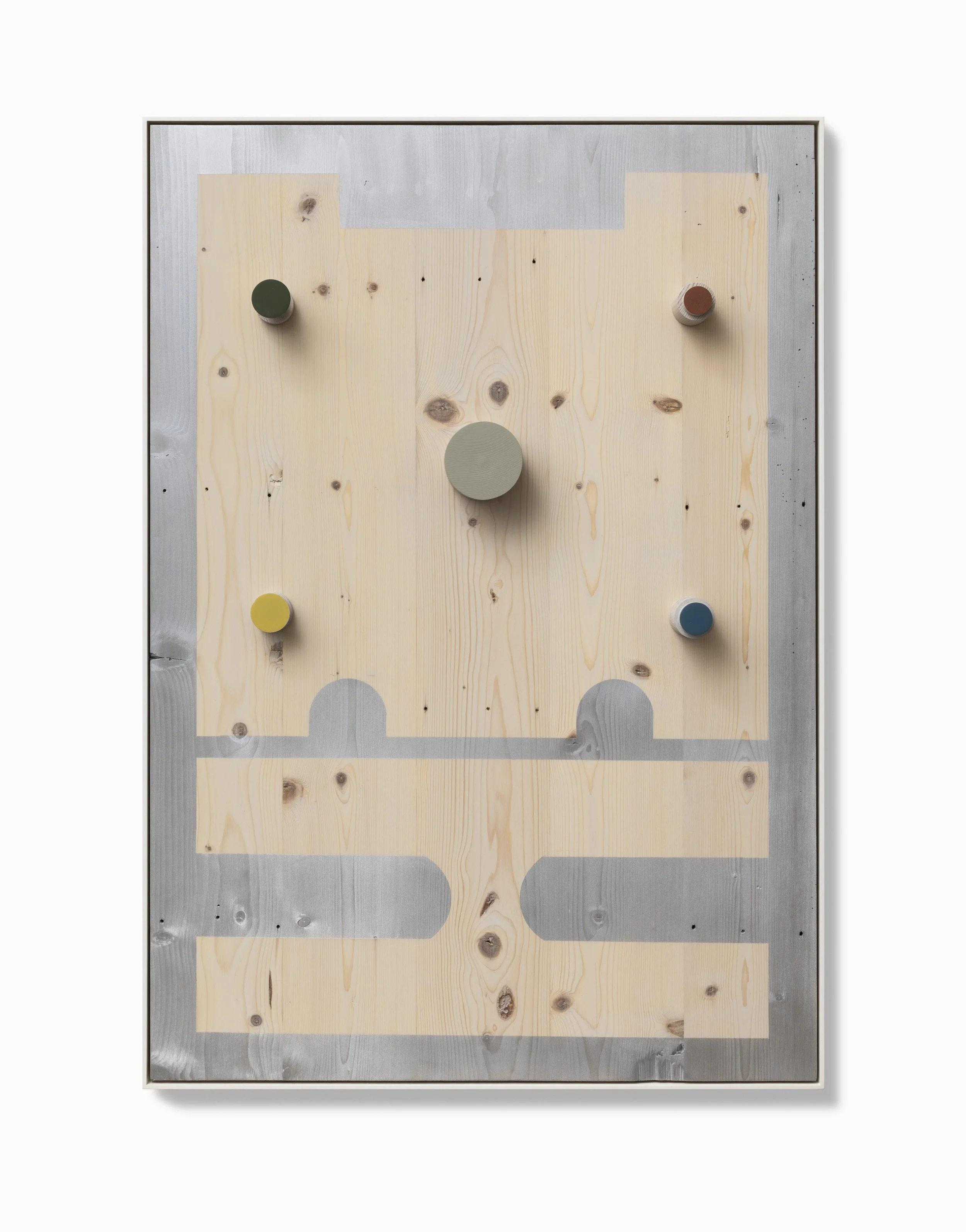
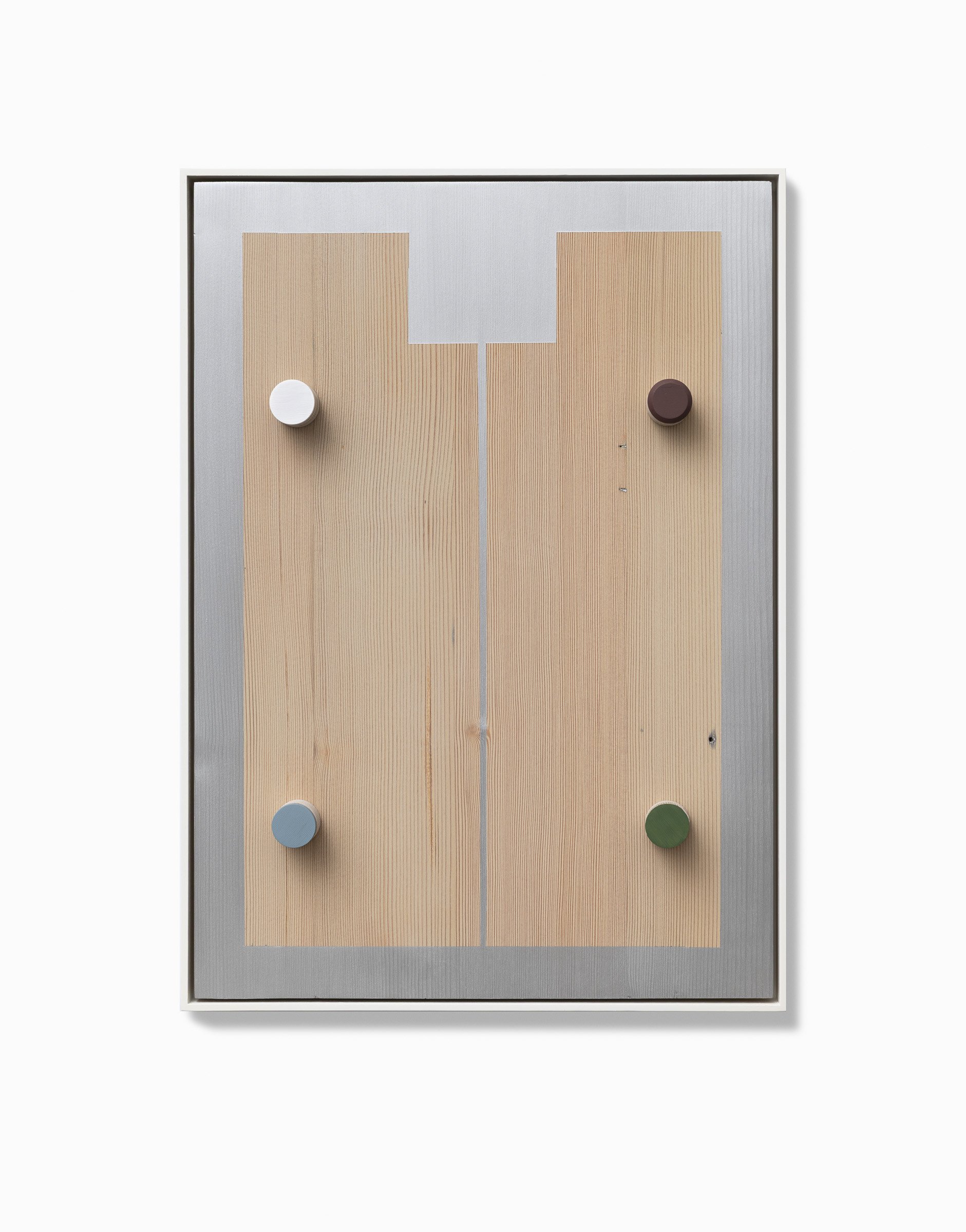
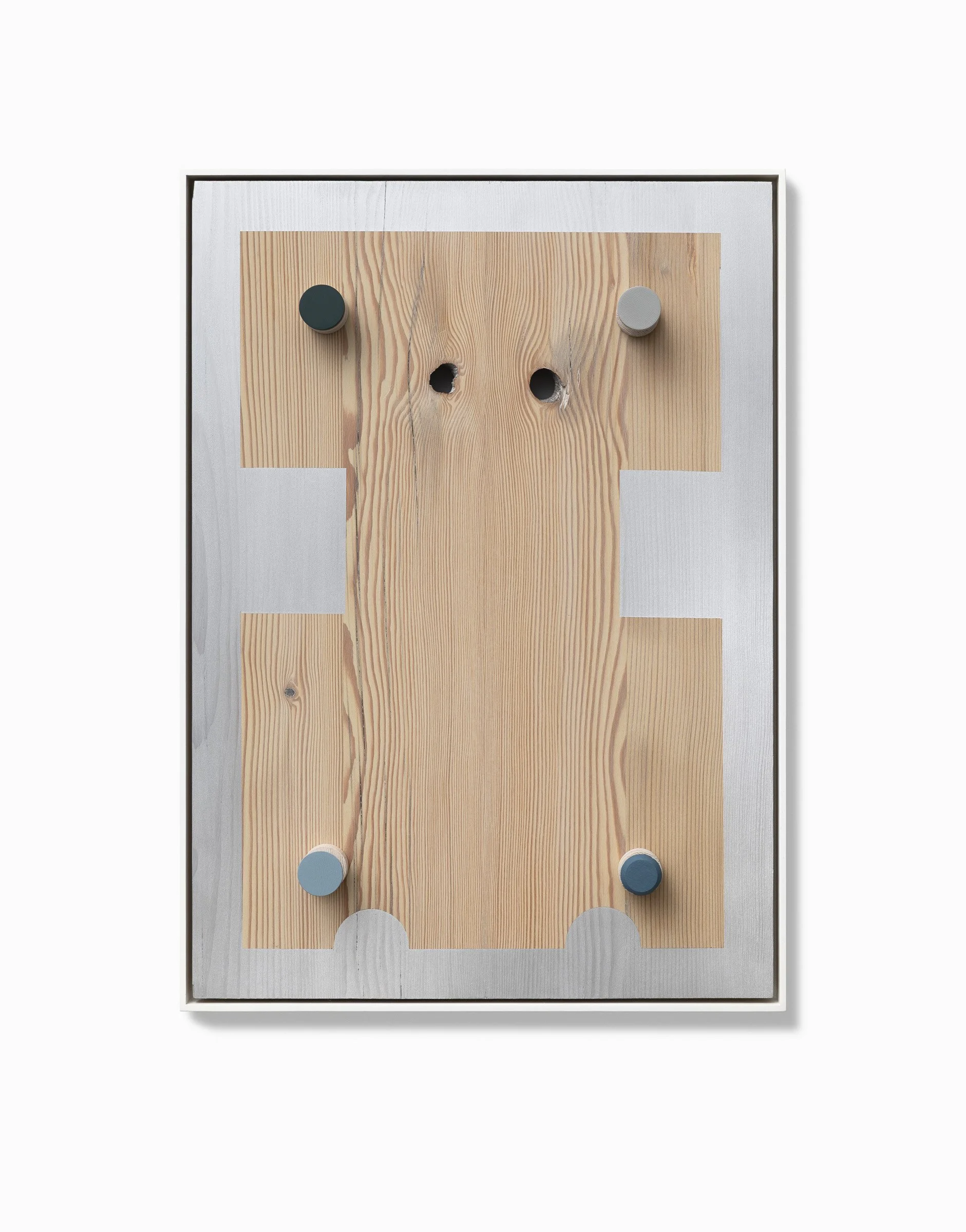
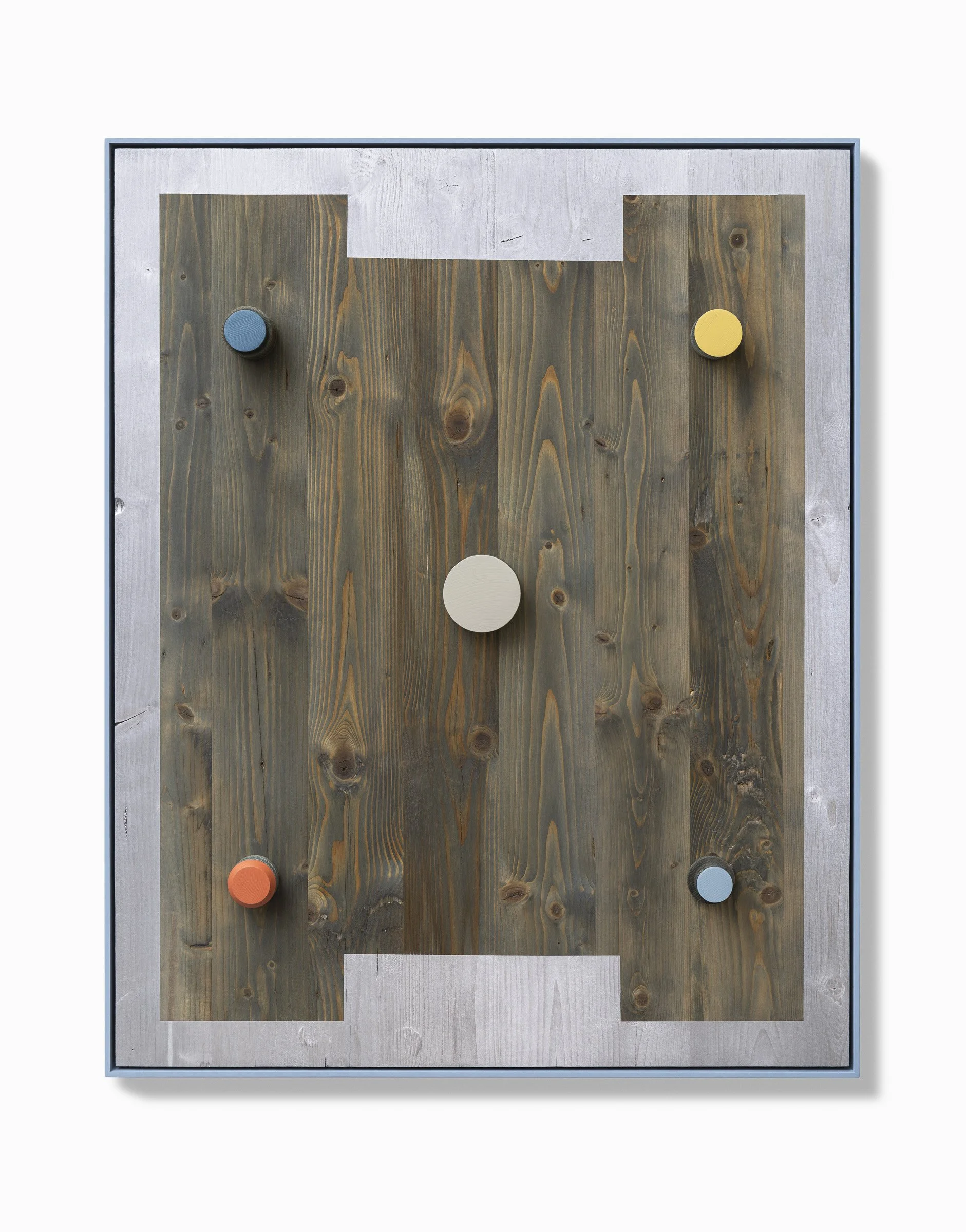
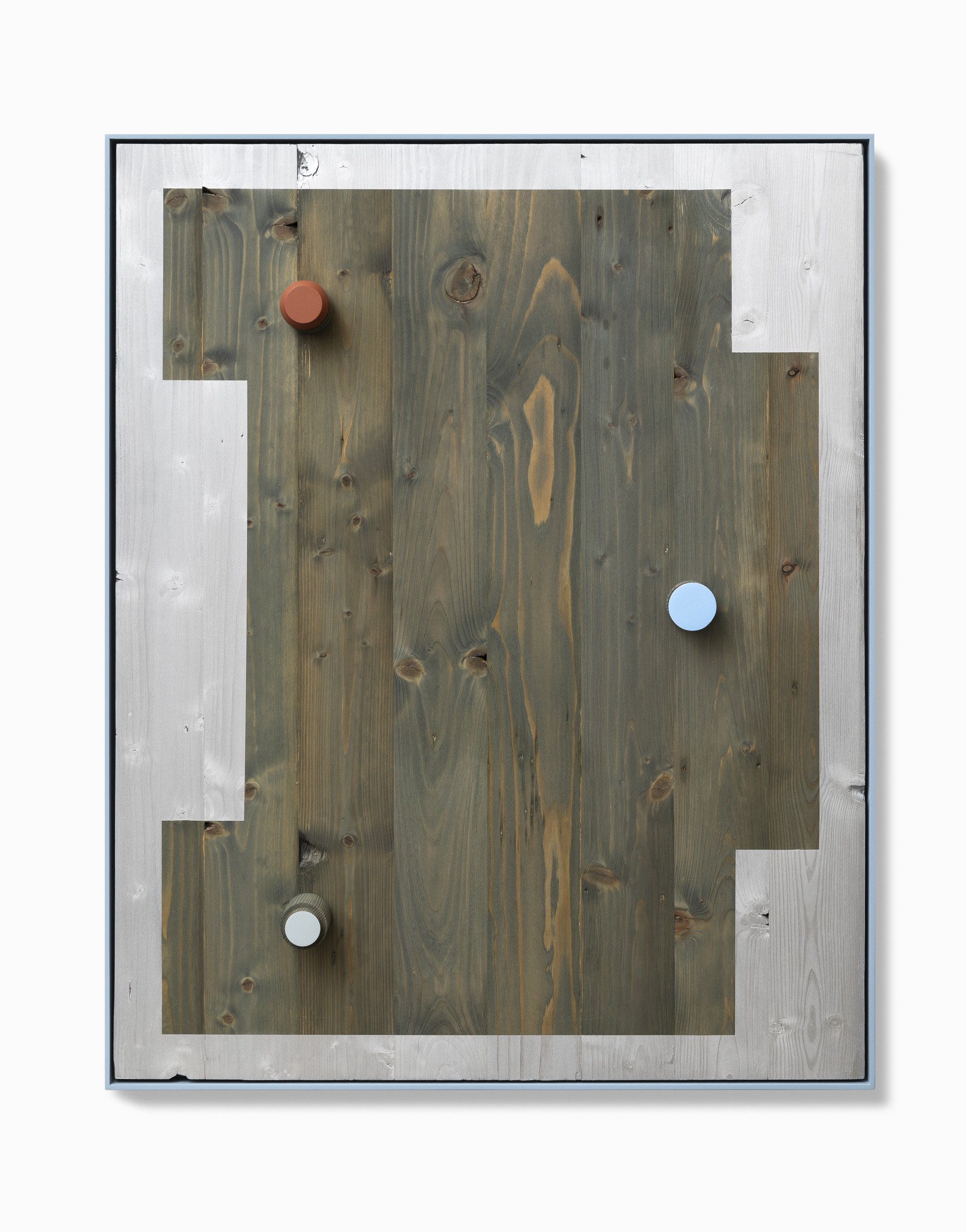
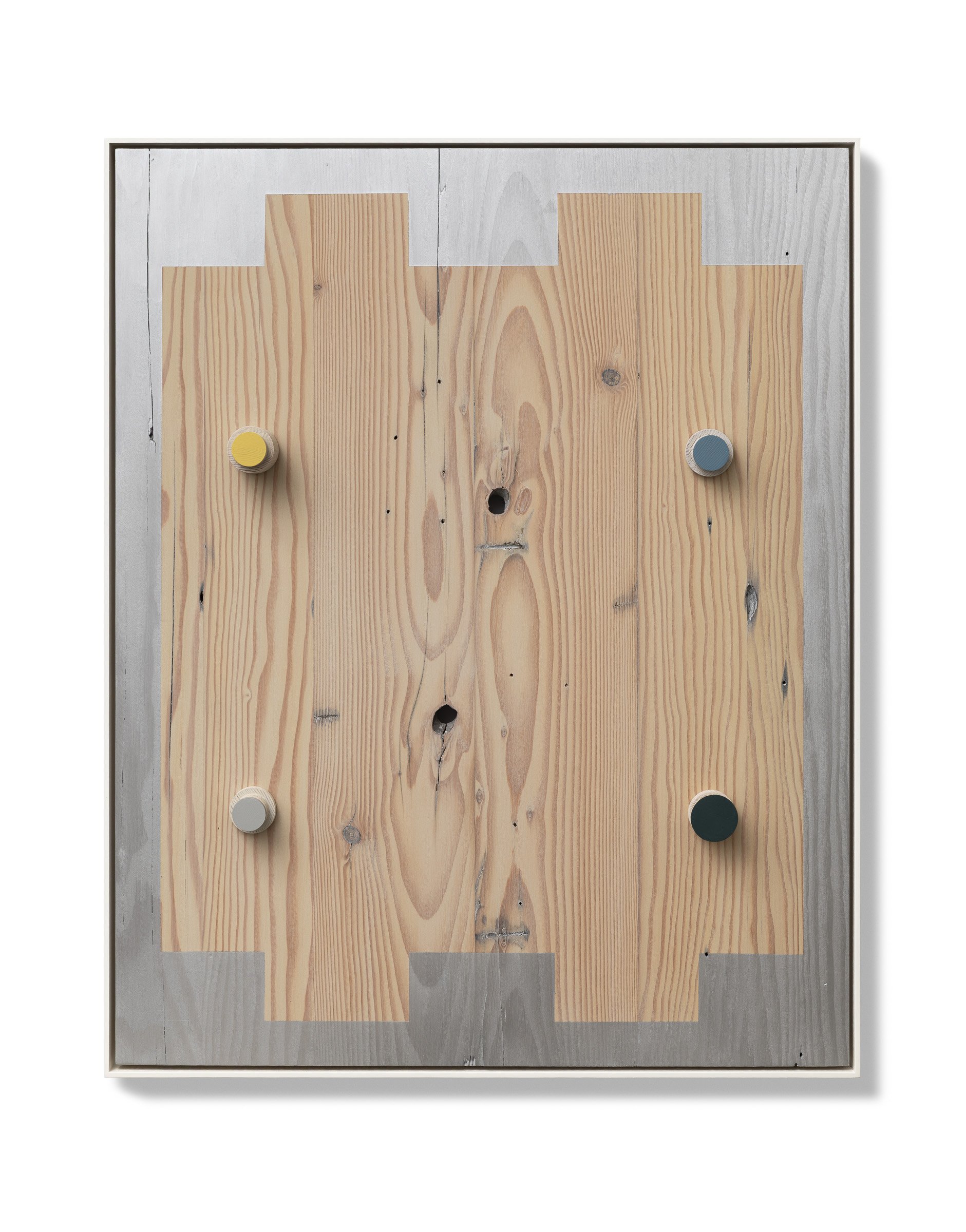
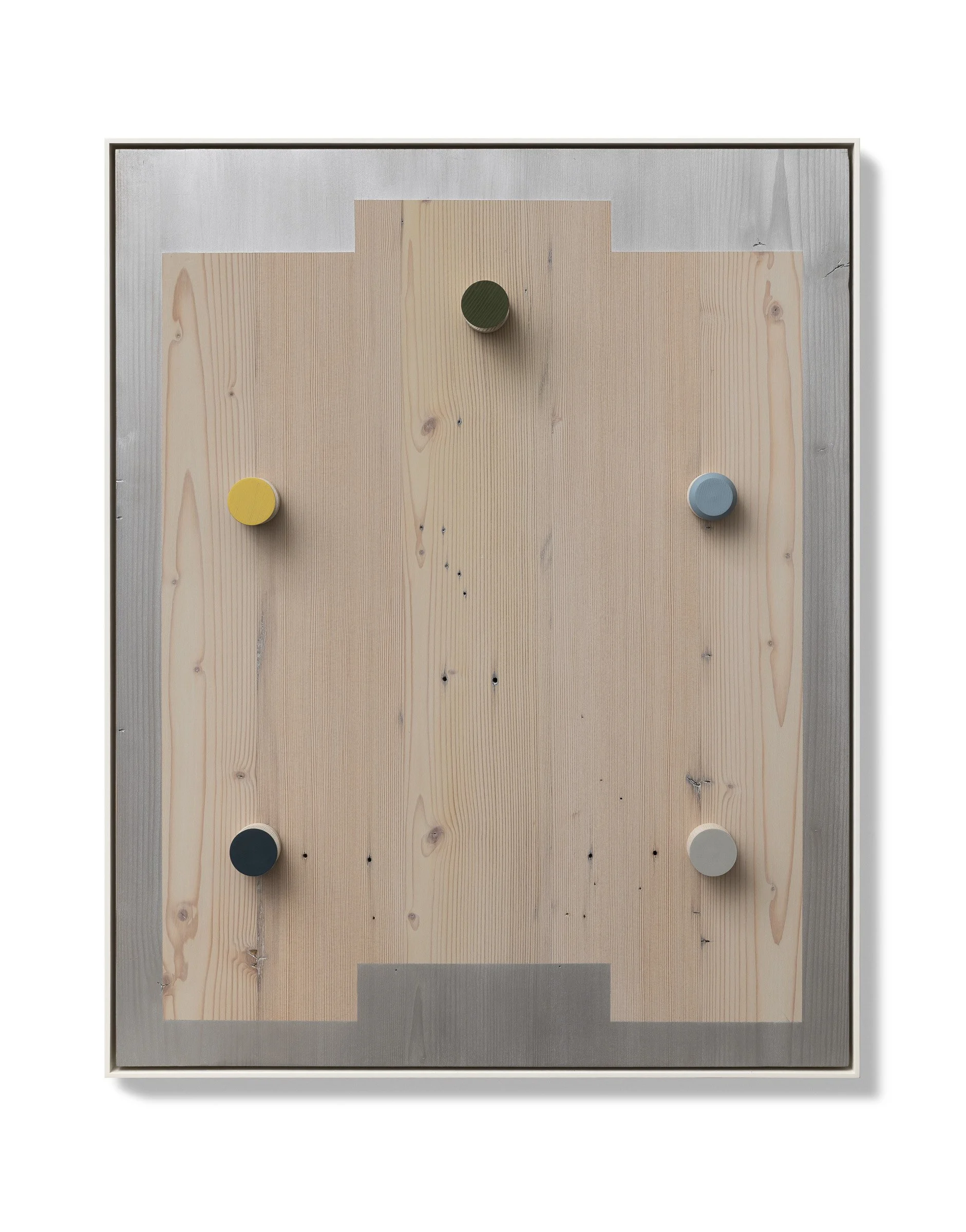
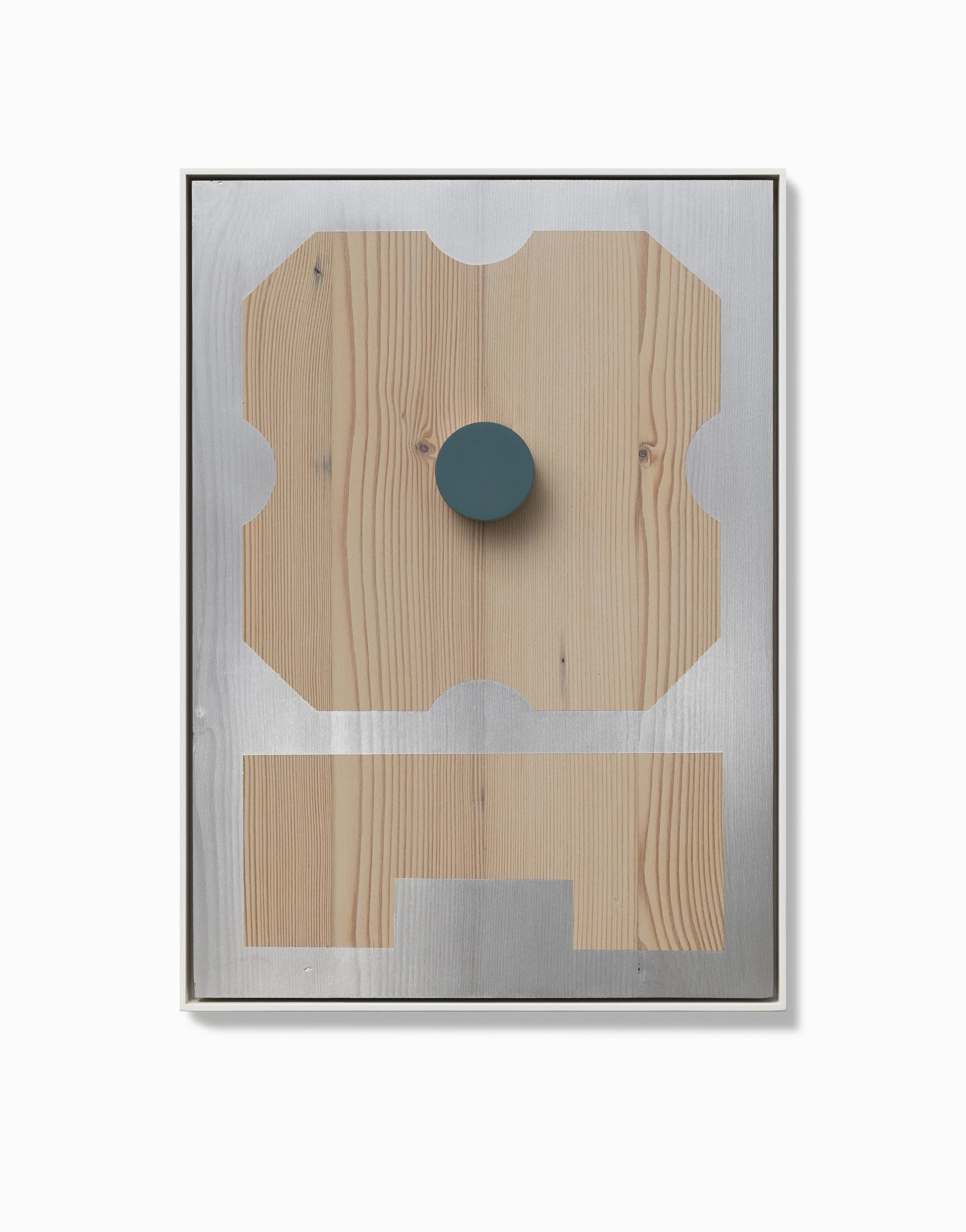
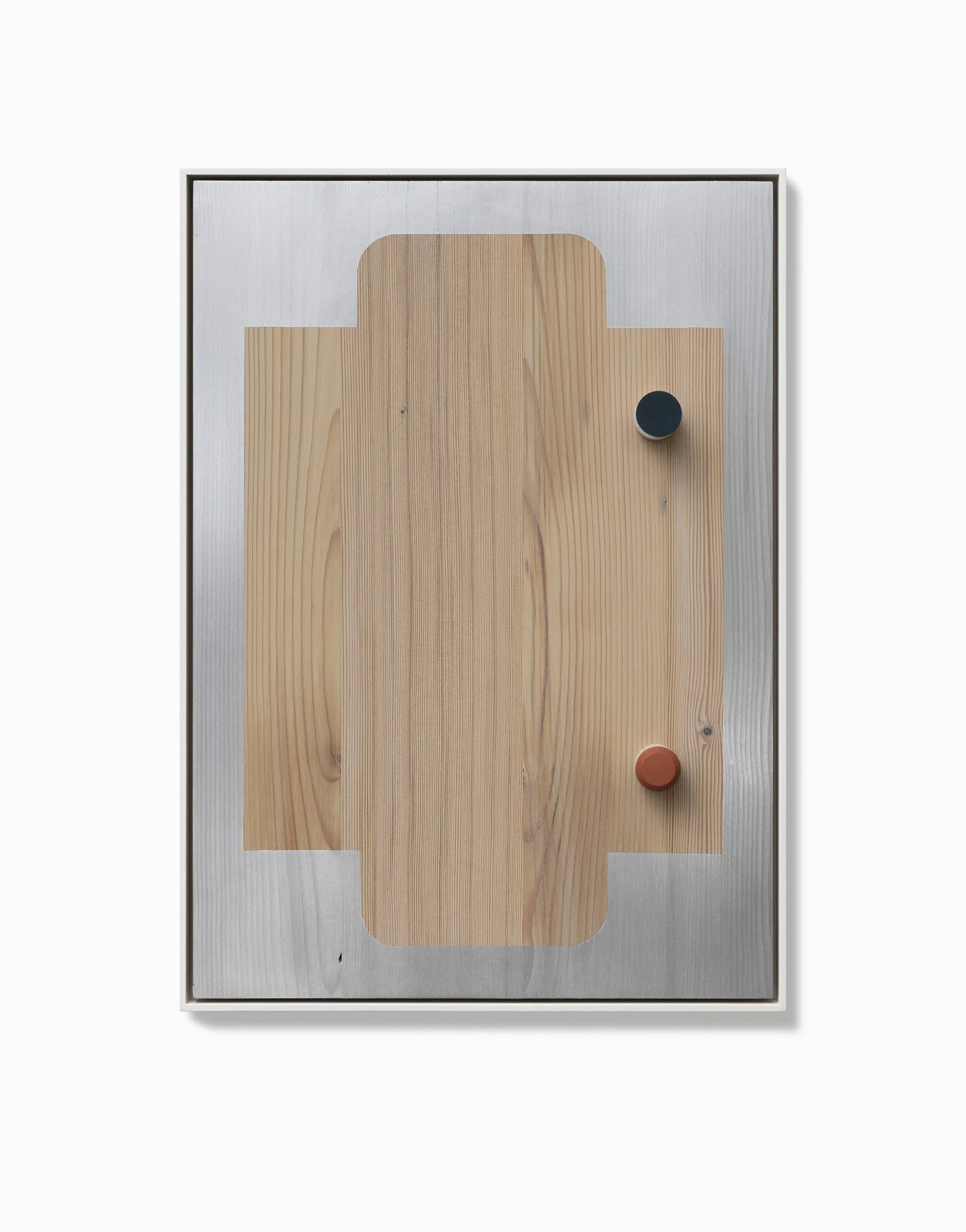
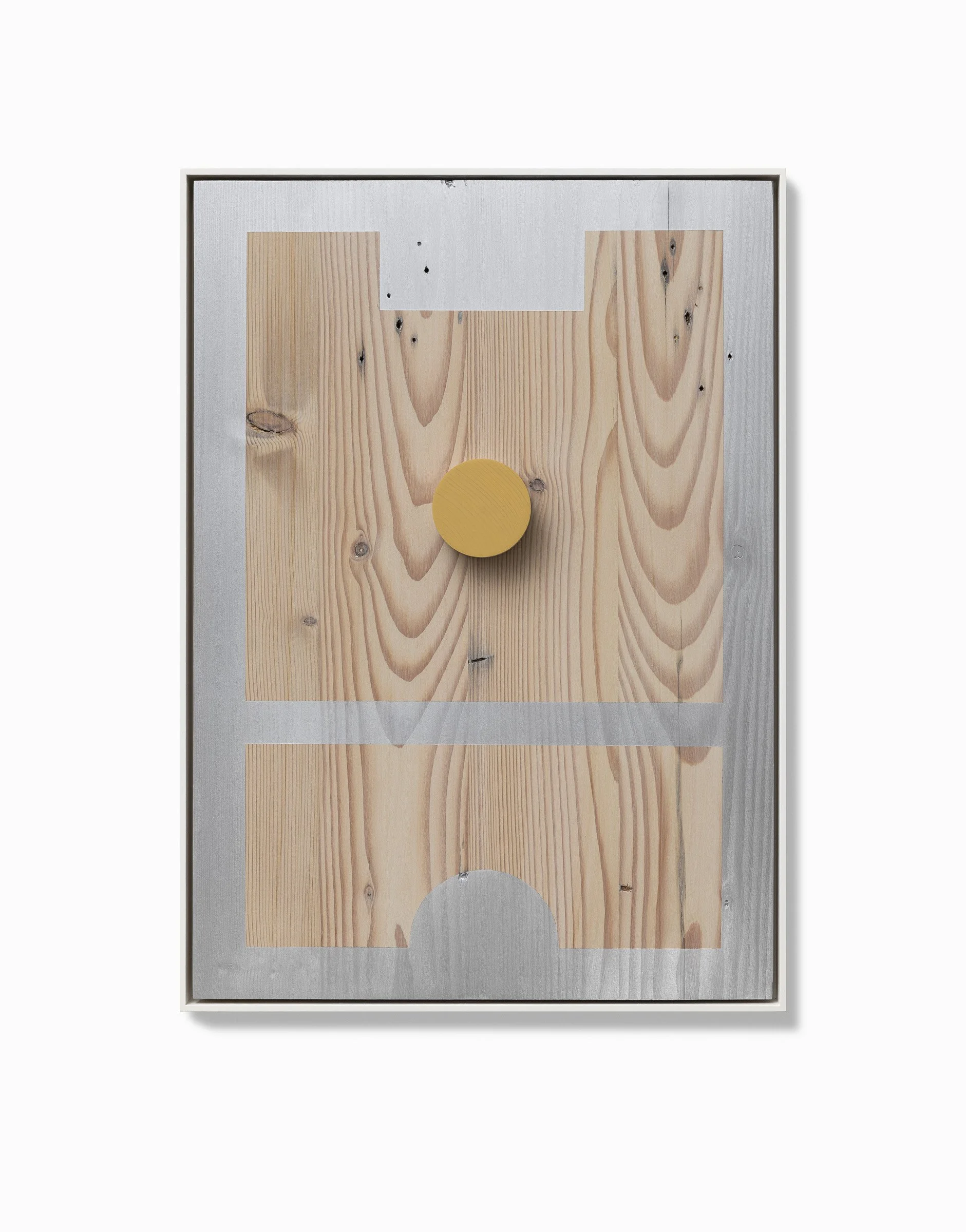
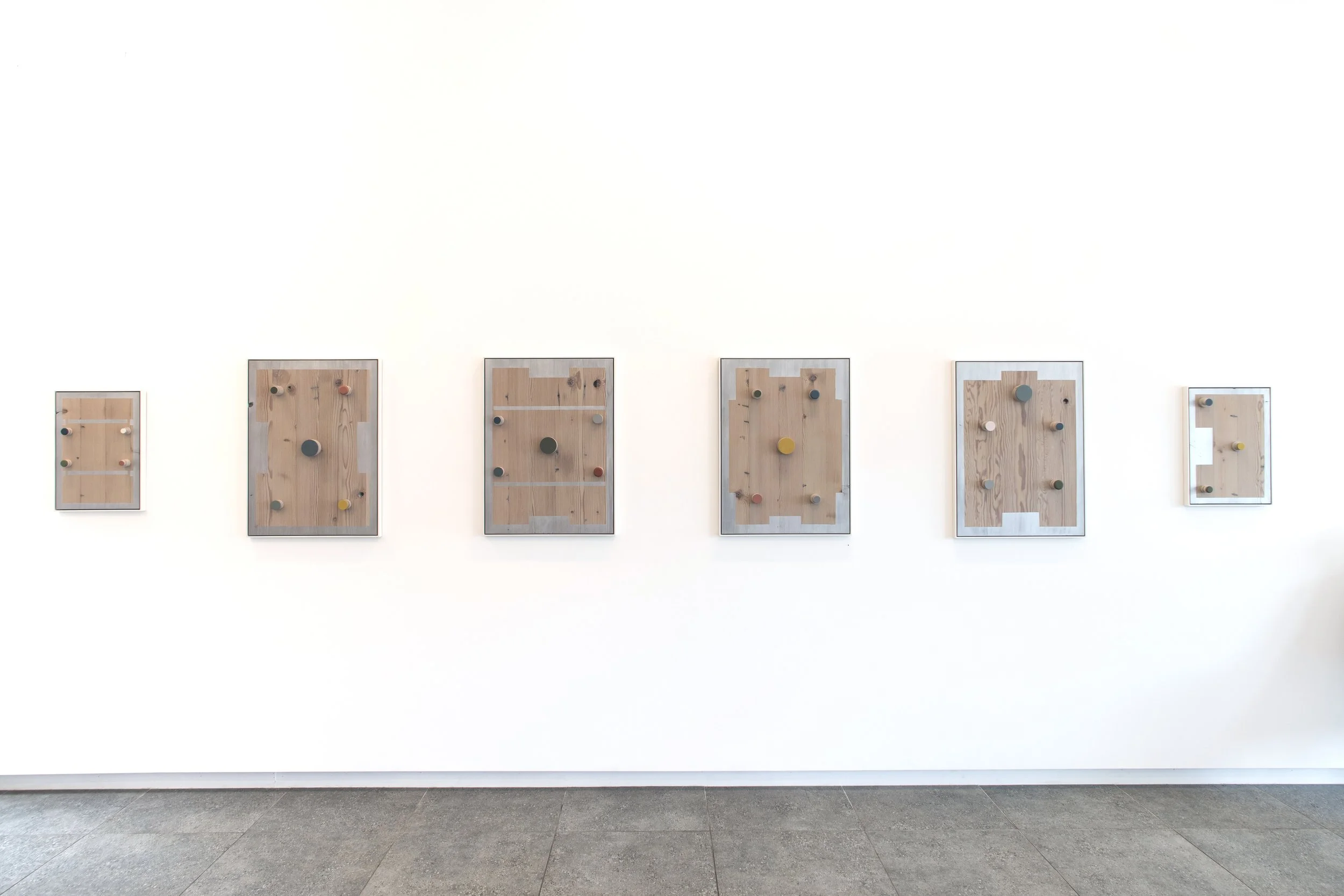
Jo Wilson’s recent works examine the relationship between geometric abstraction, industrial form, material history, and the reconstruction of reclaimed timber. Formed from Baltic Pine dado boards and Kauri Pine weatherboards salvaged from former heritage homes in Daylesford and South Melbourne, the works retain knots, fissures, nail holes, stains, and structural irregularities. Formed through the sands of time. Rather than concealing or correcting these nuances, Wilson integrates them into the compositional logic, making the material and visual instability central to its abstract structure.
Historically associated with formal reduction, geometric abstraction is here reconfigured through materials that retain evidence of labour, weathering, and architectural wear. Drawing on more than three decades of engagement with printmaking, Wilson employs the visual language of platens, moulds, nozzles, and industrial dies as recurring compositional devices. Repeated contours, geometric divisions, and framing structures establish frameworks associated with alignment, pressure, containment, and mechanical precision.
Yet, the geometric order of the works is continually disrupted by the organic nature of the timber itself. Knots interrupt the picture plane, grain patterns drift unpredictably across the surface, and tonal inconsistencies resist the sleekness historically associated with hard-edge abstraction and post-minimal coolness.
Wilson’s use of finely milled timber surfaces and architectural framing devices positions the work within a unique dialogue surrounding postminimal and neo-conceptual abstraction. The layered timber substrates and spatial divisions recall aspects of Peter Halley’s constructed paintings, particularly in their deployment of geometry as both spatial system and organisational logic.
Unlike Halley’s sealed and semiotic surfaces, Wilson’s compositions resist formal closure through the persistent visibility of material irregularity and historic wear. Colour similarly operates structurally rather than illusionistically.
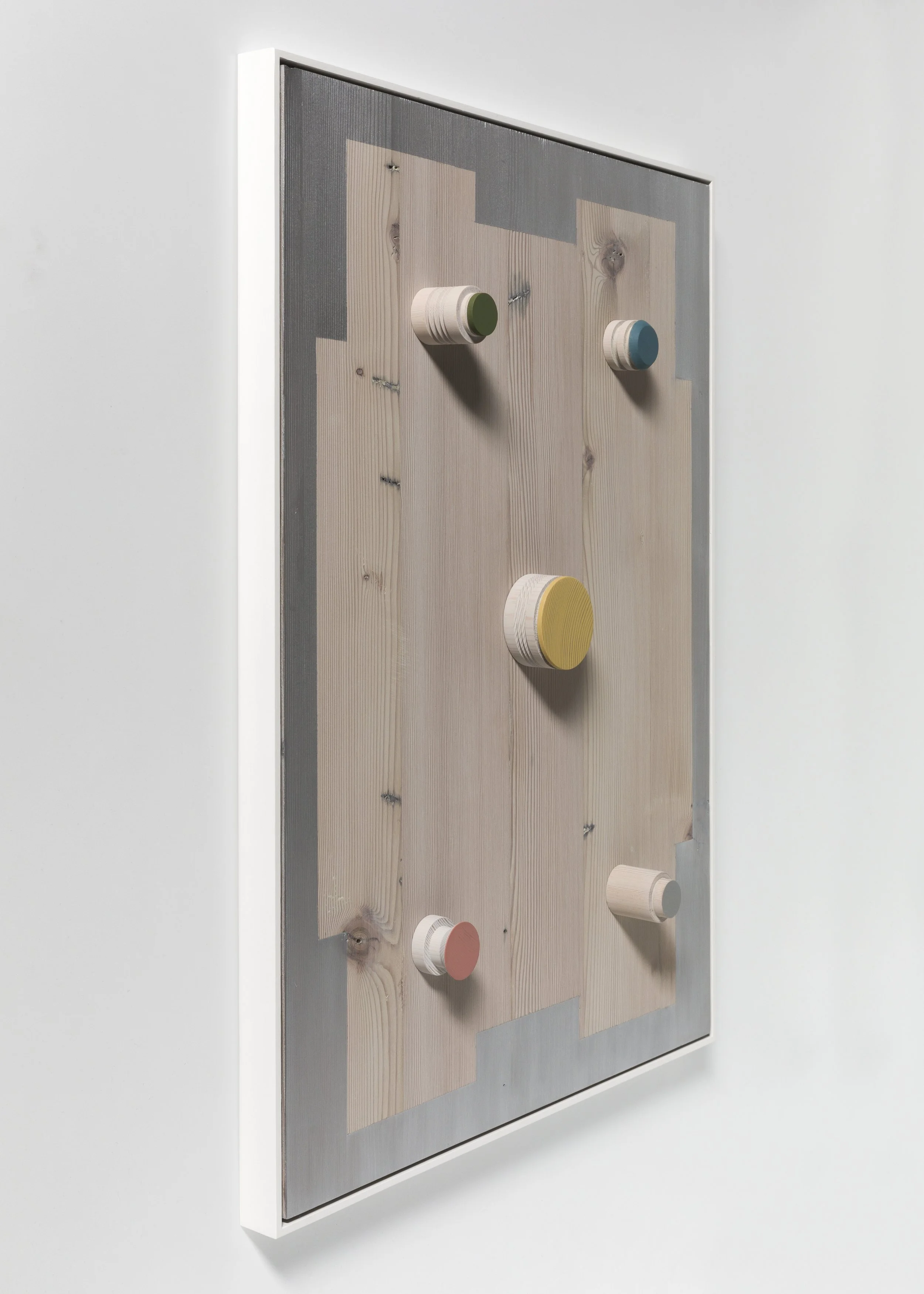
Restrained chromatic interventions, including hand-painted pins and concentrated colour accents, interrupt the flatness of the surface while evoking familiar points of contact associated with everyday objects such as door handles, fixtures, and hooks. These elements function less as devices of pictorial depth than as markers of orientation and tactile recognition.
Questions of objecthood and display are equally central to the works. Their status as wall-based constructions invites comparison with Haim Steinbach’s shelf works and Donald Judd’s wall constructions, in which acts of framing and presentation operate in a system of cool arrangements. Whereas Steinbach’s practice frequently engages systems of commodity circulation and display, Judd’s wall constructions retain the spectre of industrial intervention and design. Wilson’s wall works remain tied to the physical history and residual labour embedded within reclaimed timber. The material is a contradiction to the idea of the cold, ever-expanding plane.
The assembled and modular logic of the works recalls aspects of John Nixon’s provisional abstractions and constructed surfaces, while their emphasis on material presence shares affinities with Kishio Suga and the wider Mono-ha movement, in which materials resist complete formal acceptances and retain a degree of ephemeral. Wilson’s works hover between organic form, design object and fine art.
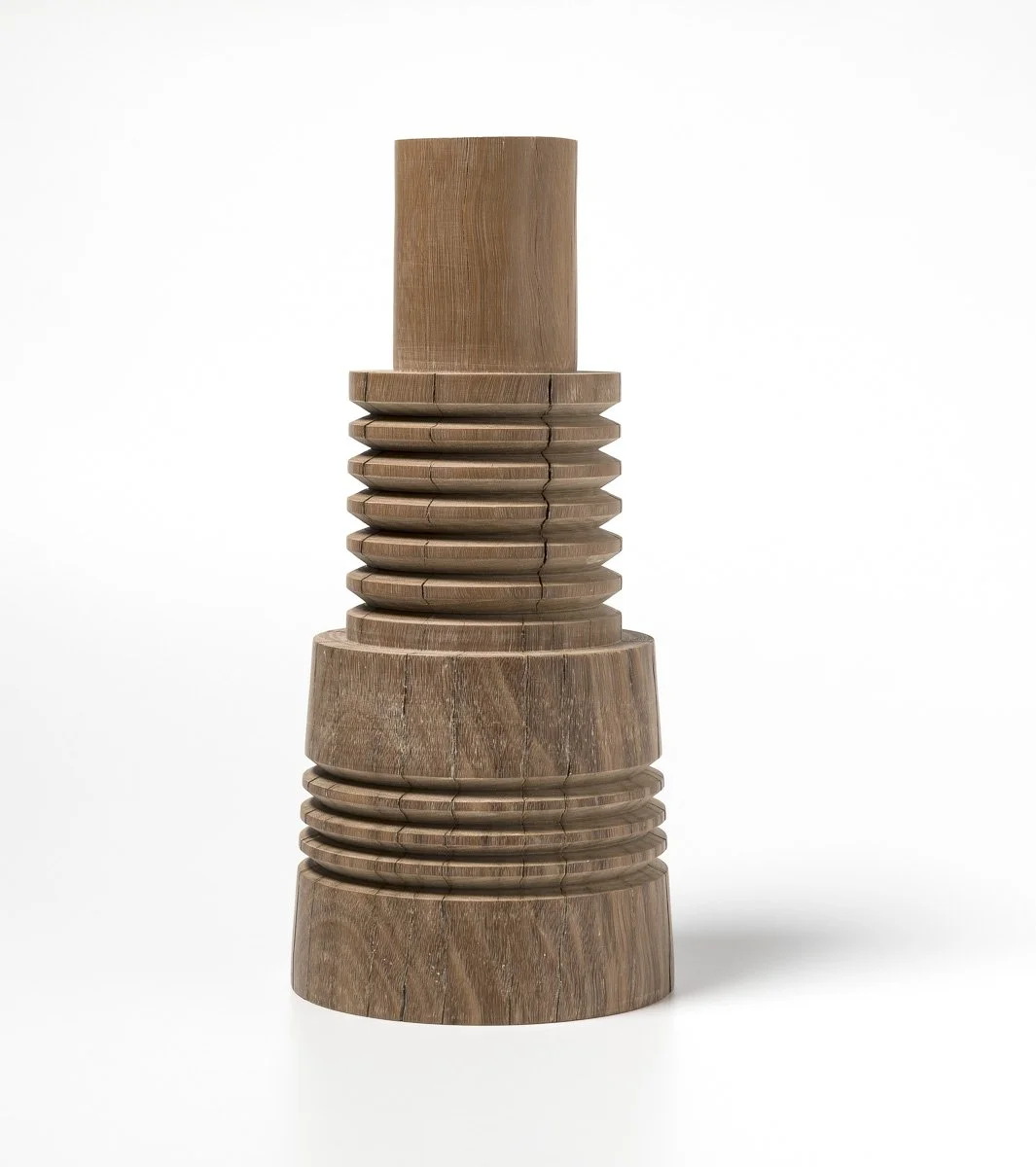
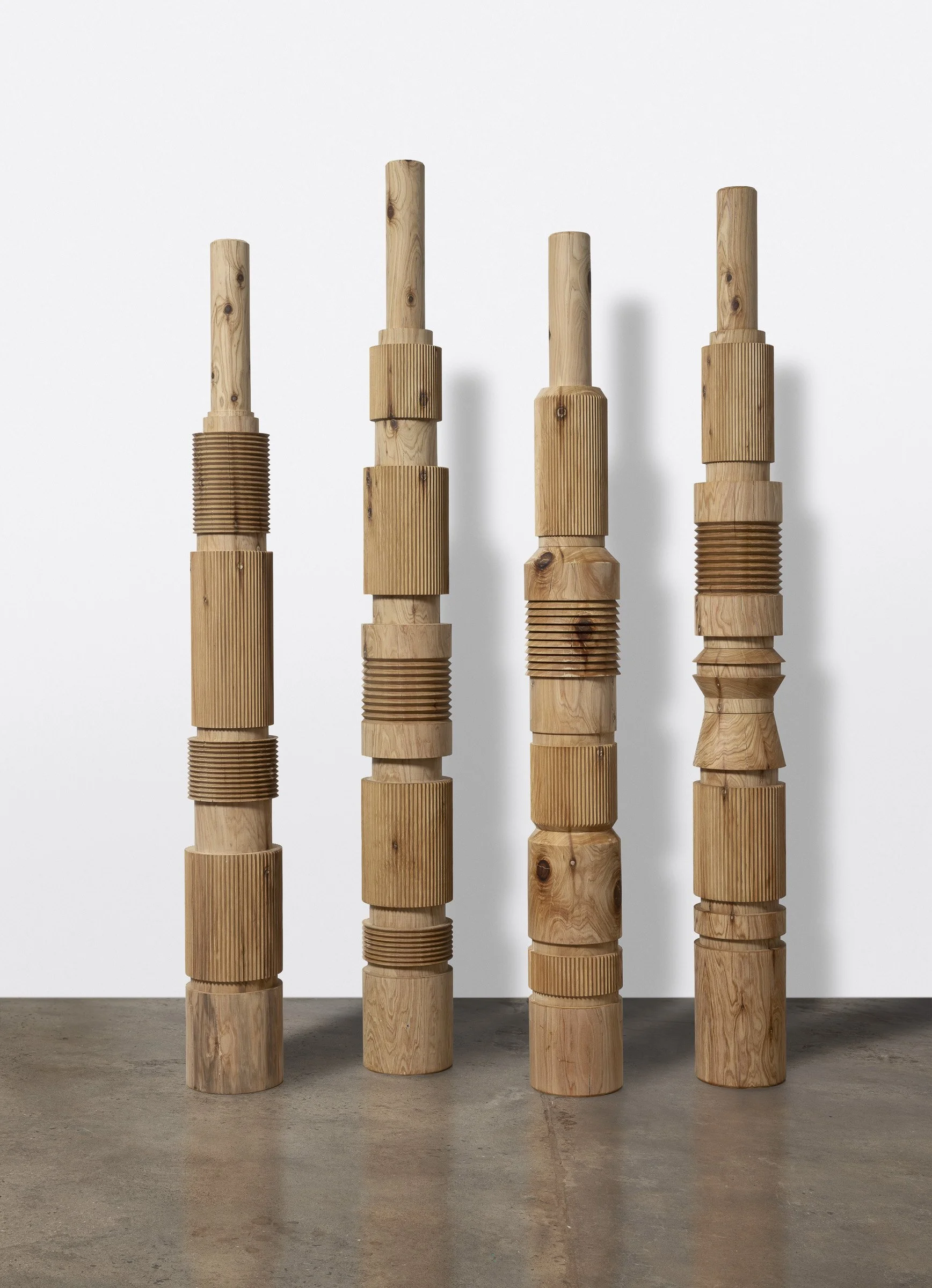
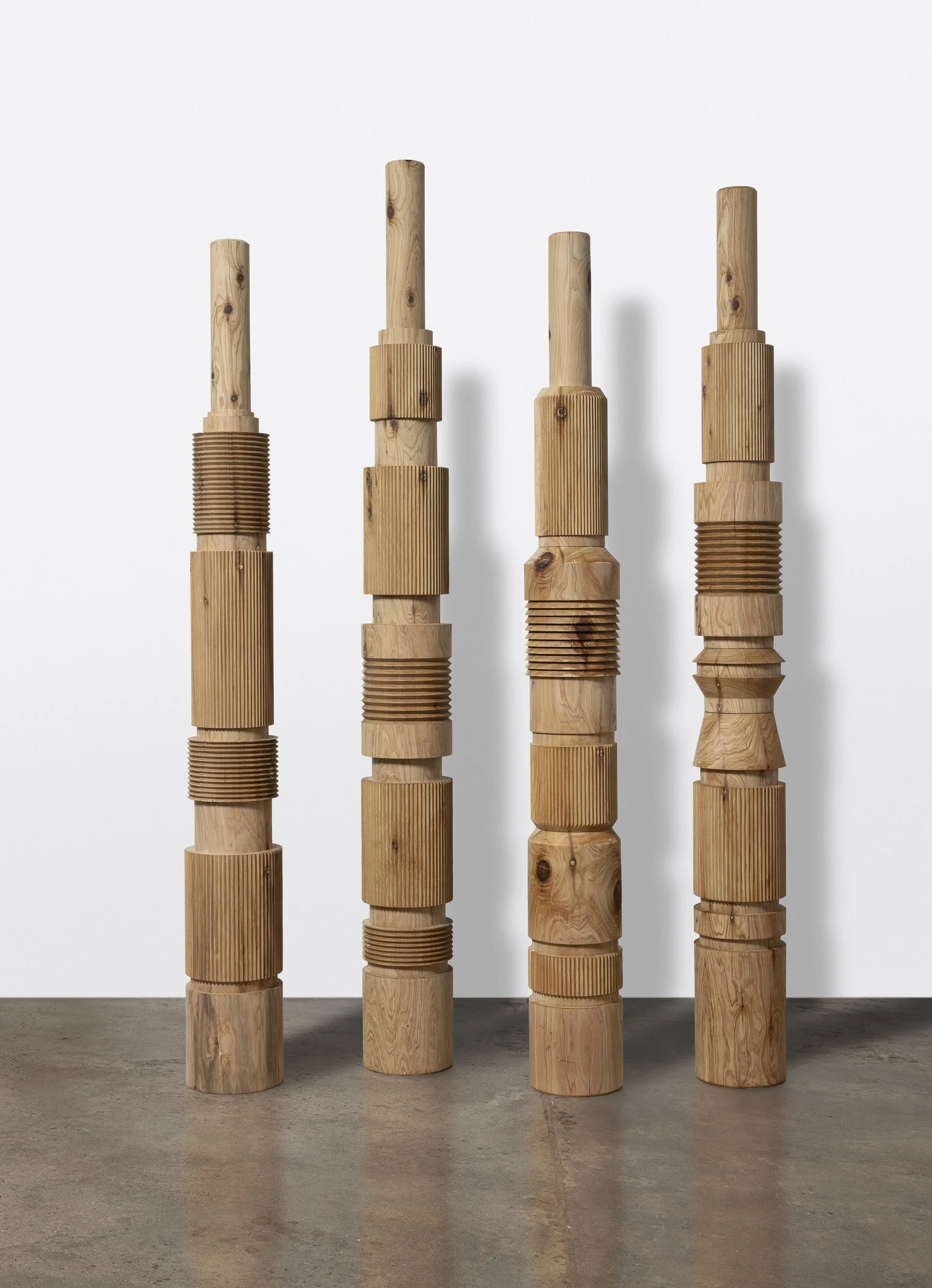
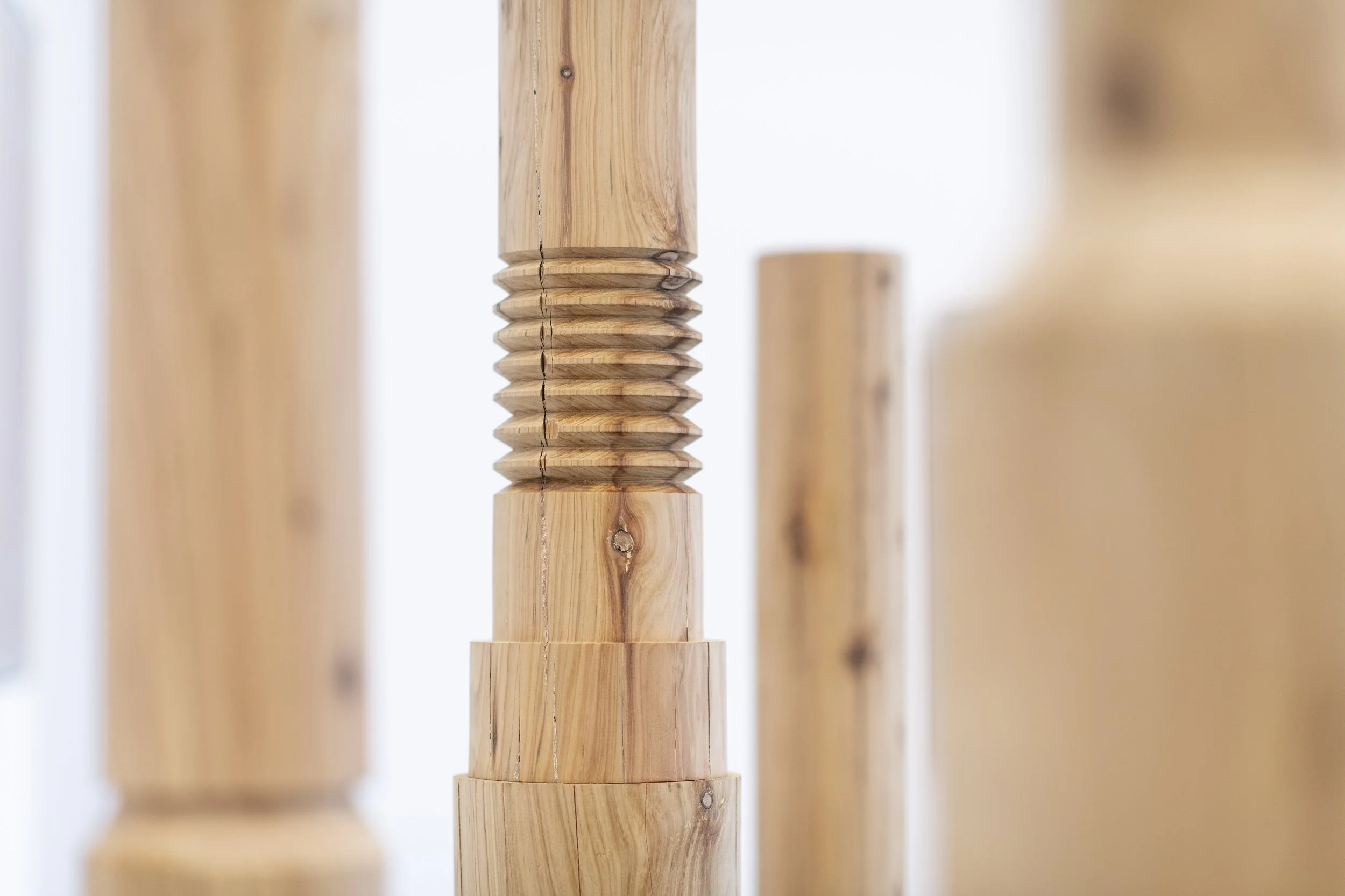
The vertical sculptural works extend the history of the totem-like object. Their stacked cylindrical forms suggest machine components, architectural fragments, or ritual structures, yet resist fixed categorisation. Precision cut grooves and repeated profiles establish serial rhythms repeatedly complicated by variations in density, grain, and surface irregularity. Across the exhibition, abstraction emerges not as a withdrawal from material reality but as a means of registering the tension between time, geometric order, human systems, and the foreboding temporal conditions embedded within matter itself.
Jeremy Kibel 2026
OF LINE and EDGES
The timber used in these works originates from my photographer’s former heritage homes in Daylesford and South Melbourne. During a photoshoot, he mentioned he was beginning to clear out these materials from his studio, where they had been stored for many years. Next, we were loading my car with his collection of beautiful old Baltic Pine dado boards and Kauri Pine weatherboards from the 1800s. These timbers carry a strong connection to local history. They have been reworked and reimagined into this new series of wall works. I have loved giving them a second life.
Within this body of work, platen, moulds and industrial components serve as primary references for outlines, borders, and contours. A platen is a flat plate used in machinery and printmaking to apply pressure and hold materials. It is often the heaviest and most critical component of a press, ensuring precision. In metal forming, a platen is the component that houses the mould for forging the required shape, the movable and stationary platens are in the dies (custom, sharp-edged tools) located inside an injection moulding machine. The titles of my recent works reference this essential industrial and printmaking component, marking a connection between its industrial function and my background of over 30 years in printmaking.
After careful laminating and preparation, the timber substrates are layered with wood washes, acrylic paint, pigments, and hand-turned pins. The pins introduce a play of colour, mapped through an open enquiry into the geometry found in nozzles and bolt holes within industrial dies. The sweet spot emerges intuitively, as all elements come into balance.
My aim is to allow the timber to breathe and shine, often leaving large, centred open margins. As much as possible, honouring the marks of time. Boundary lines establish a structural silhouette, holding the composition in place.
Linework is central to the totems. Linear elements define each form, with alternating direction and orientations. These works draw on core principles of form, edge, and contour; referencing the profiles found in industrial tooling and machinery. At the same time, the linear rhythm of the woodgrain plays with our perception, reminding us timber is a living material.
I aim to create works that feel positive to experience. Ideally, the viewer is drawn closer and compelled to touch. Wood, by its nature, invites connection: its scent, surface, and subtle vibration create an object that we’re compelled to connect and engage with.
J/W 2026
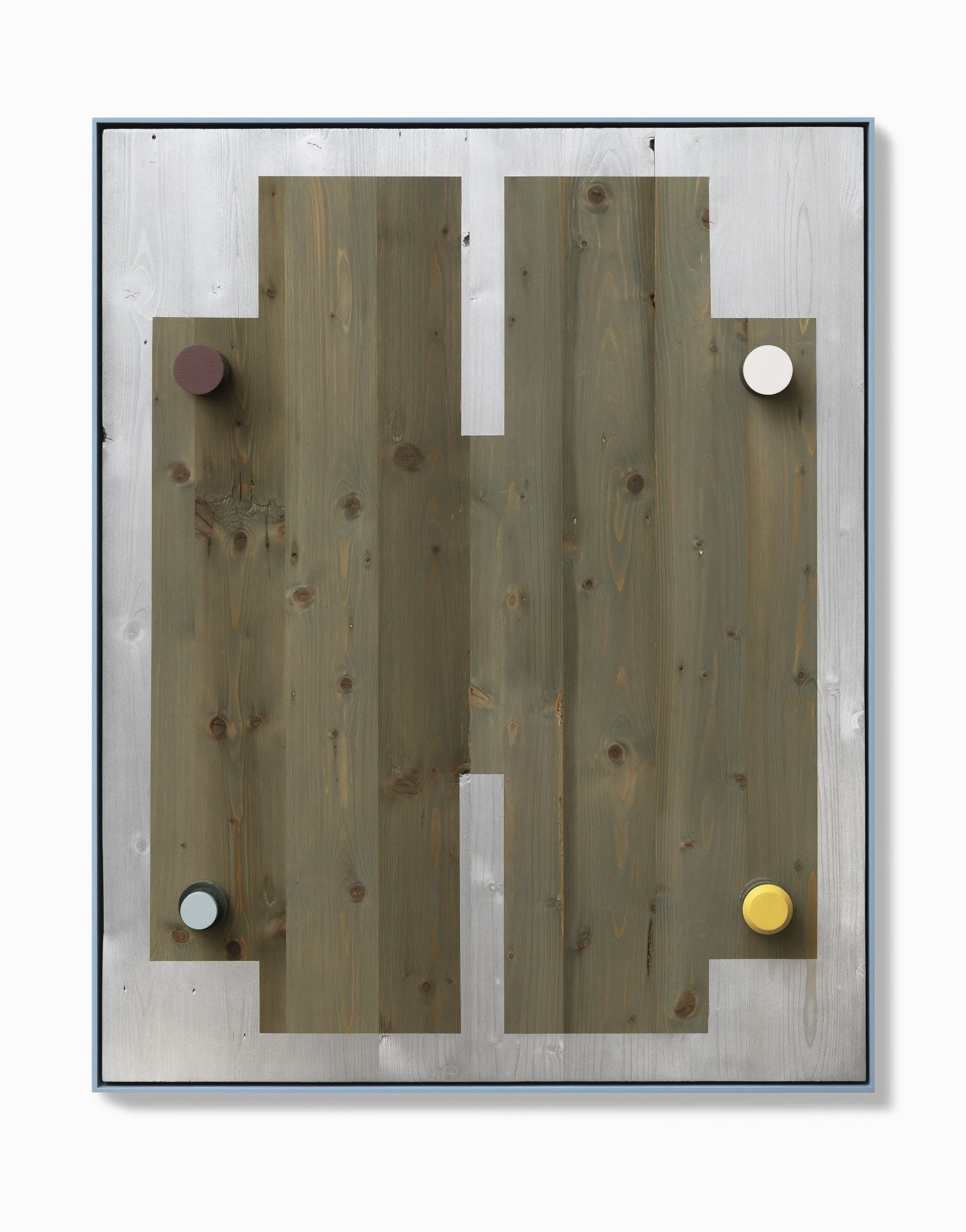
jo wilson: wood/line/pins
Jo Wilson
16.10.24 - 16.11.24






Jo Wilson: wood/line/pins
While nature and industry are not immediately obvious counterparts, they are the primary and consistent themes that characterise Jo Wilson’s recent art practice. Her work is distinctive both in its use of natural materials – typically reclaimed timber which is selected for the beauty of its grain, texture and colour, as well as its history – and in terms of the ongoing and wide-ranging influence of the plastic injection moulding factory that was established and operated by her father. Wilson’s studio is based at the factory and the varied elements of this familiar industrial setting provide a rich repertoire of source material that has inspired her work over many years. While others may not see beauty here, for Wilson, who is acutely aware of her environment and sensitive to its details, it is a site of artistic potential and constant creative renewal.
The woodLINE totems in this exhibition are based on steel tooling components stacked in imaginary assemblages which have been turned on a lathe into a series of single towering forms. Shape and line are perfectly calibrated in these works, but the precision of their design is interrupted by the natural features of the cypress – the irregular patterns of its grain, variations in colour and random knots in the timber – establishing a compelling interplay between the manmade and the organic. The same dynamic operates in the Channels and Pin/Point series where details from the factory are replicated in metallic paint and playfully coloured miniature pins (also turned on a lathe) on panels of richly figured cypress and oregon. The silver painted sections in these works follow the linear format of channels in plastic palettes which Wilson has sketched and photographed in the factory and while they recall the sheen of industrial machinery, sometimes appearing solid and dense, in certain lights the paint is also translucent, deliberately chosen so that the grain of the timber remains visible.
Wilson feels a strong connection with her medium – she loves its tactile material qualities, its patterning and tonal variation, even its scent. She is excited by the prospect of transforming discarded raw material into something beautiful and giving it new life. Beyond this, she is also conscious of the timber she uses as having an energy that connects it directly to the natural world. She observes the finely-set grain lines of one panel which indicate years of growth, for example, with fascinated awe. The slow, often hand-worked and labour intensive nature of the techniques that Wilson uses allows her to focus on these qualities, showing respect for the medium at the same time as stilling her own thoughts in a therapeutic form of making as meditation.
KIRSTY GRANT
Kirsty Grant is a curator and writer specialising in Australian art. She previously served as the Director of Heide Museum of Modern Art and was the Senior Curator of Australian Art at the National Gallery of Victoria (NGV).
ARTWORKS:


enquire.
JO WILSON: FORM WORK & TOM VINCENT: INTROSPECTION
26.05.21 - 19.06.21
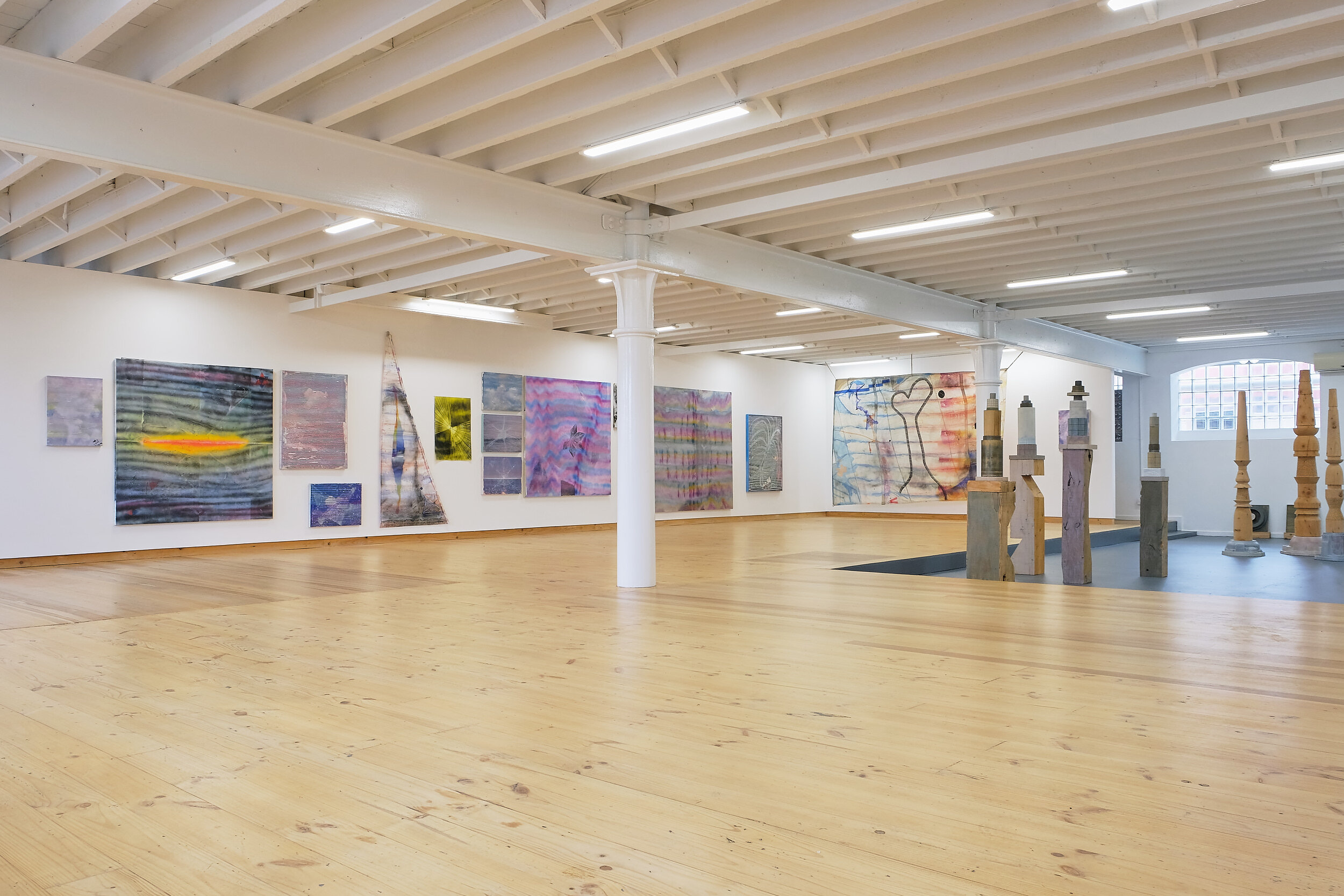
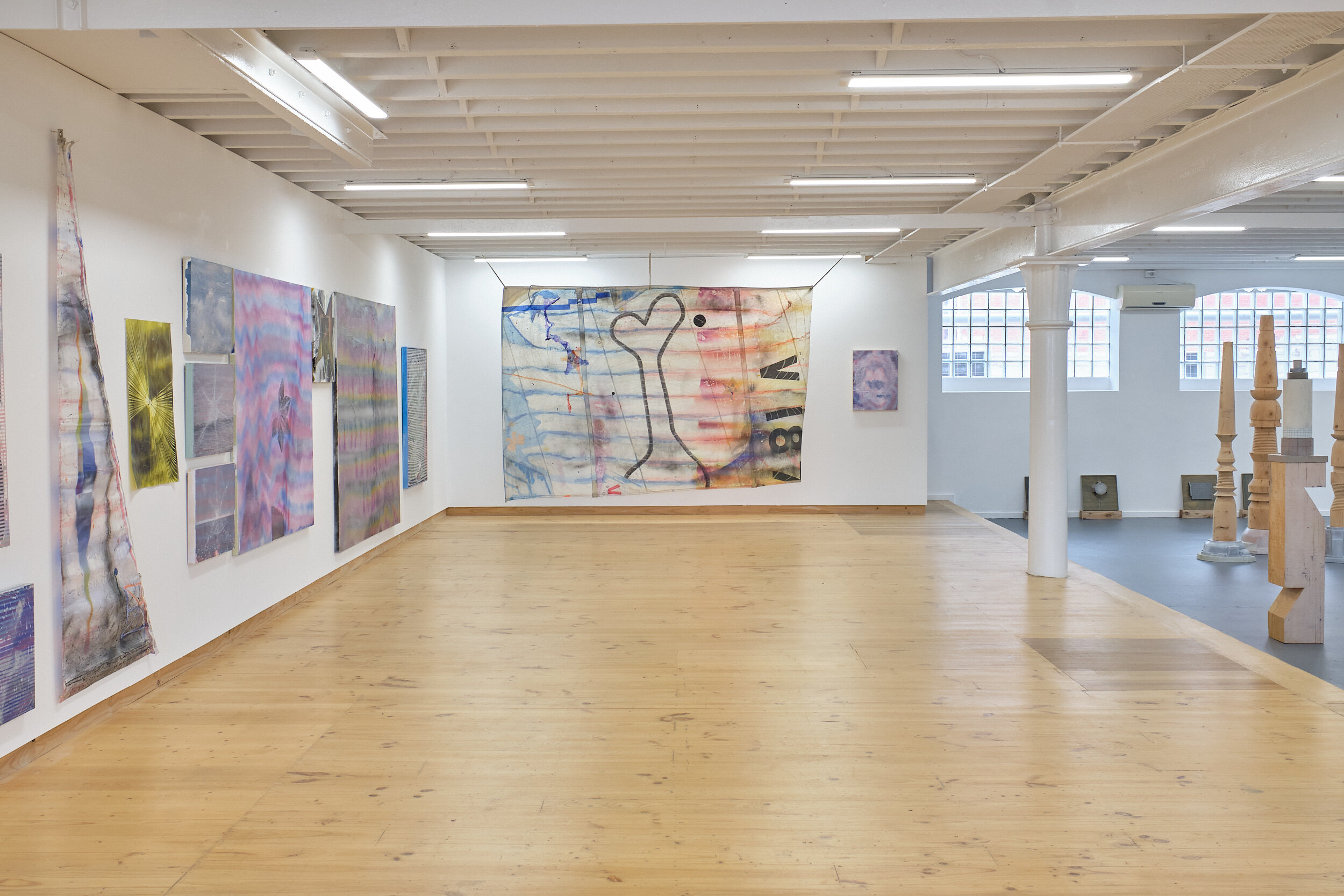
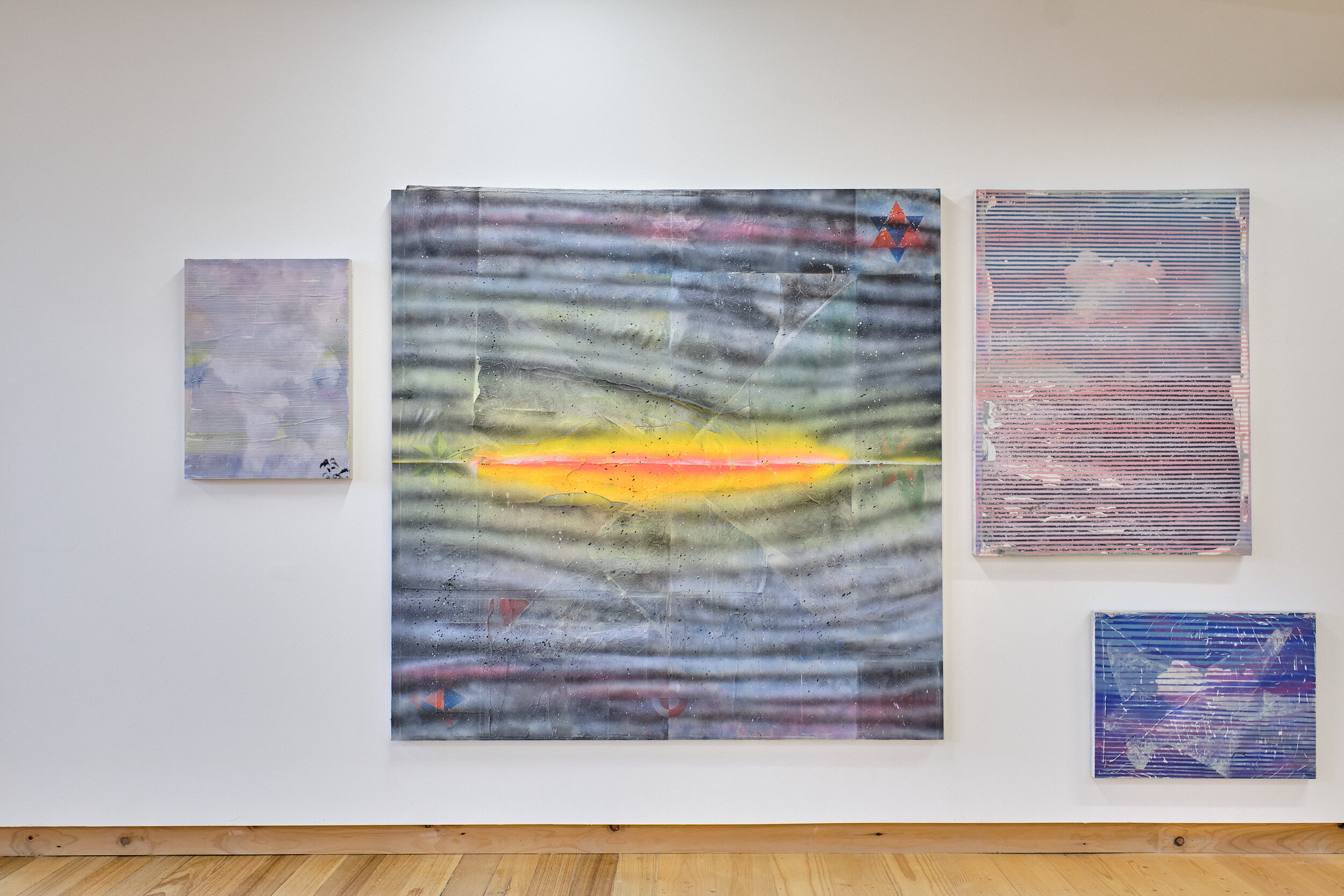
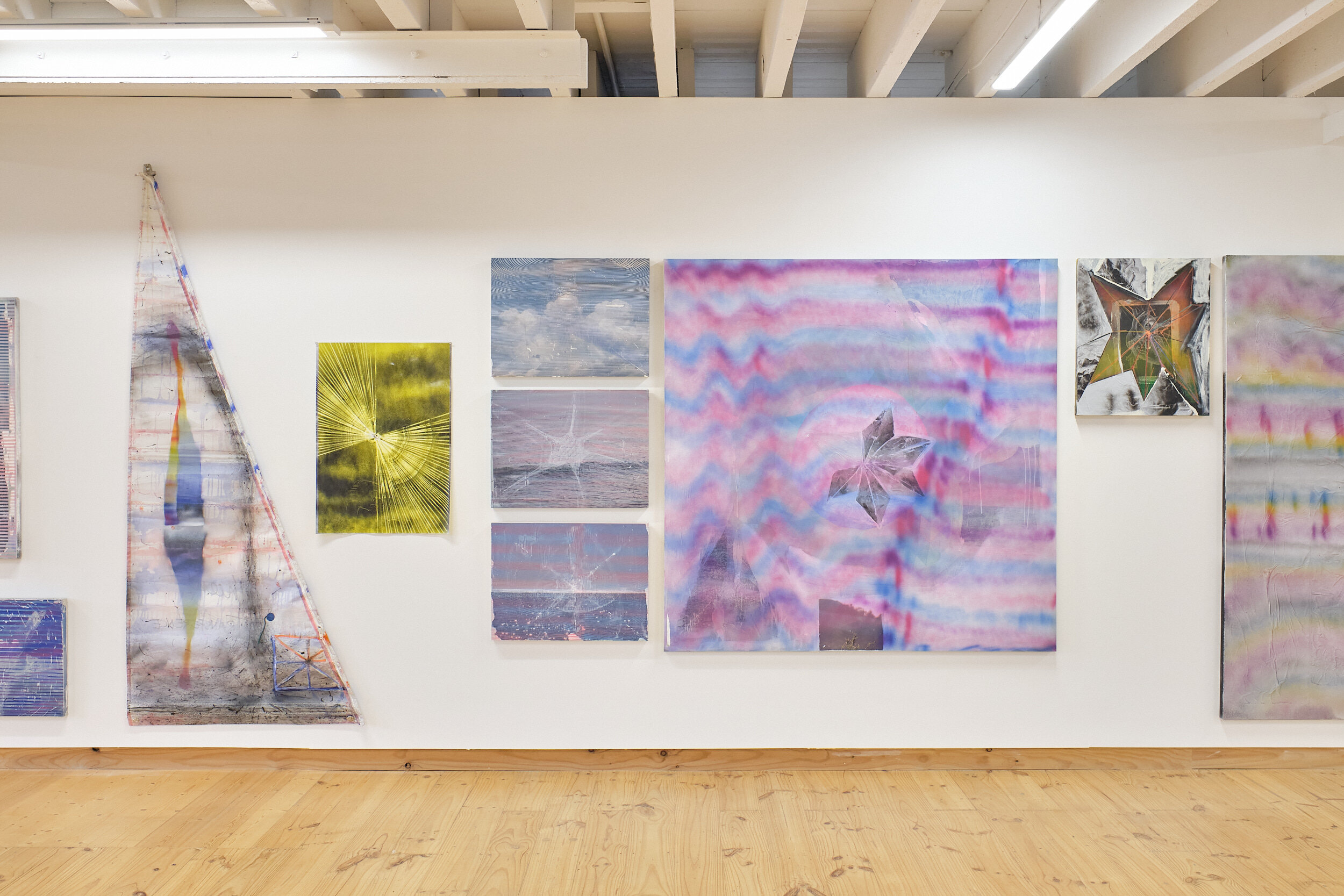
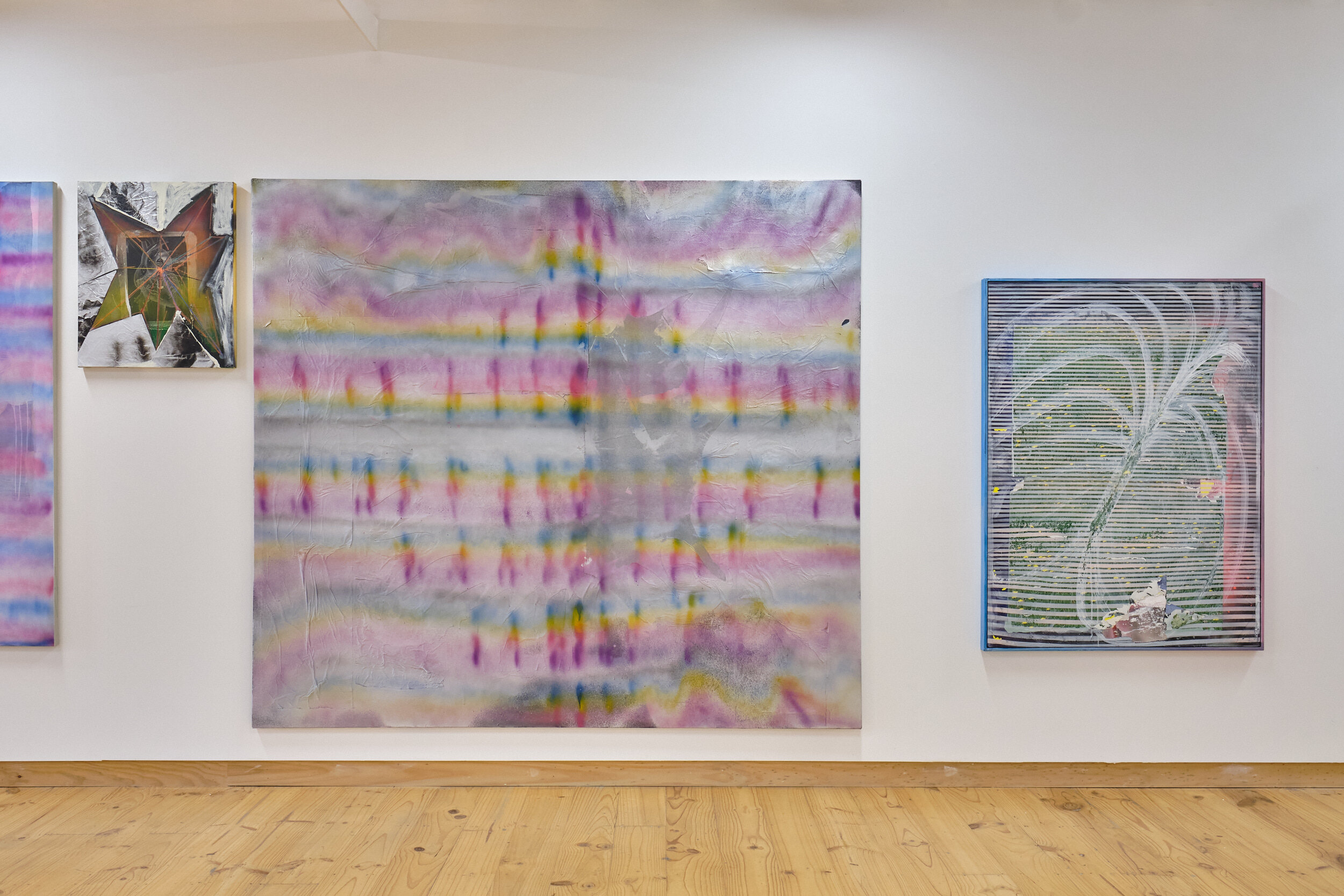
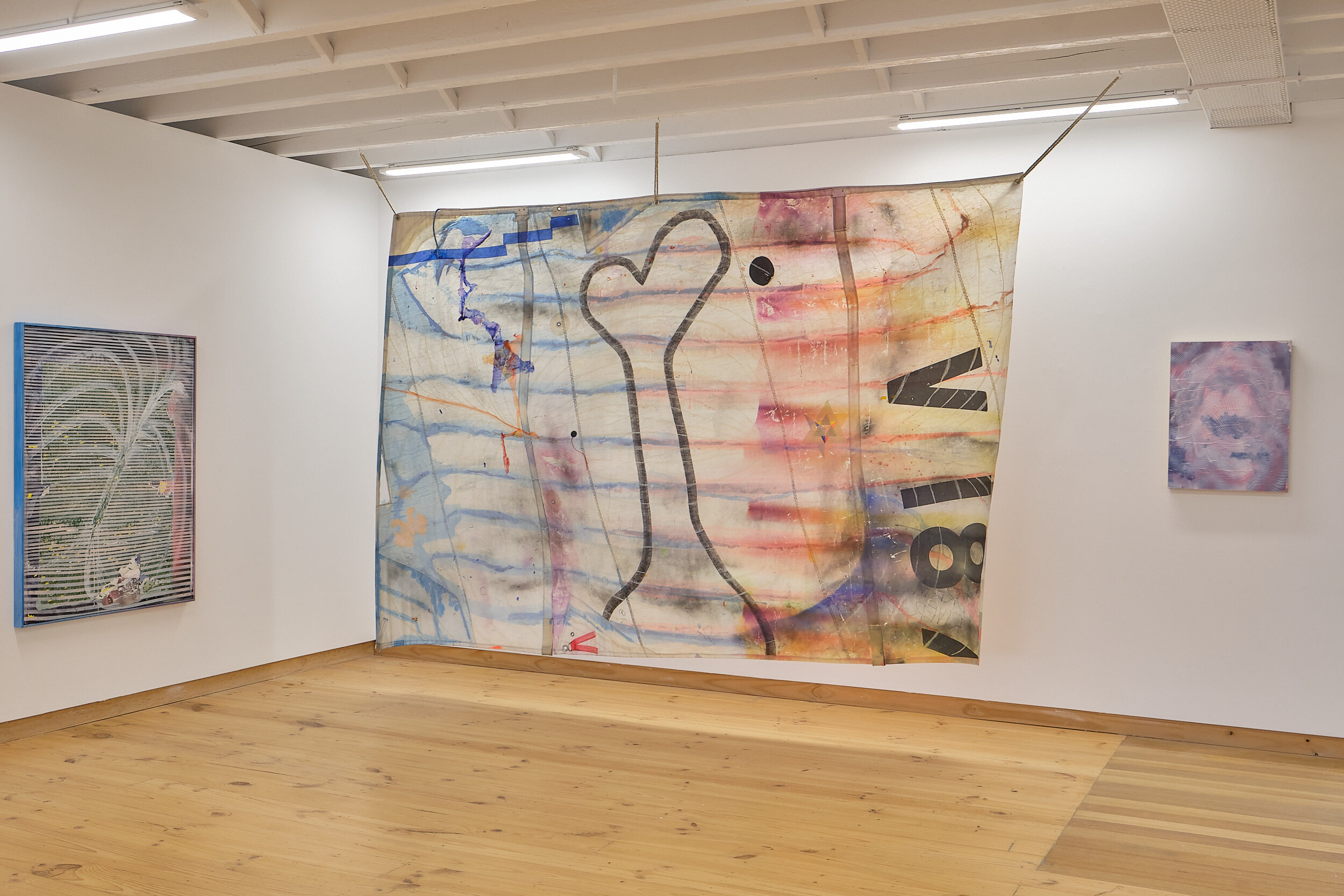
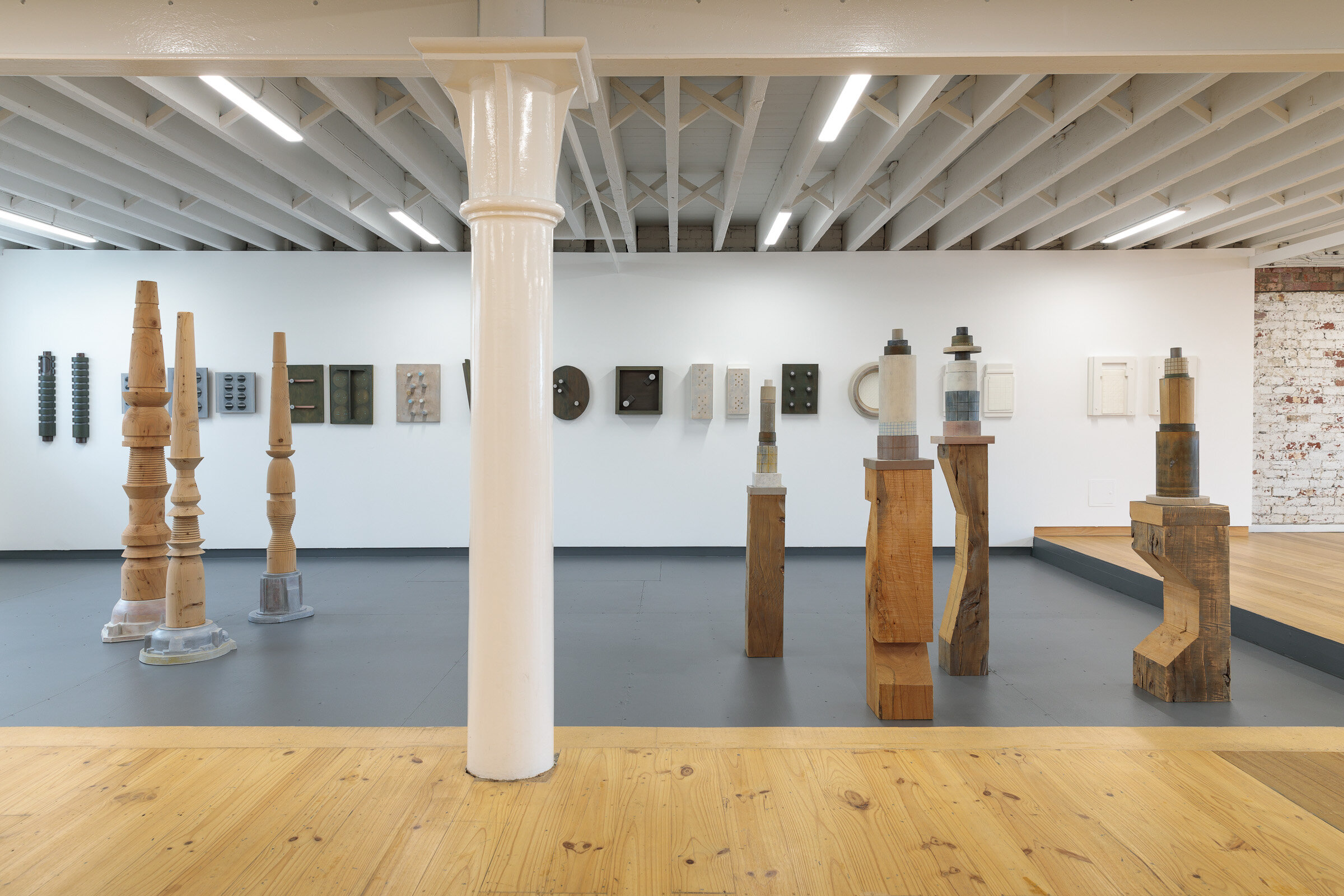
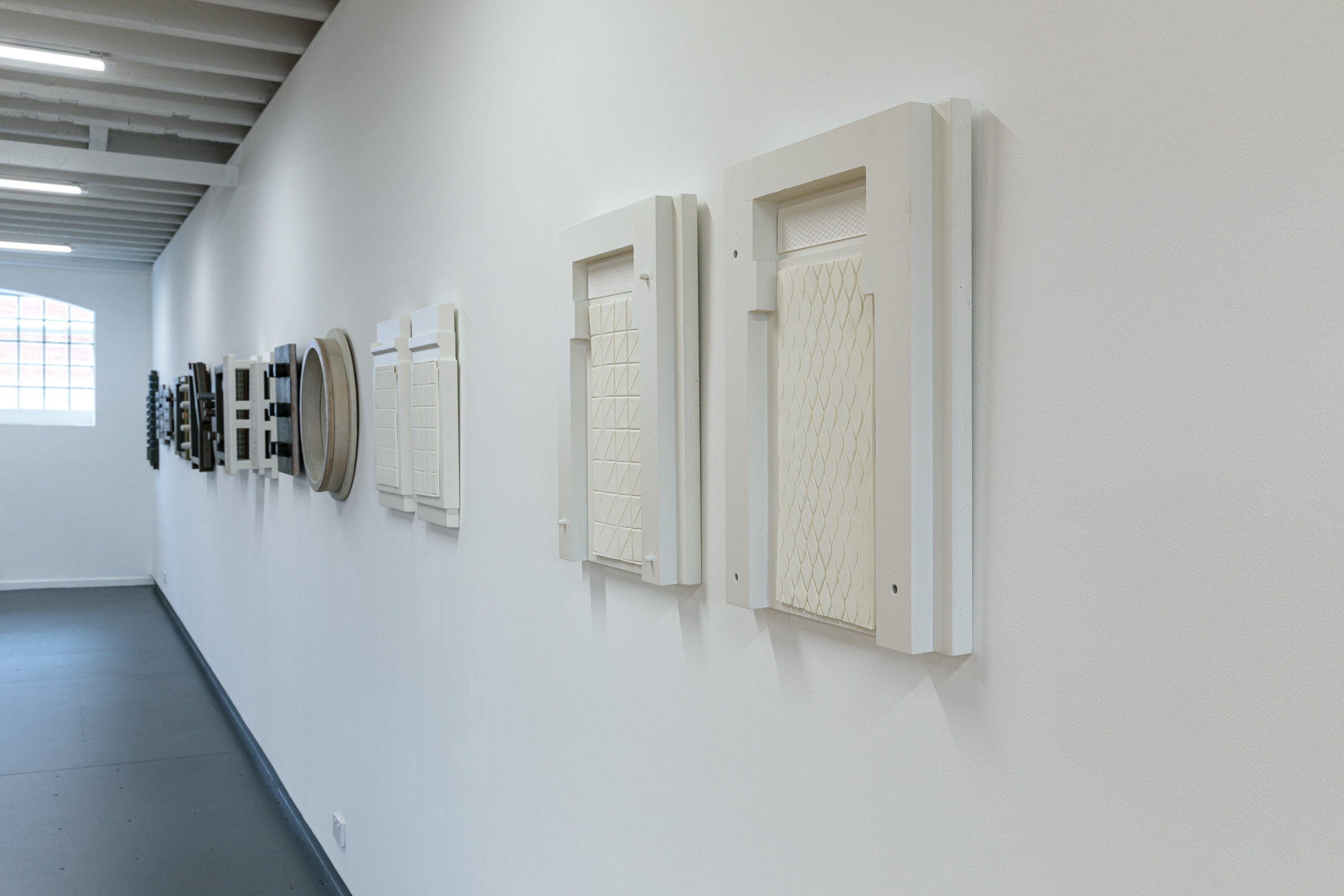
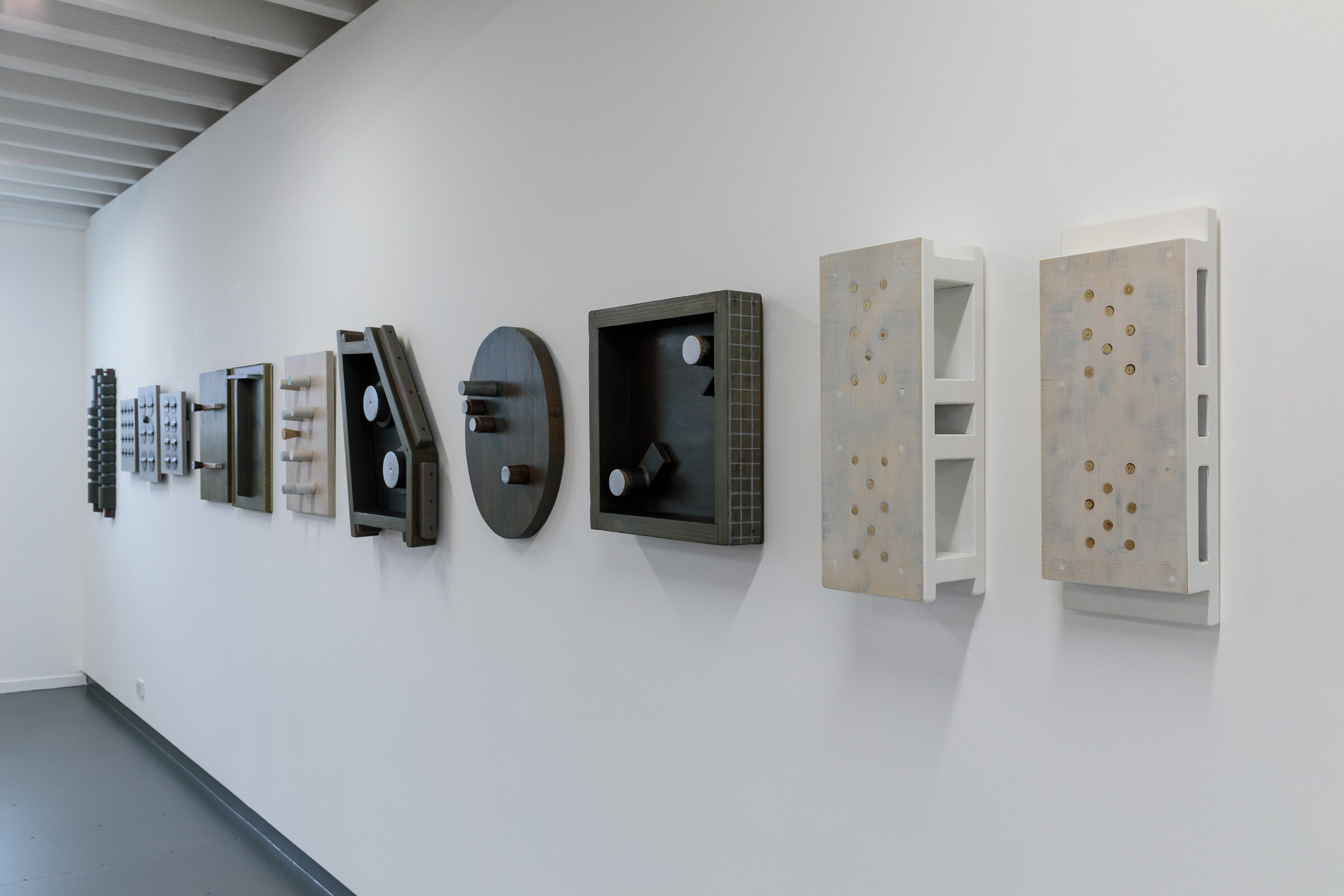
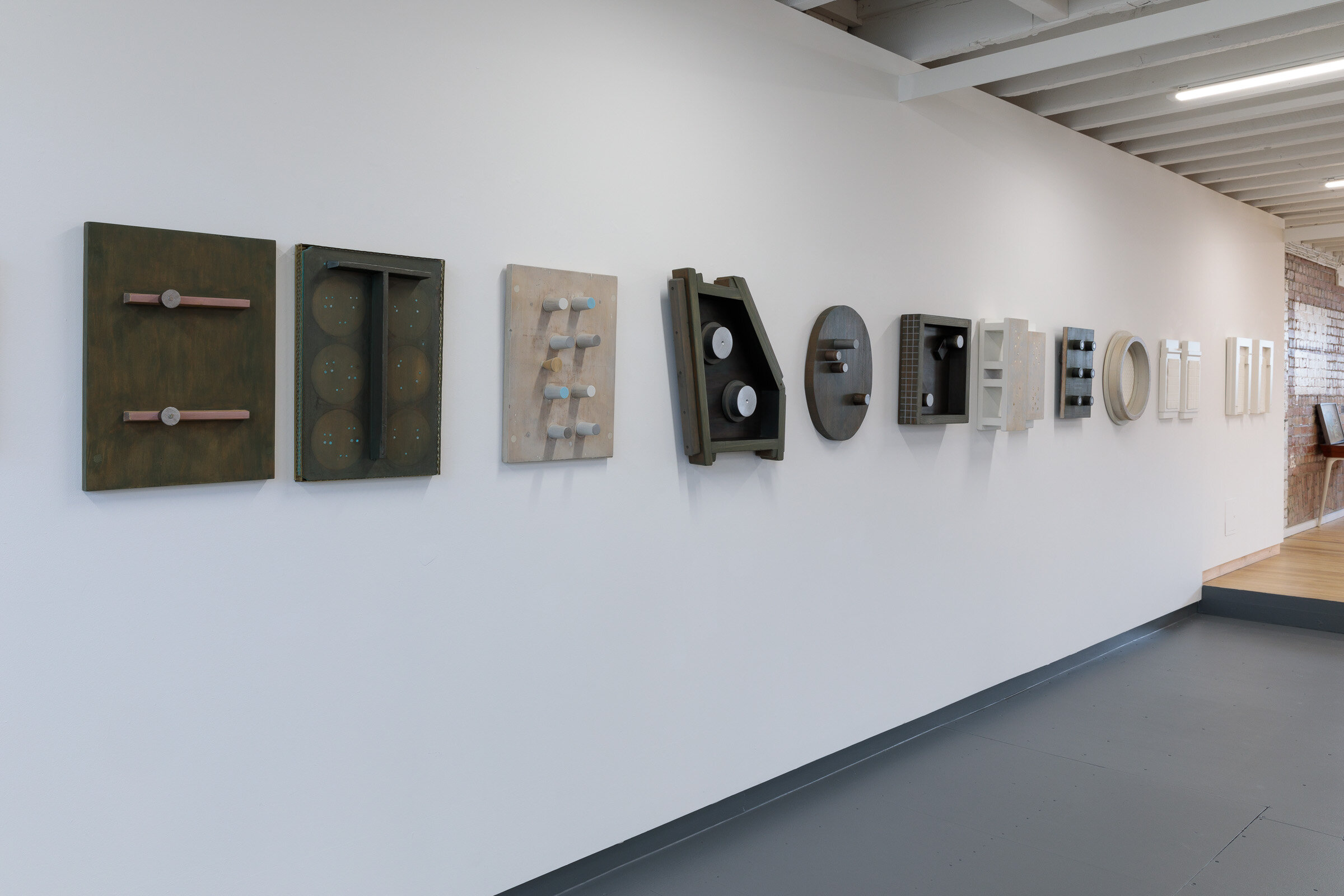
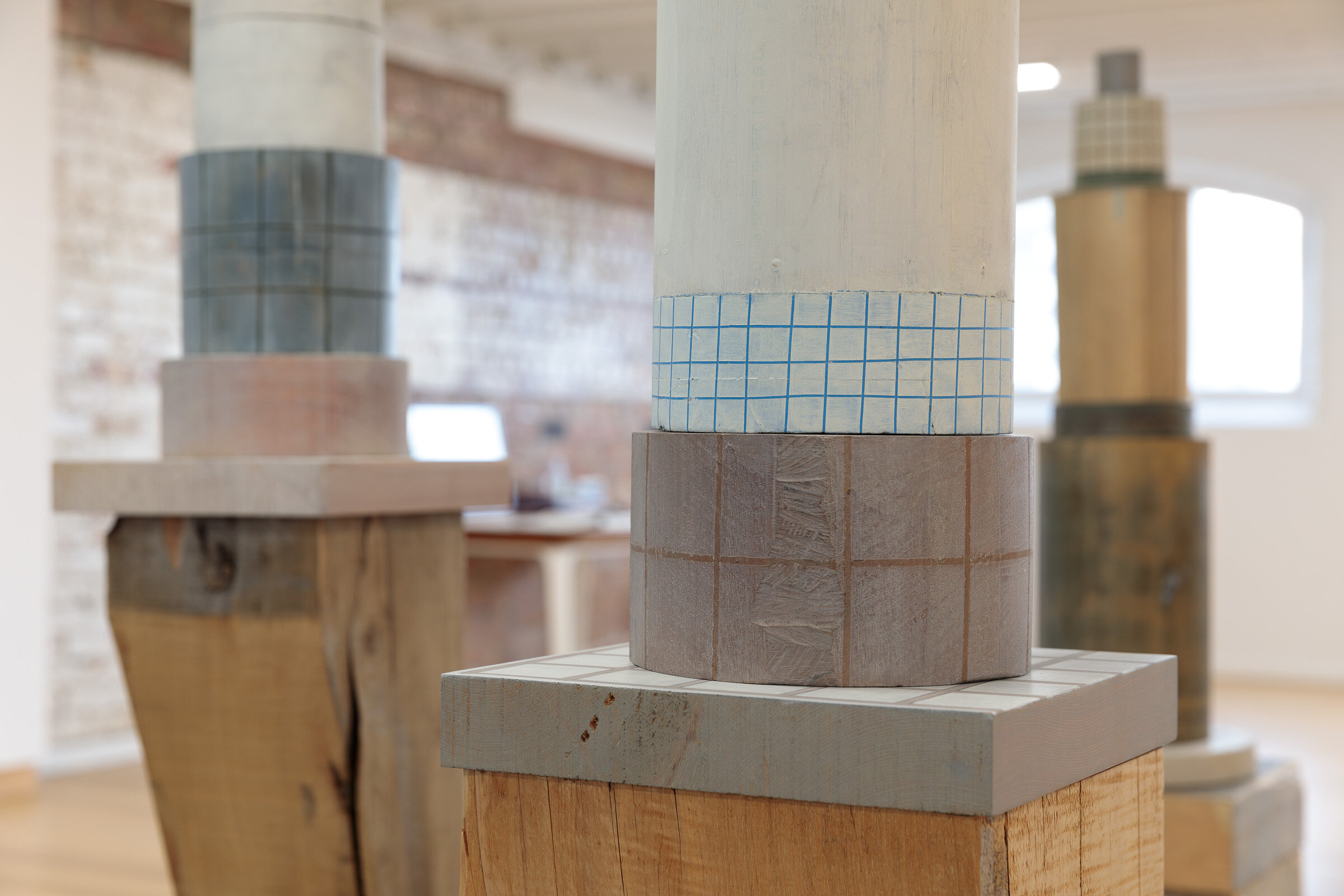
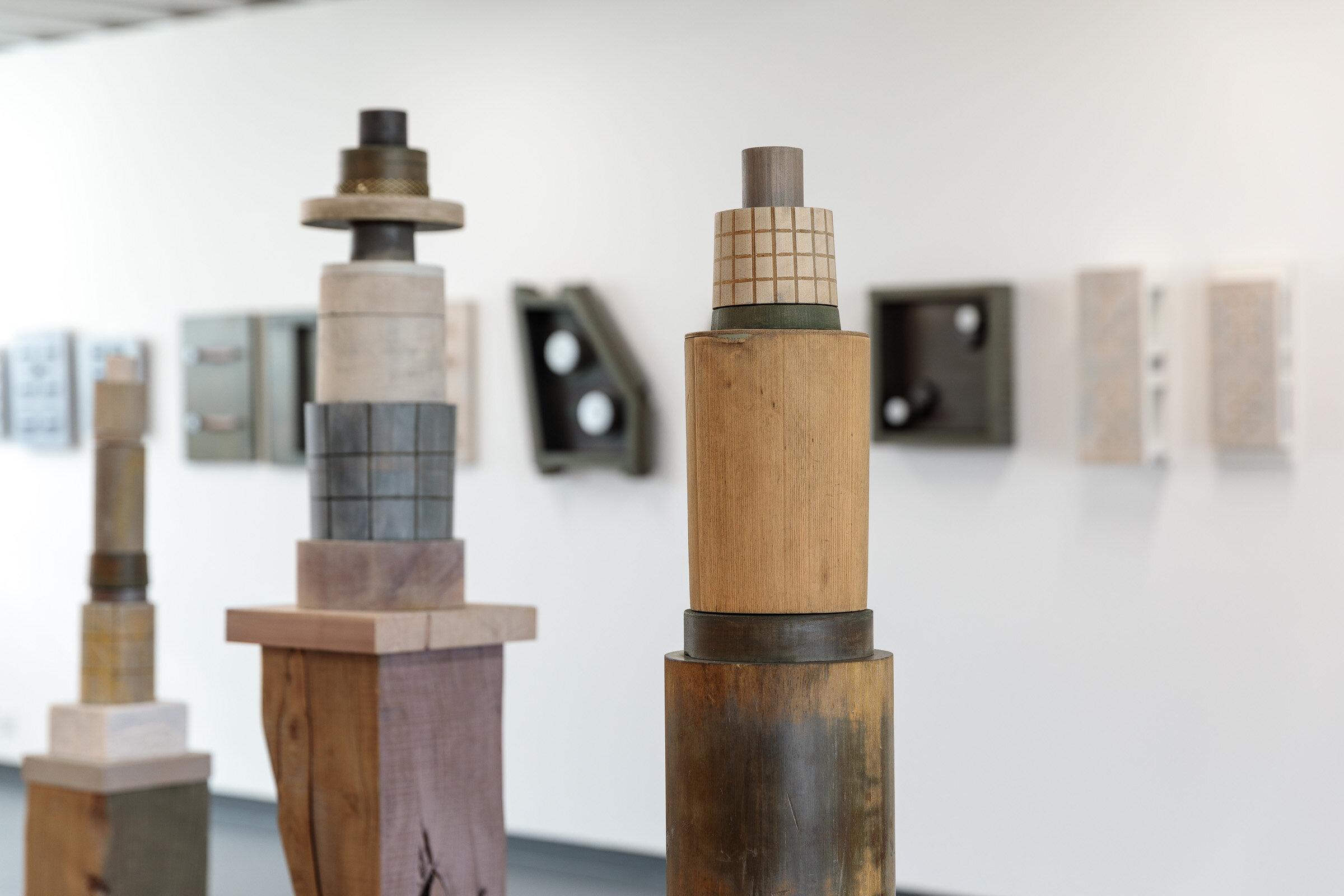
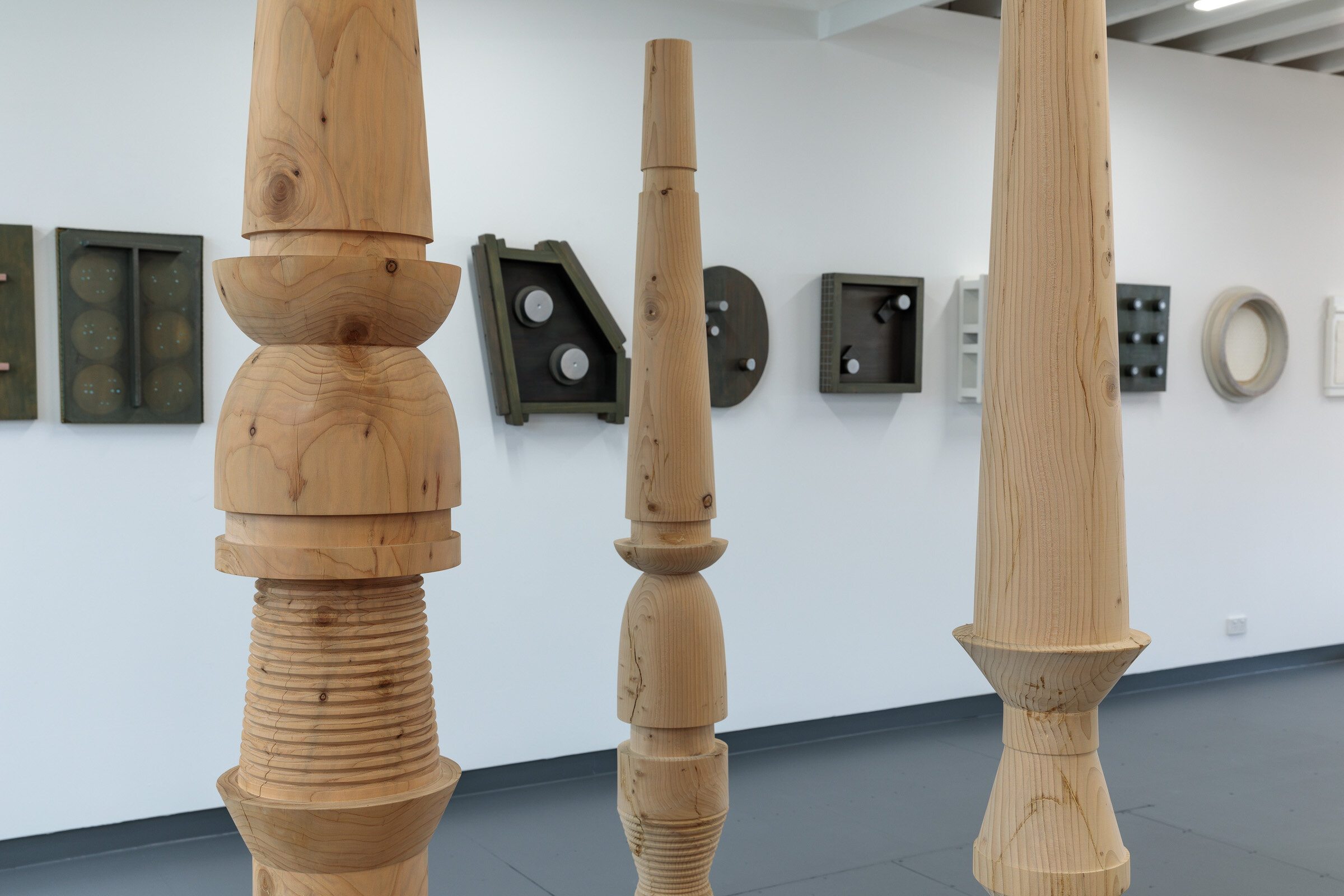
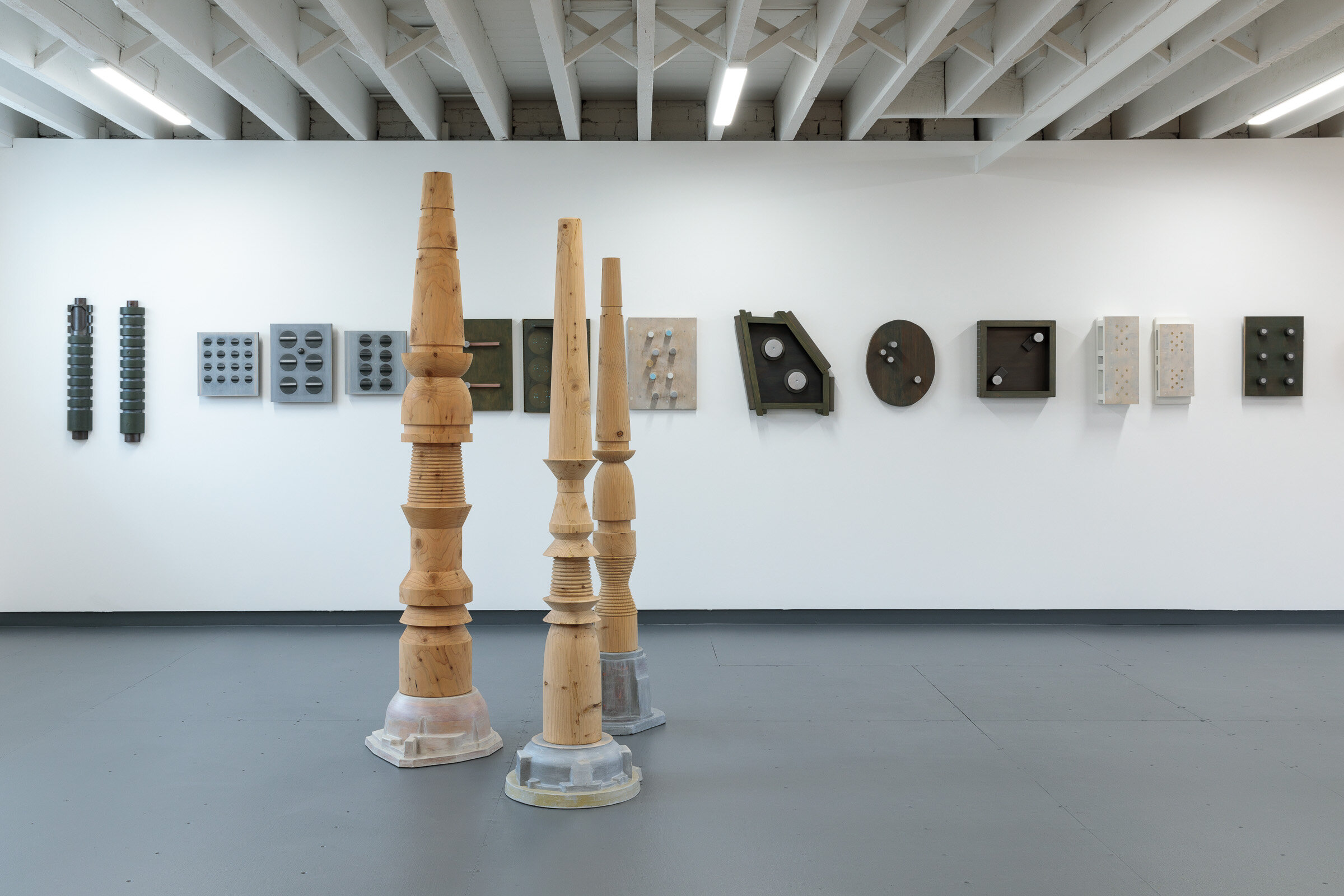
Installation images, Tom Vincent: Introspection, & Jo Wilson: Form Work. Blockprojects, 2021. Images by Mark Ashkanasy & Tom Vincent.
SOLO exhibitions by
Jo WILSON & Tom Vincent
Both artists celebrate the power of imagery using traditional and found materials in a unique and experimental manner, which offers an intuitive and honest experience between the objects and the viewer.
Tom Vincent: Introspection.
”These works have arisen from a way of looking and observing in an attempt to gain an understanding of the nature of myself and the place we find ourselves in. Experimentation and discovery are key drivers to my work, and these are experiences that occur not outside of my body but rather inside my head with my eyes closed as a type of thought experiment or consciousness exploration.
I have been aware of a constant of movement, a constant marching of the natural systems we inhabit most of my life. A cycle or rhythm that at its core is an oscillation between on and off, open and closed. A cycle that, as much as we like to think it, we are not removed from. Through observation of these movements and rhythms of the world I became increasingly aware of the importance of stillness. Seeking to find stillness in a continuous ocean of waves and current has helped me observe what I see both with my eyes open and closed, gaining an insight into my own true nature. These works are made from a point of introspection past what I think I am. The waking, walking, talking and painting human being I think I am. But rather from the point of view inside, underneath the movement and flow at a point of stillness.”
Tom Vincent ARTWORKS:


Jo Wilson: form work
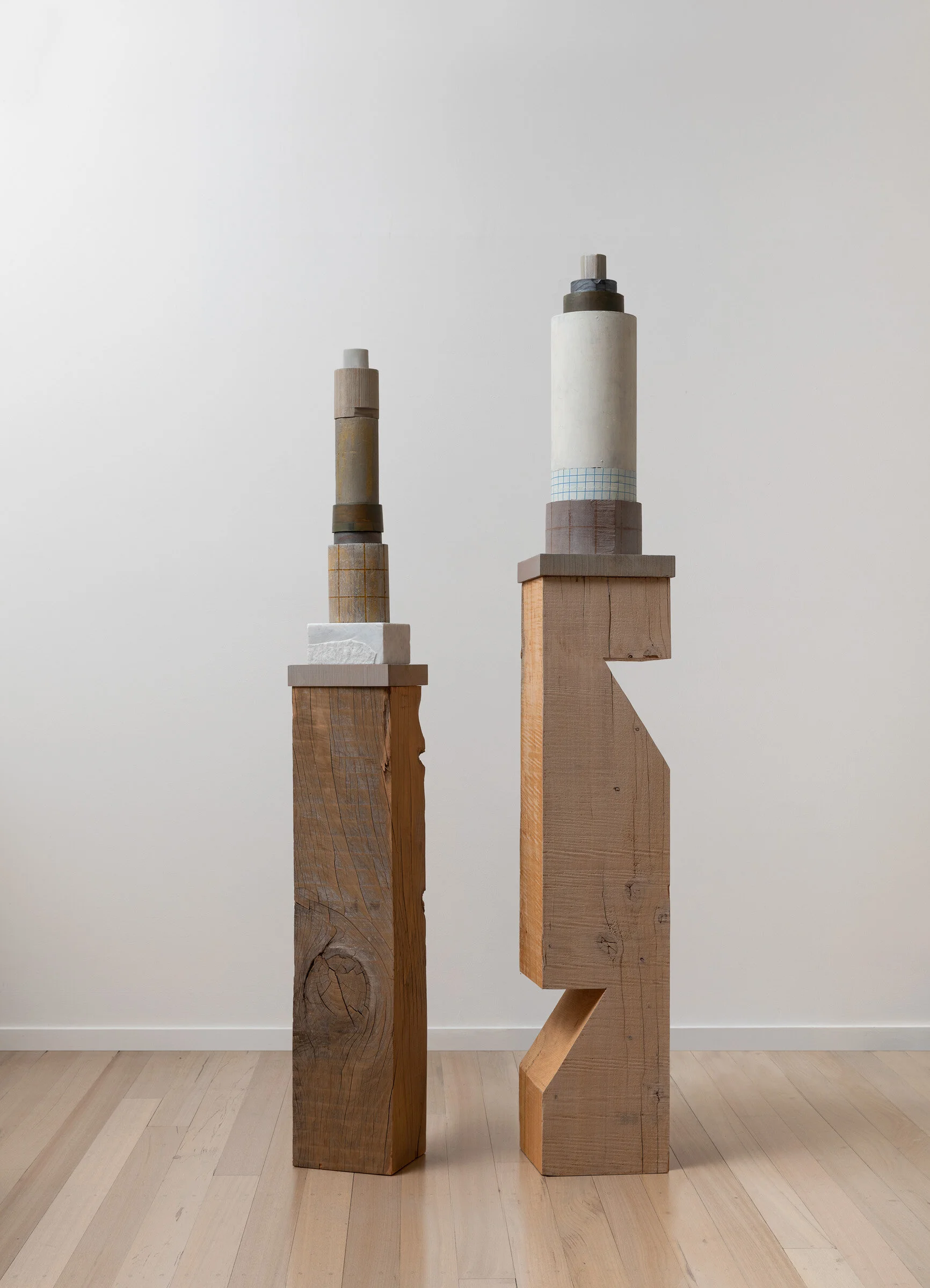
A plastic injection moulding factory in an outer south-eastern suburb of Melbourne seems an unlikely starting point for Jo Wilson’s refined sculptural works. It is this site however, where she maintains a studio and sources most of the elements used in her art, inspired by the sheen of tools and machinery, and the texture of wooden sandcasting moulds, which make up the patina of its industrial landscape. Established and operated by Wilson’s father, Bob, this particular factory is deeply embedded in her being – she has spent many days there over many decades, and in addition to registering the ingenuity and technical skill of its workers, its spaces also conjure up memories of a strong father-daughter bond.
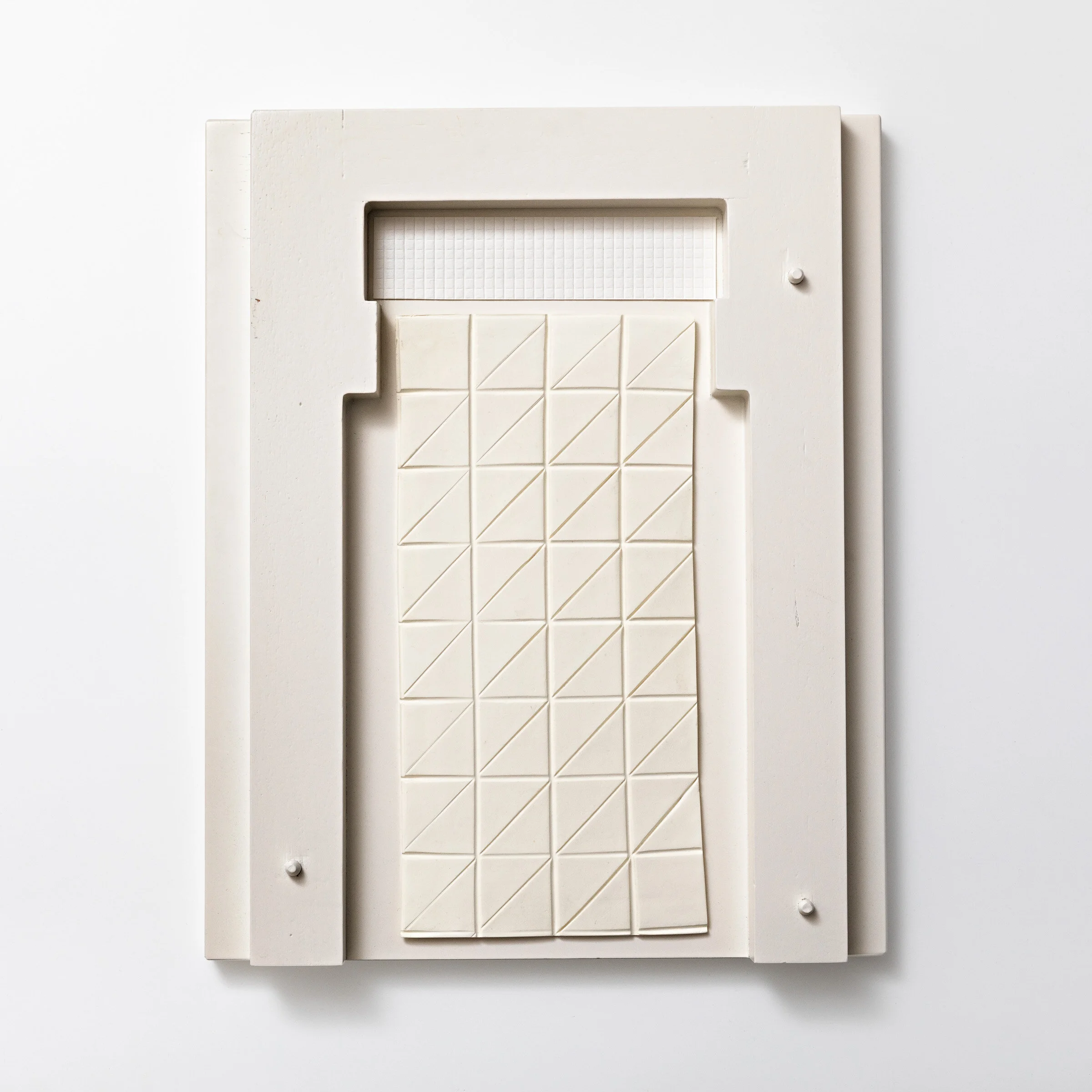
The components Wilson used to make this body of work had been gathered over a number of years, removed from the factory context so that their material qualities – shape, size, colour and so on – could be considered independent of their traditional function. Having a reserve of pieces at home, she was able to work throughout the extended lockdown which Melbourne residents experienced last year. Using what was at hand, without the prospect of being able to add to it, her approach was more playful and she incorporated materials that might otherwise have been discarded. Wilson describes the process of making during this strange time as having a calming effect and there is something meditative in her hand-working of these pieces, from the graphite dust which is rubbed into timber surfaces until they take on the appearance of metal, to the carefully painted grids based on fragments of steel mesh found in the factory. In a series of white works, sheets of paper clay which record the impression of mesh and small pieces of embossed paper (both harking back to Wilson’s experience as a printmaker), embellish sandcasting moulds, creating serene minimal compositions. Particularly prominent in these works is Wilson’s sensitivity to texture, the smooth surfaces of the wall works contrasting against the totems, where the tactile, natural grain of the timbers is highlighted.
The materials and processes used to create these works are many and layered. The end result is simple however, pared back forms constructed from geometric shapes in a limited palette of grey, ‘Wilson Green’ (a bespoke colour mixed to the artist’s specifications) and white, alongside the varied tones of timber. Although the functional purpose of the individual elements Wilson uses is no longer apparent, she celebrates the detritus of industry, acknowledging the workmanship that went into their production as she transforms them into objects of beauty. Fundamentally abstract, these works are rich in meanings that subtly echo with memories of labour, family and creativity – what the artist terms ‘talismans of the past.’
KIRSTY GRANT
JO WILSON ARTWORKS:






enquire.
JO WILSON: MATERIAL ONLY
JO WILON: MATERIAL ONLY
JAMES CLAYDEN
10.10.18 - 30.10.18
Installation images
Material only
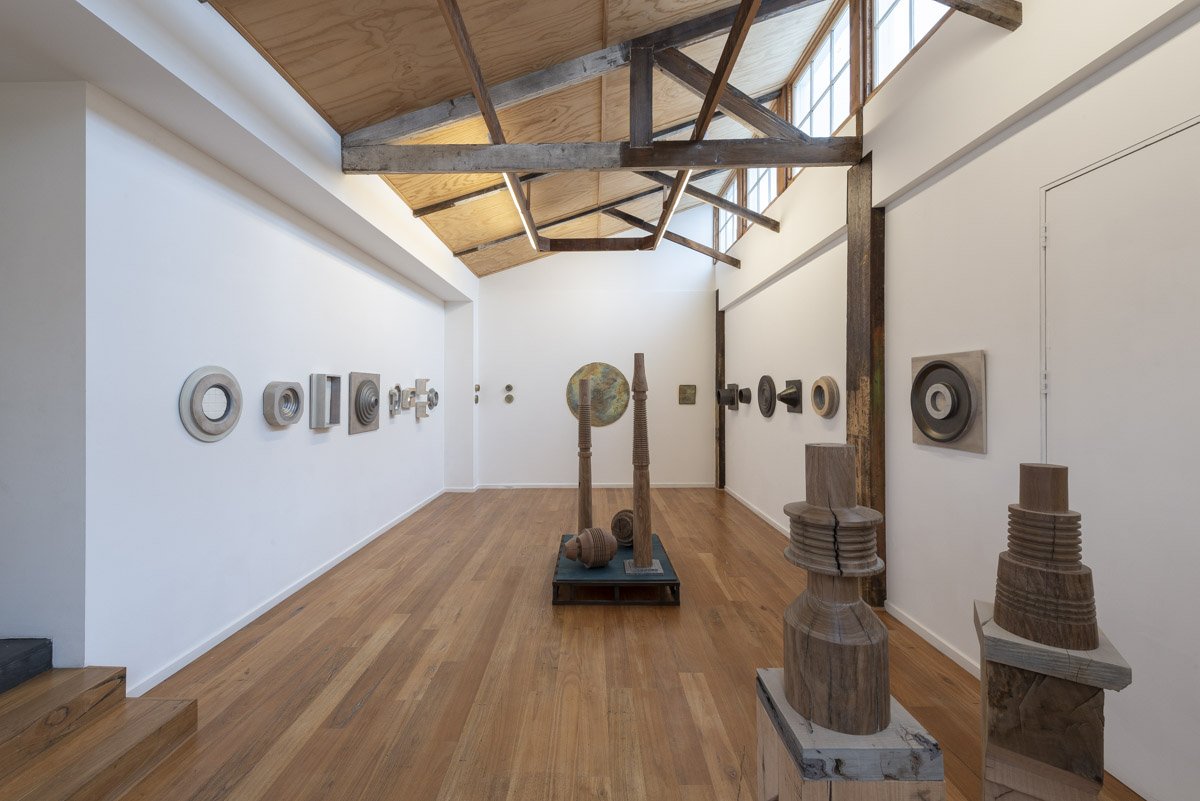
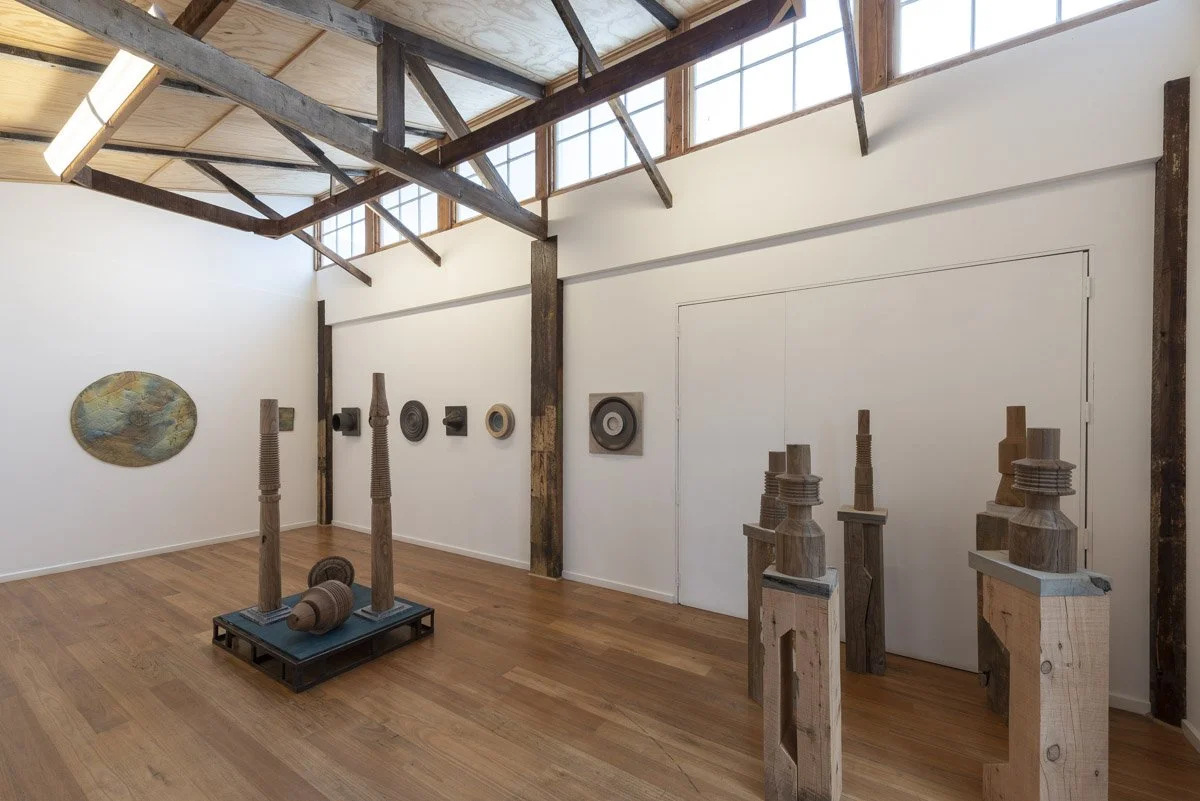
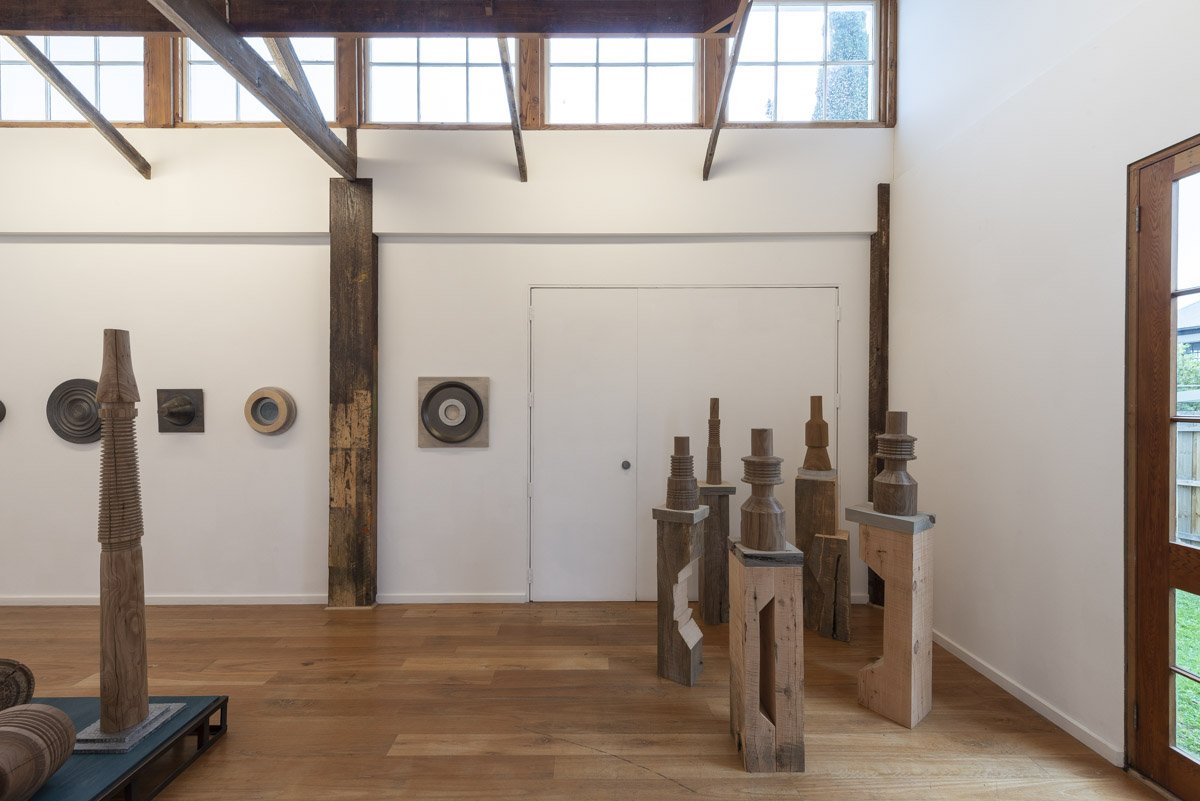
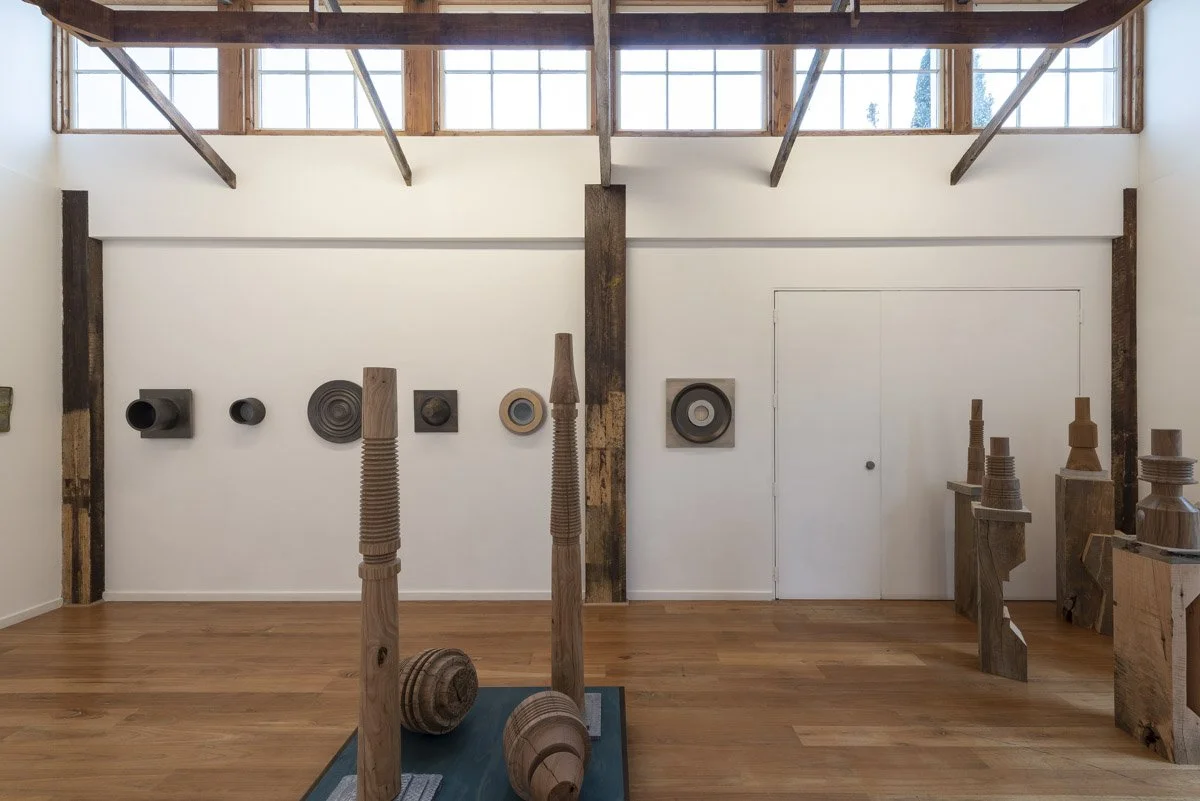
Jo Wilson’s sculpture is inspired in part by the contents of her father’s factory. The artist has taken delight in the industrial trappings of this mechanised workspace.
She has found mysterious beauty in sections of machinery, discarded workshop objects, sprockets, offcuts and fragments, which she has reconstructed and repurposed into elegant abstract forms.
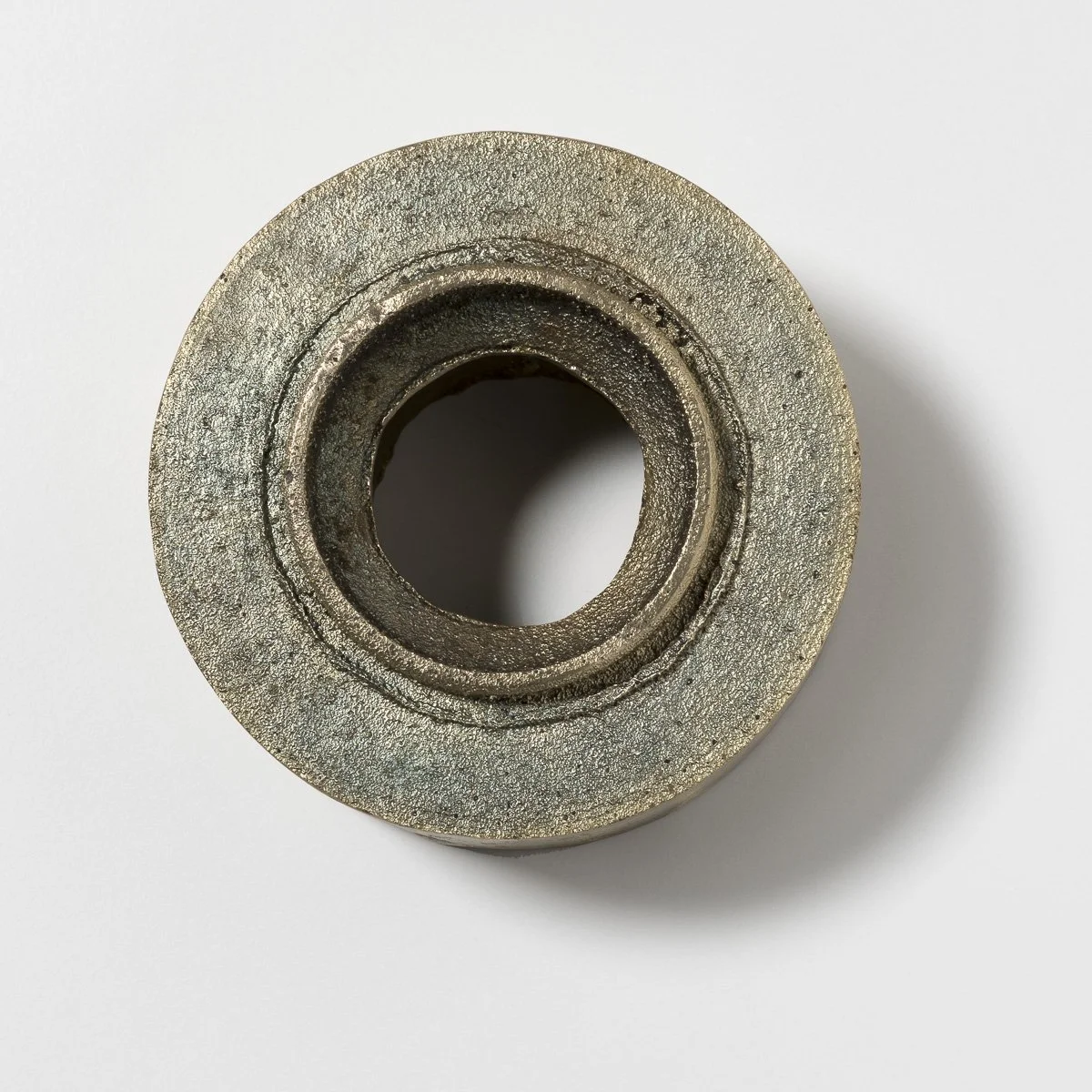
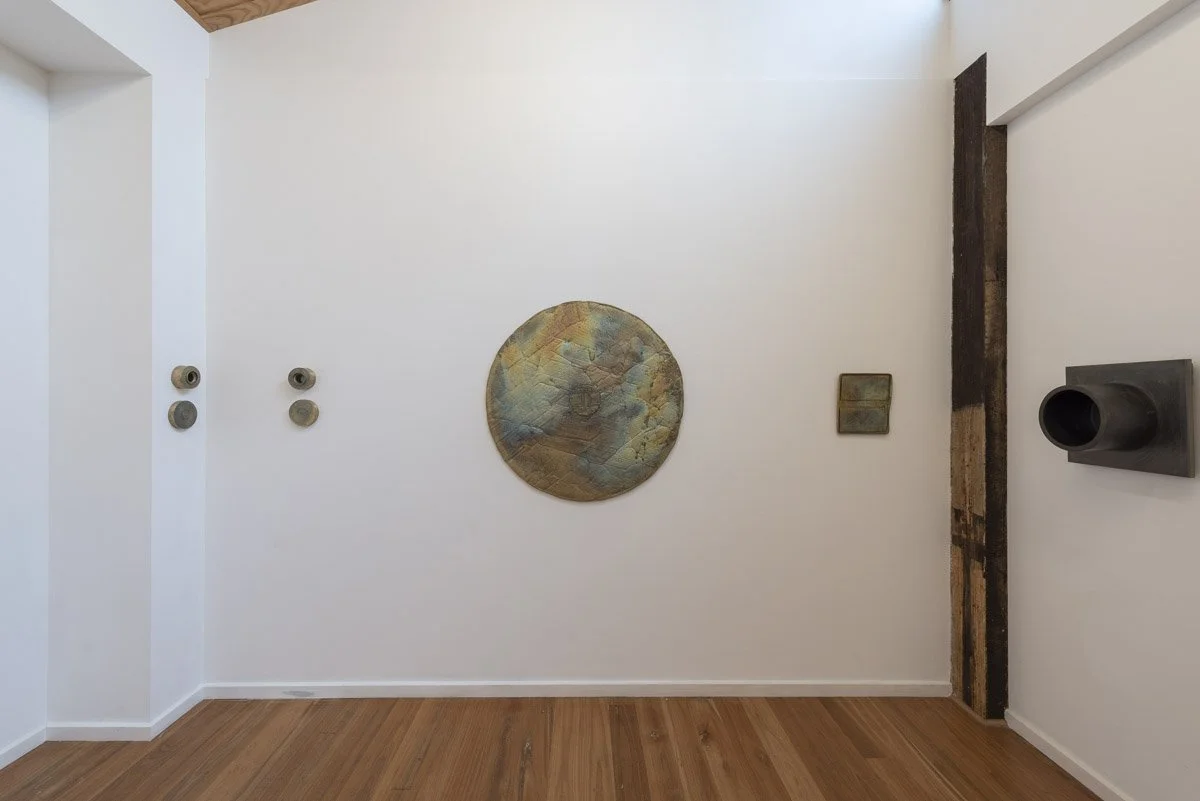
The resulting objects are strangely familiar, yet also enigmatic. A discarded sheet of pressed cardboard, rescued from the factory floor and cast in bronze, is now eternal; the utilitarian roll of sticky-tape, cast in the same permanent metal, becomes a poetic relic of the age, as intriguing as any Bronze Age artefact.
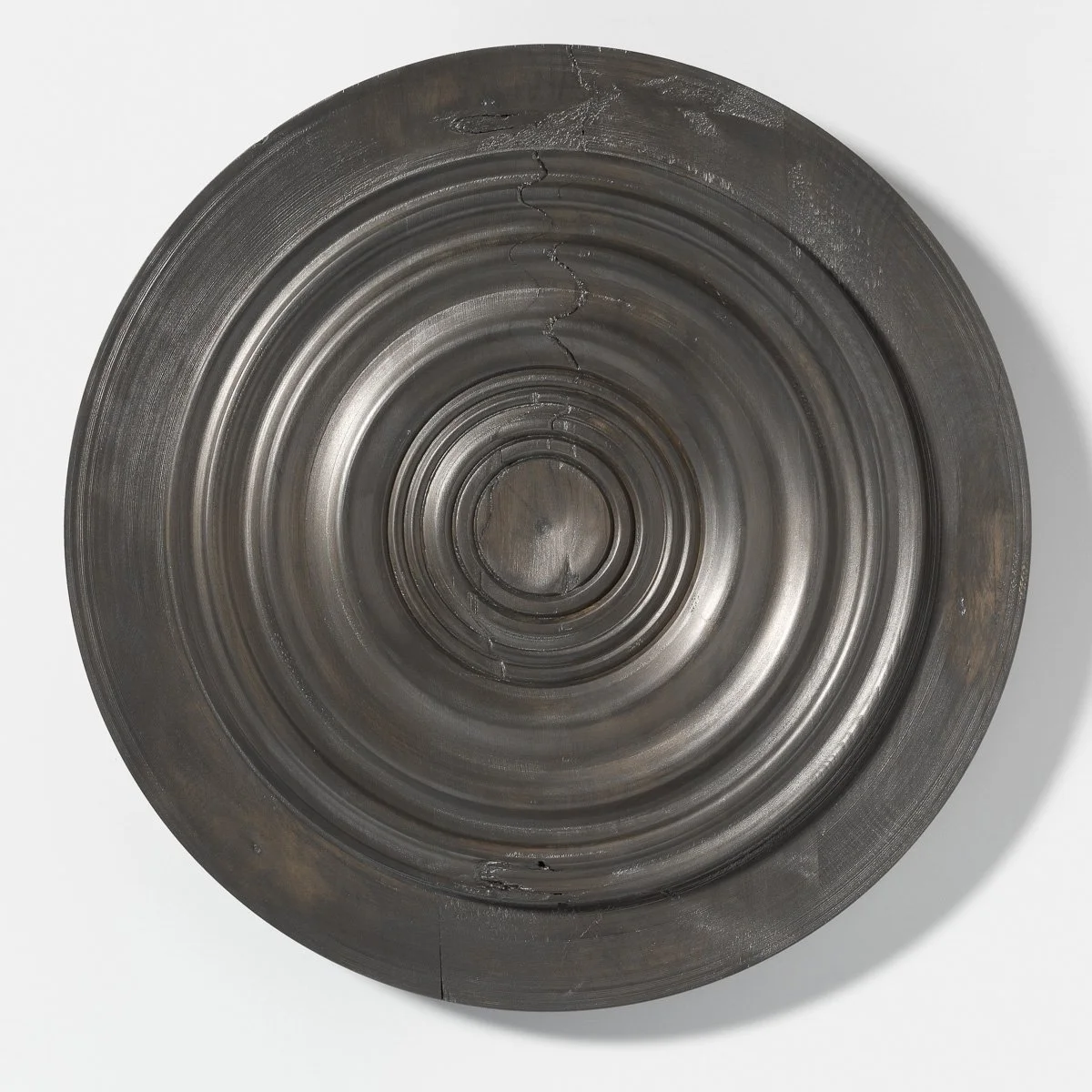
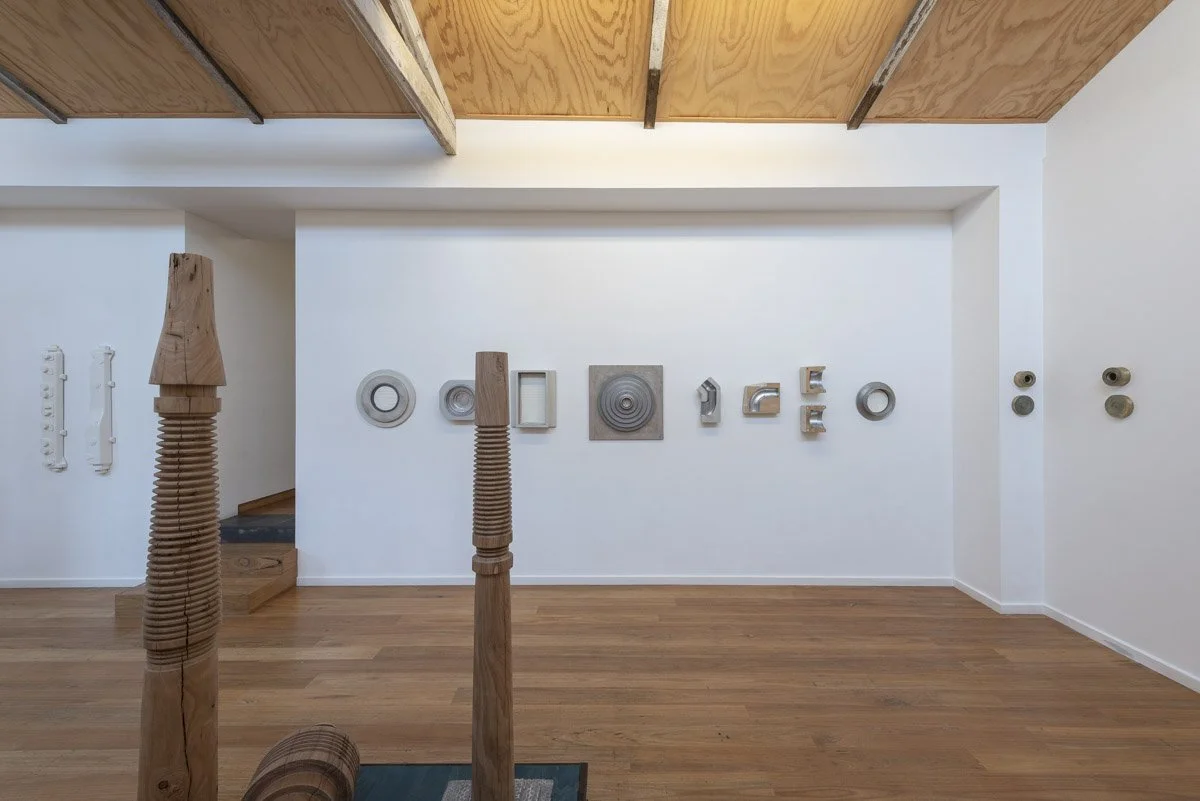
Elsewhere, circular wooden forms have been constructed, with concentric rings emanating from the centre-point. These mandala-like objects suggest shields, or charts of the cosmos as they set out the trajectory of their own enclosed universes.
In Wilson’s work, we may find echoes in the sculpture of Constantin Brâncuși, or British artist Eduardo Paolozzi, the godfather of British Pop Art, who also saw the sculptural potential in the detritus of contemporary life.