paul newcombe: conspiracy of ravens
08.04.26 - 02.05.26
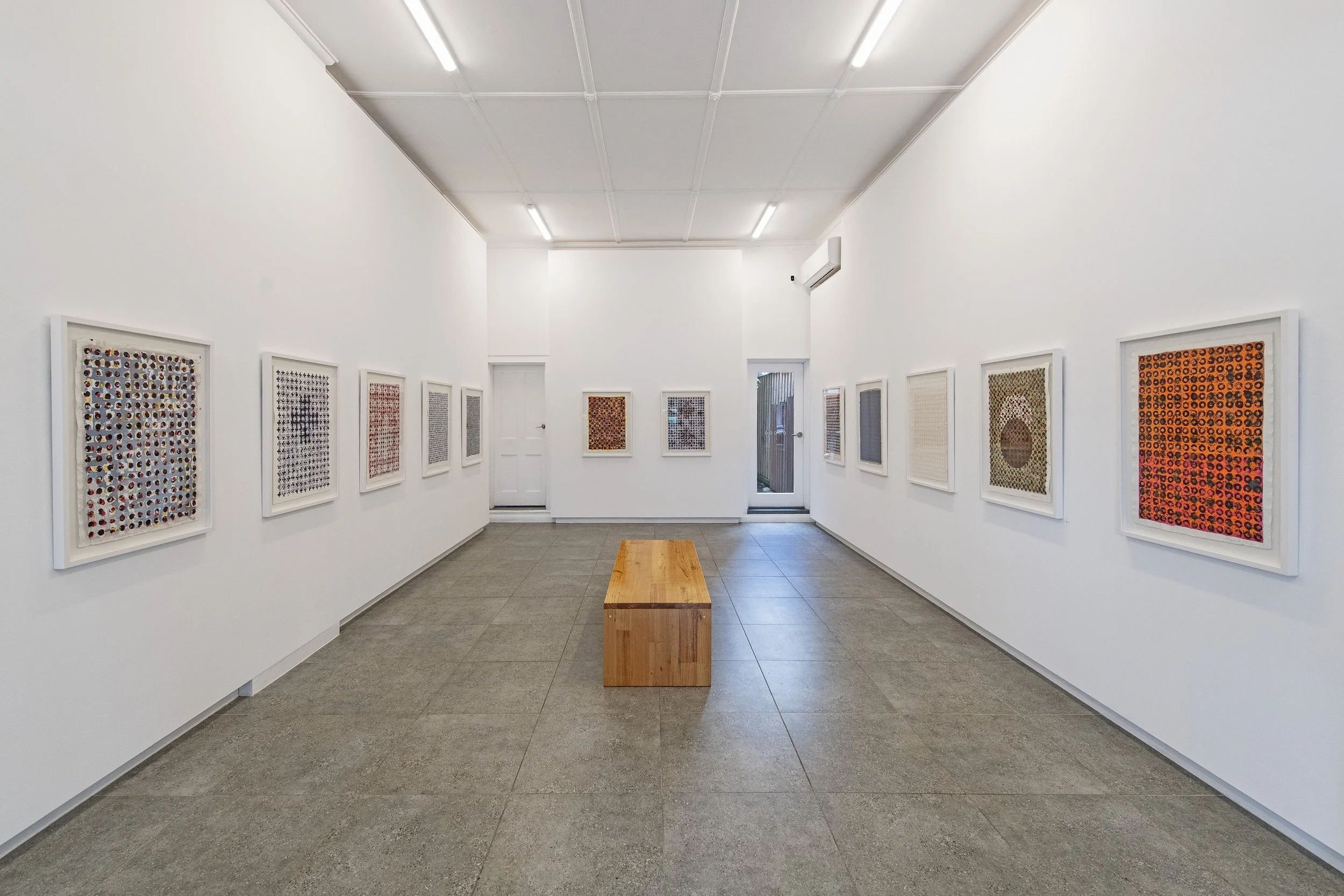
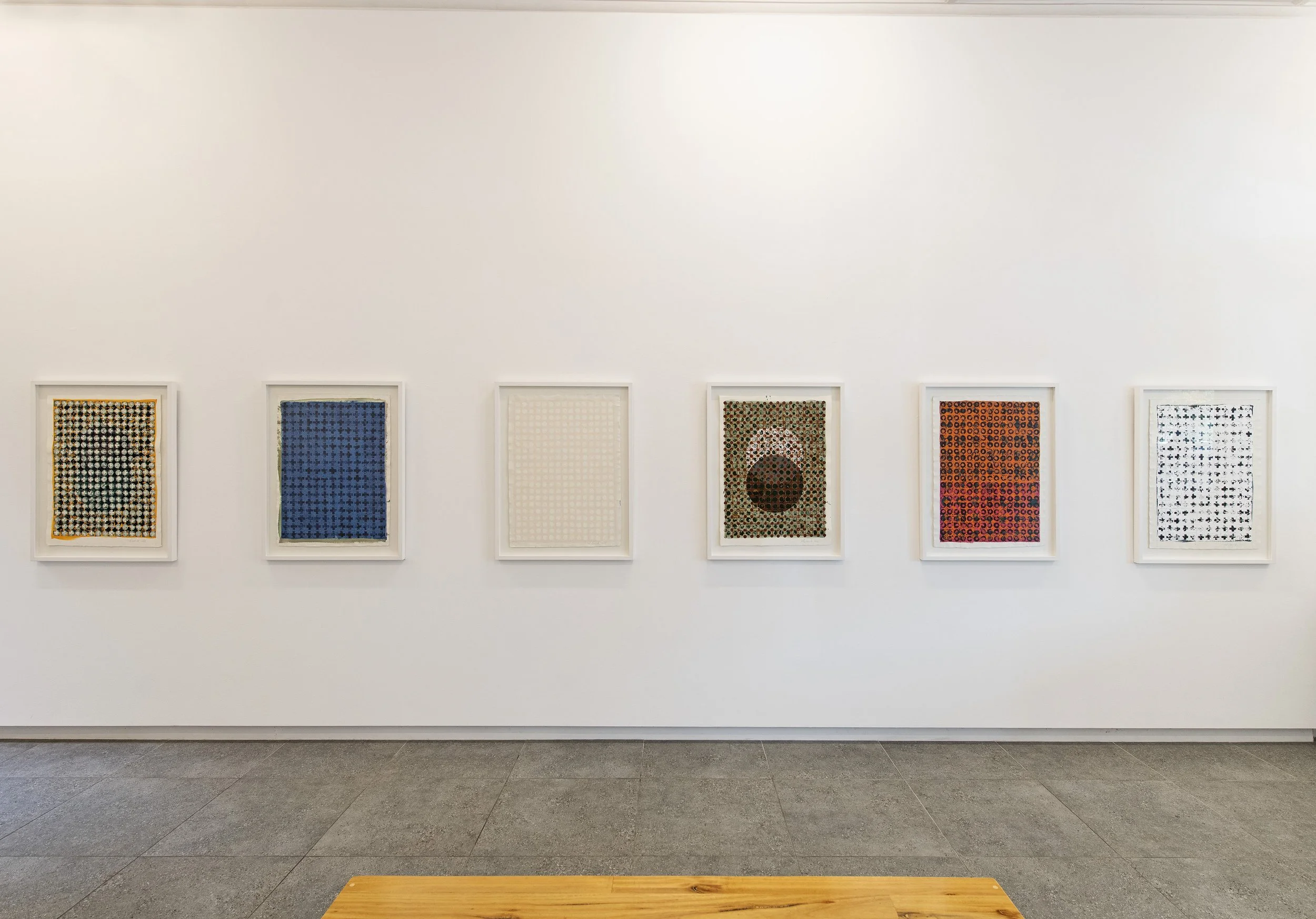
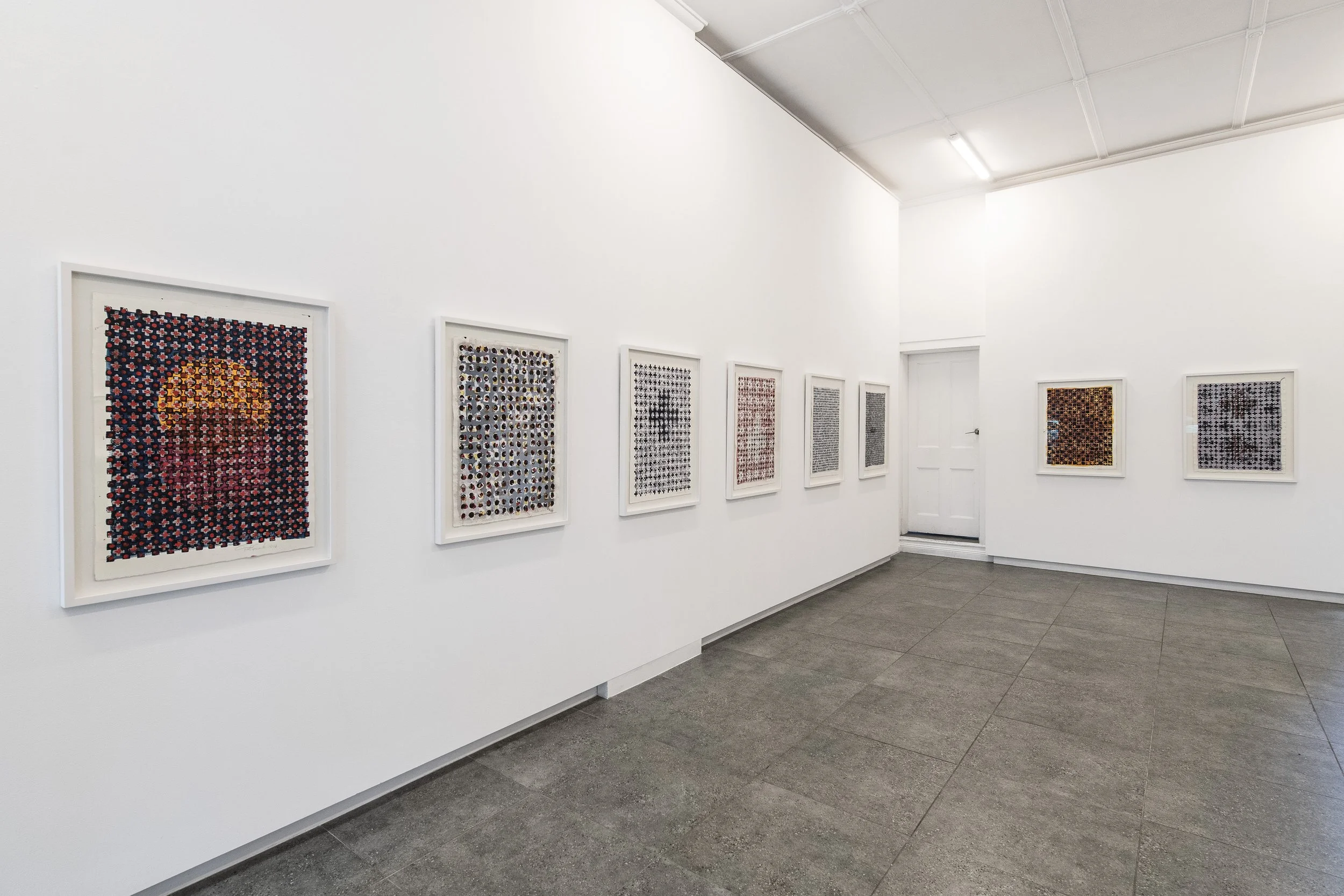
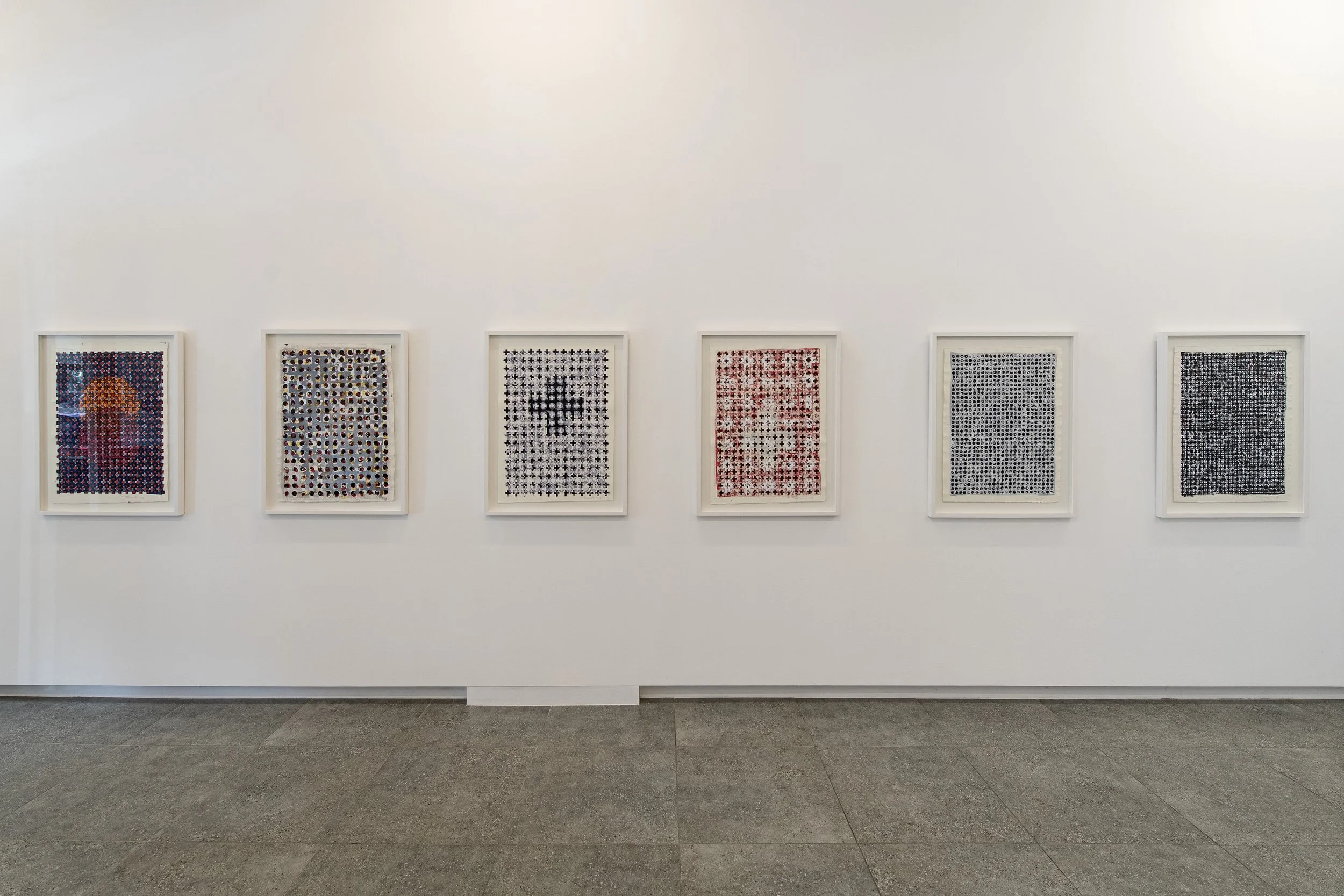
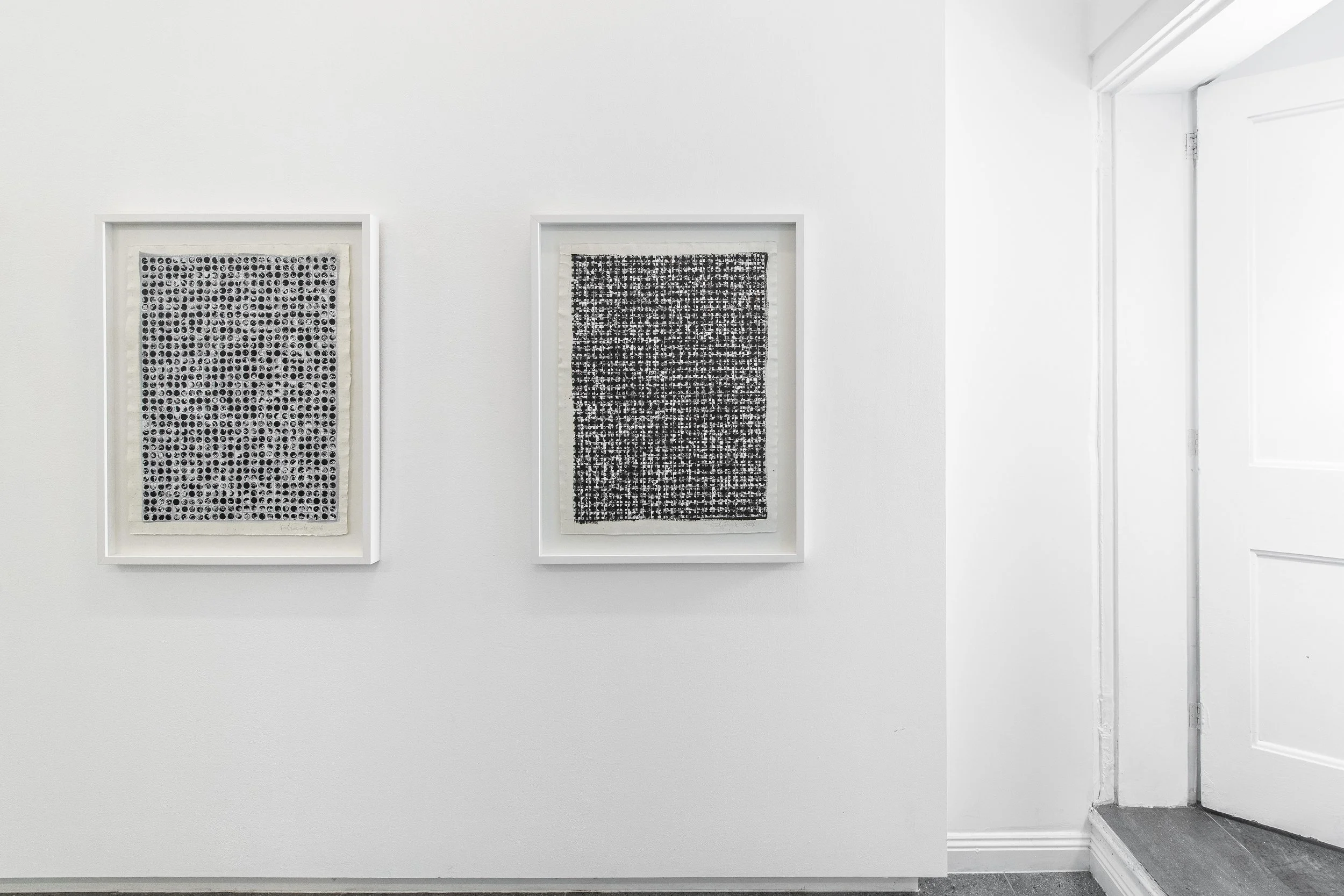
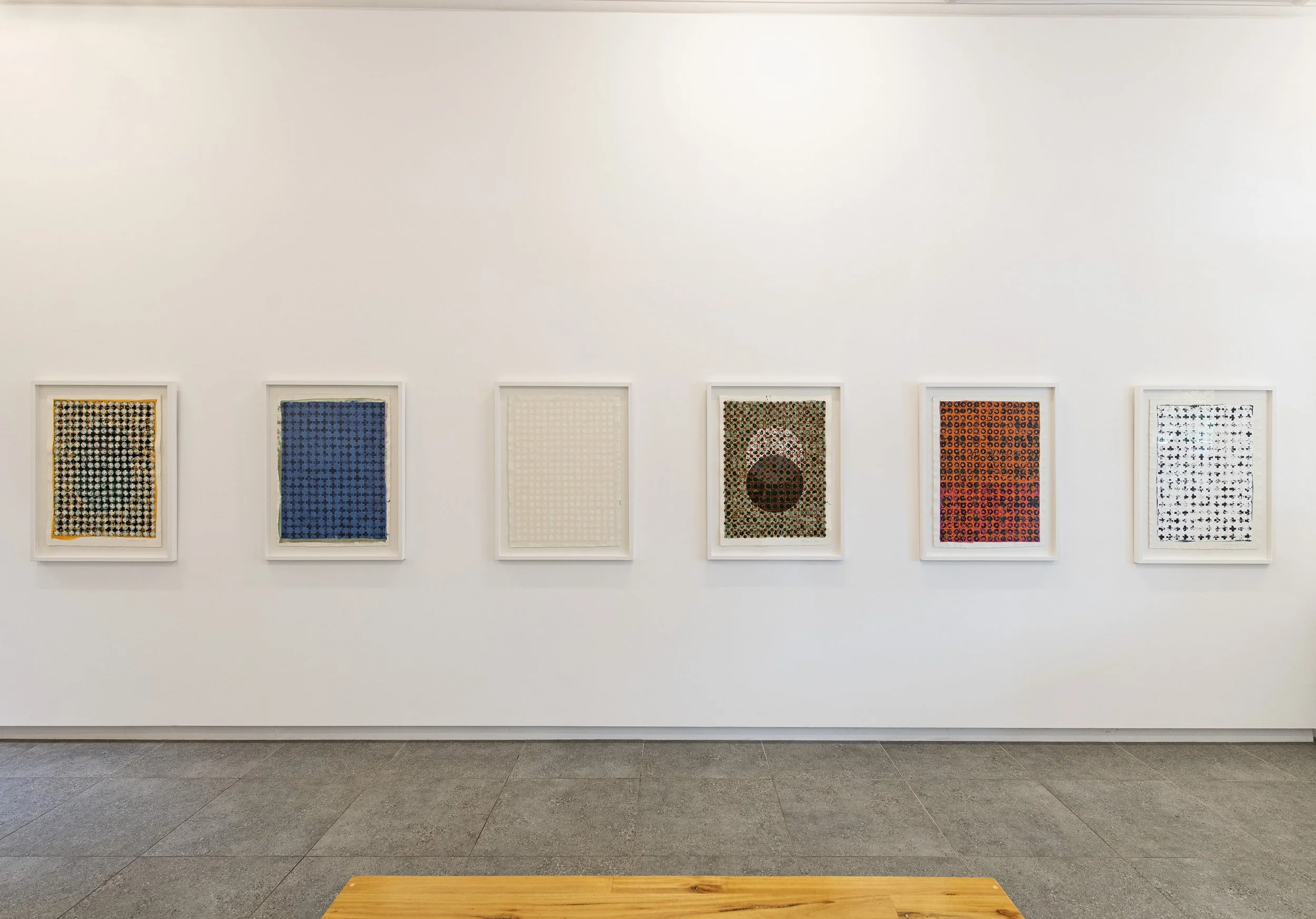
Installation images
Pattern Recognition
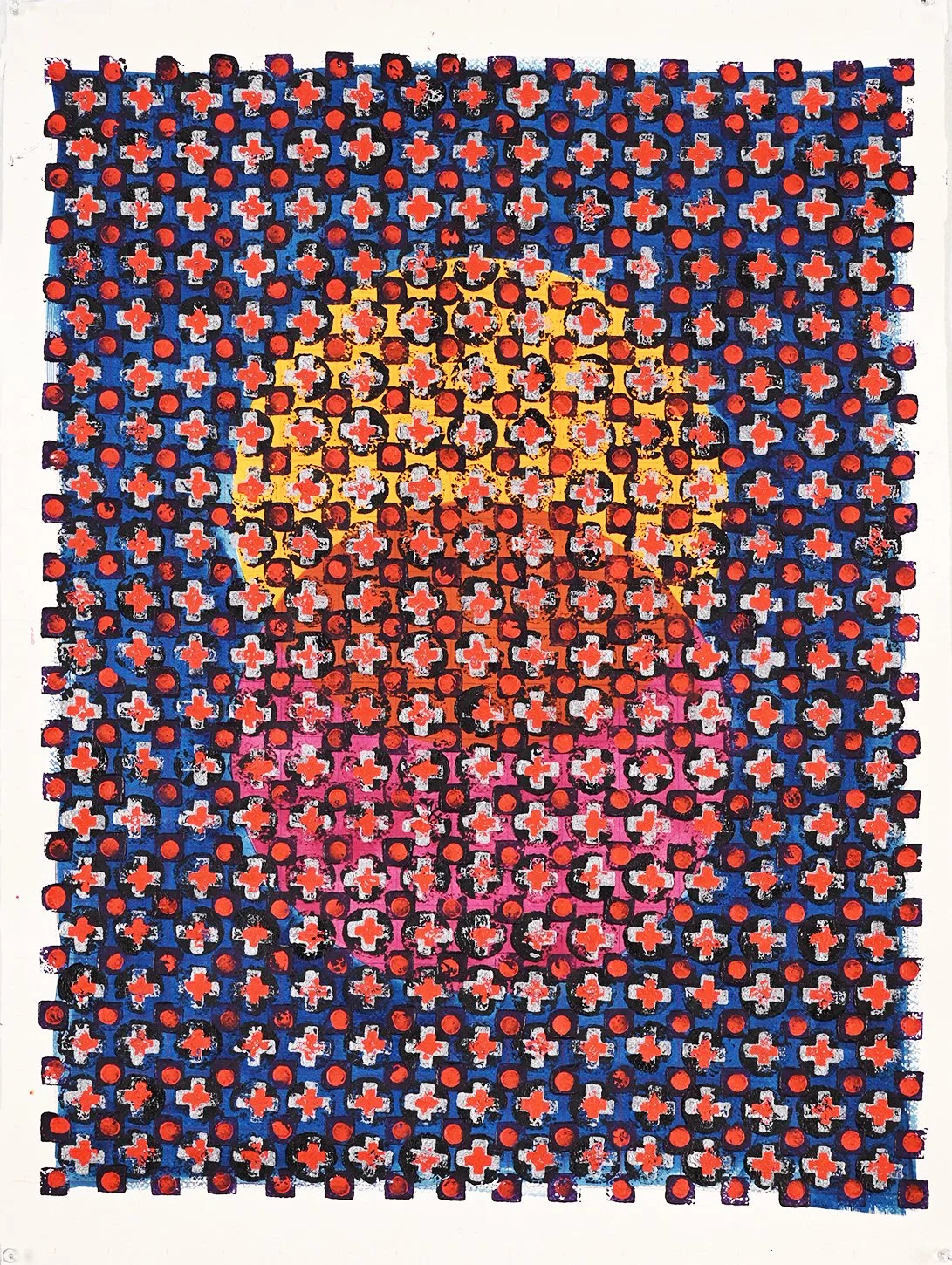
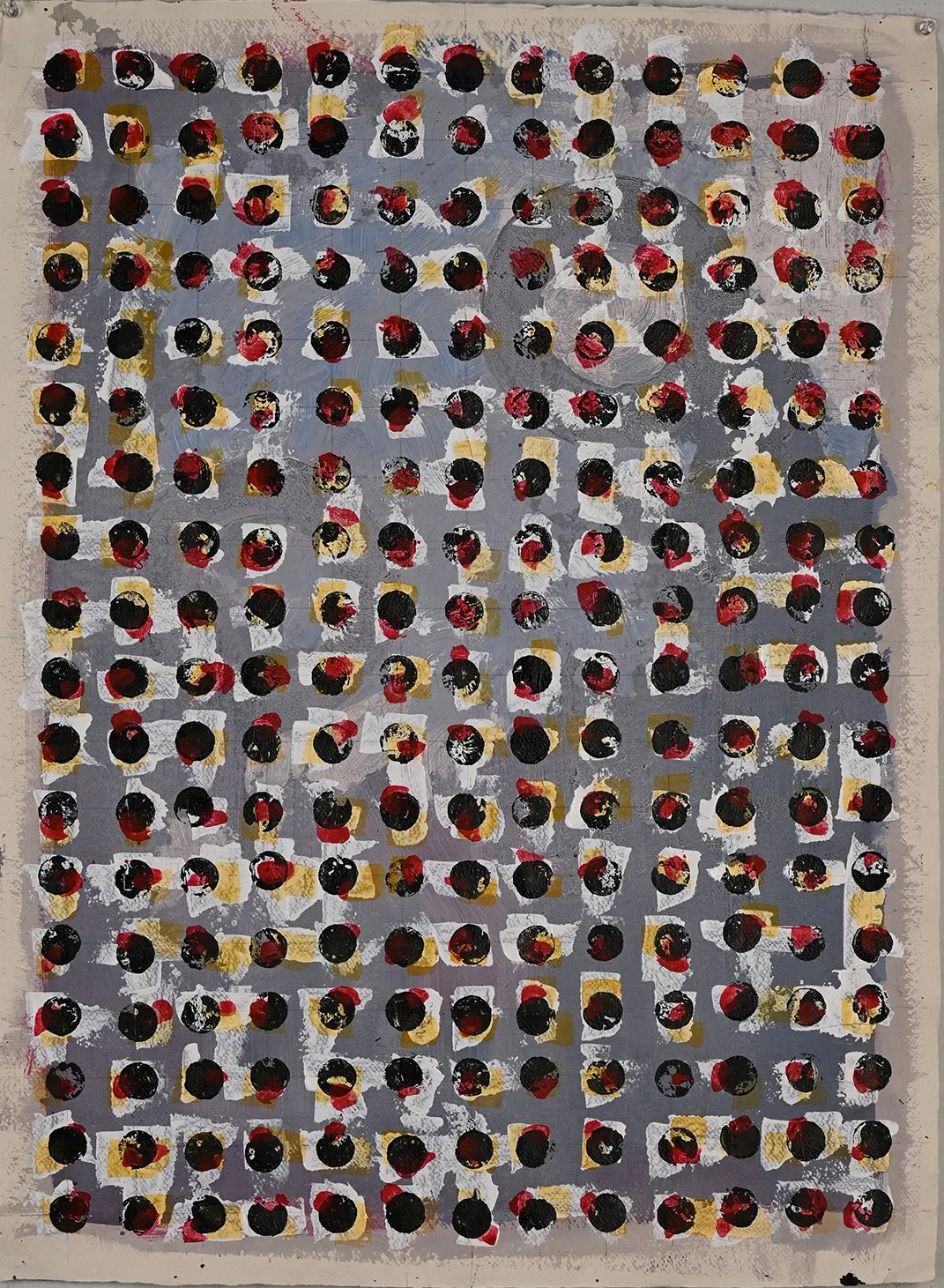
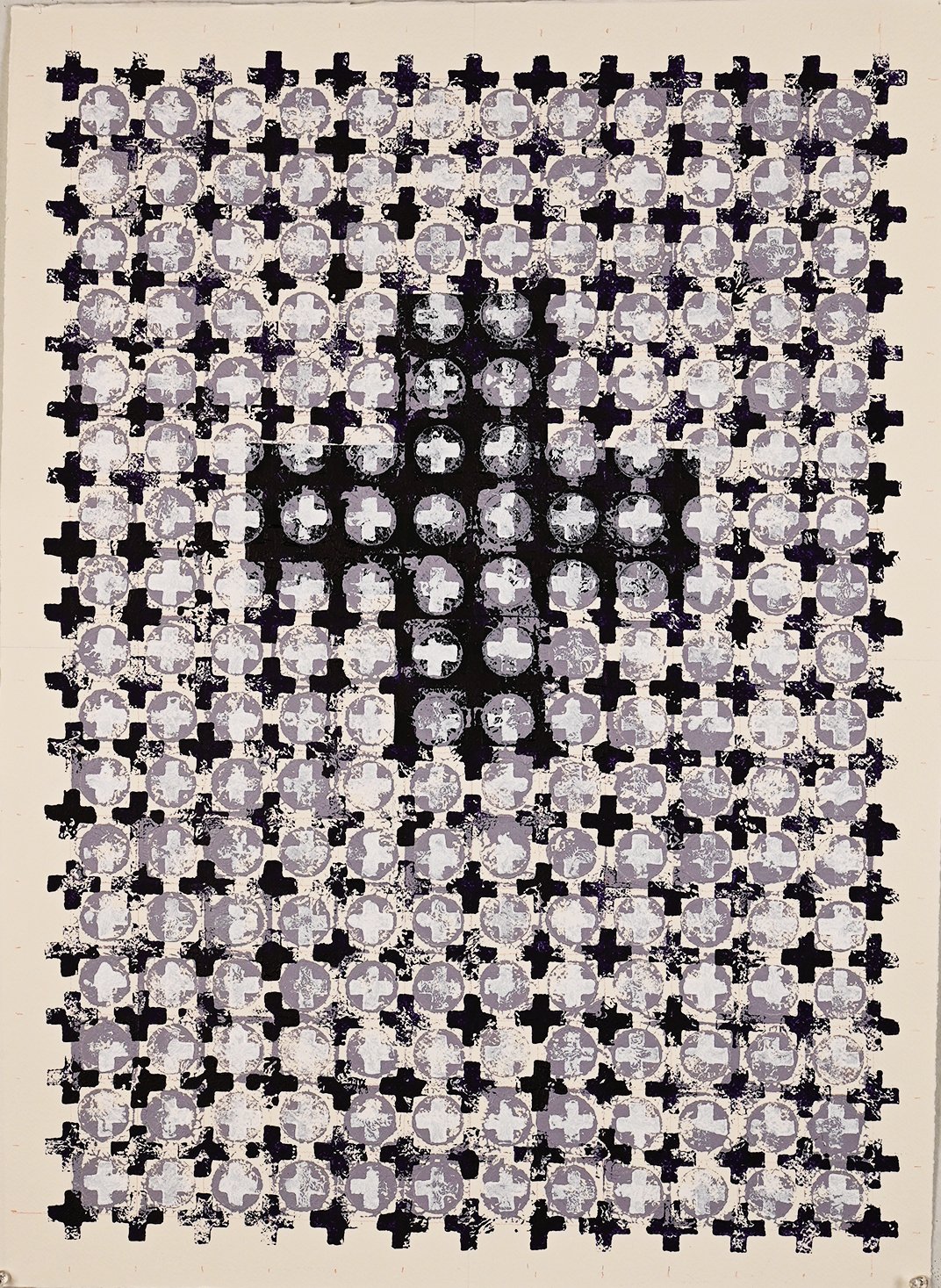
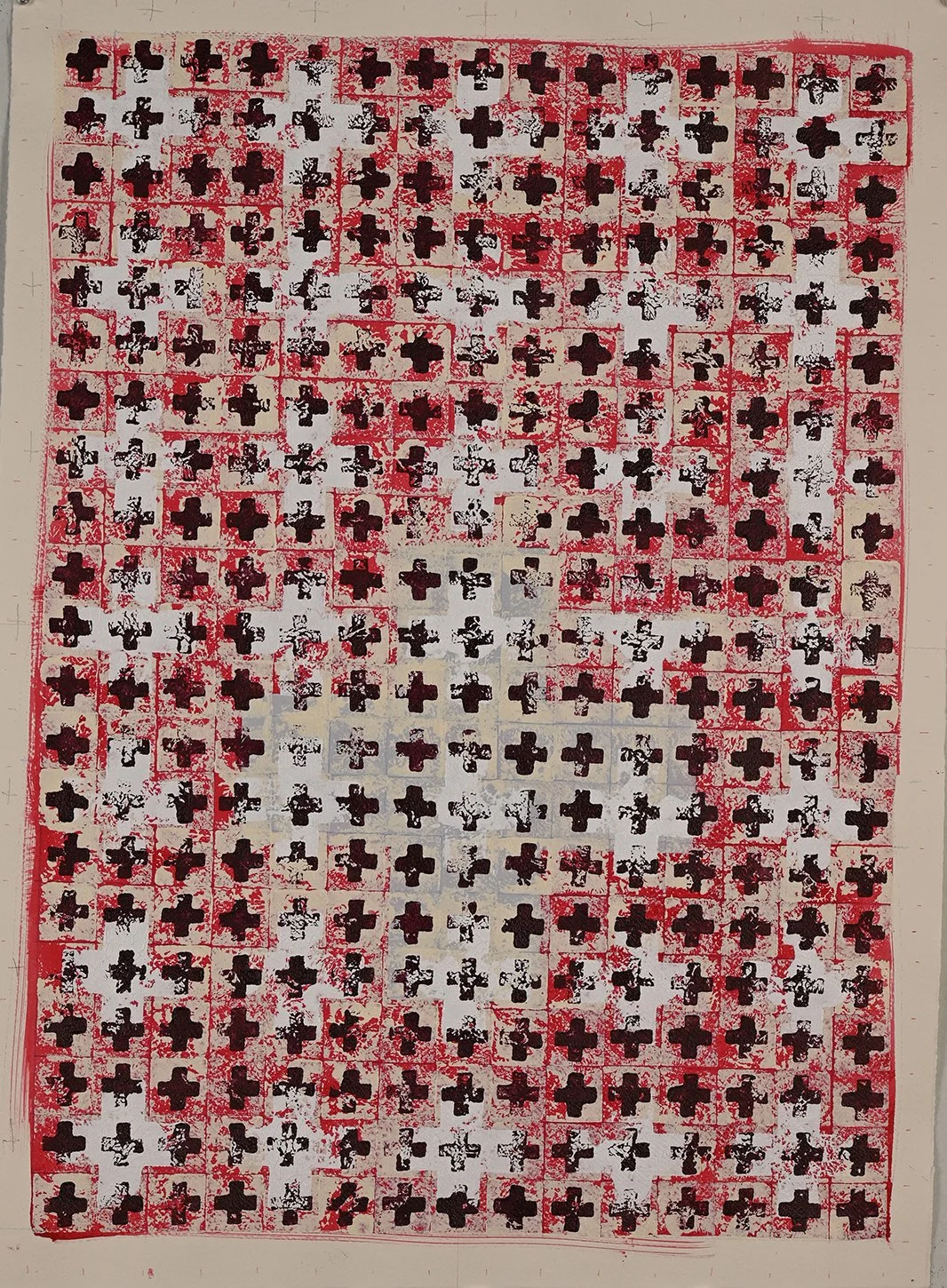
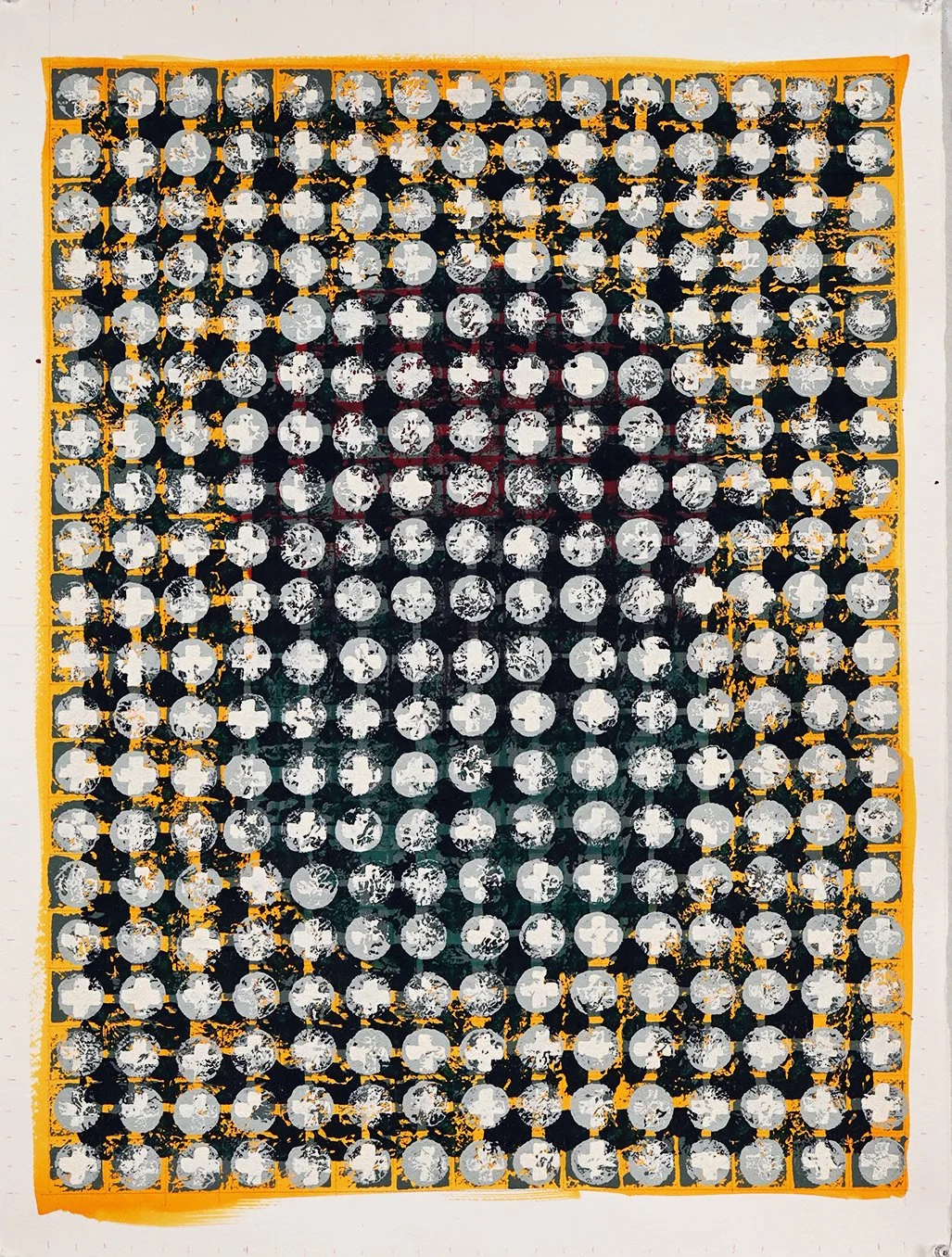
Patterns are a worthy footnote to Paul Newcombe’s paintings and his exhibition Conspiracy of Ravens. Patterns in the everyday and in art provide a ground by which to notate repetition. In contemporary life, pattern recognition determines activity and pathways that anticipate future outcomes. In art, patterning is also critical, but less defined and less inclined to systematic ends.
Take, for example, Persian and Oriental rugs. Their beauty runs tandem to their function, but their common ancestry, their genus, presides over cultures that venerate and represent traditions in graphic form. Rugs are an art, but one that can withstand man’s footprint.
The same qualities of pattern and repetition are seen in Newcombe’s paintings. They have a sound that persists and replays at a frequency that is systematic. It is stylistic. I would think - Motorik, the artist’s beloved Can, is the refined muffle beneath these surfaces. Music is listened to while painting, and the patterns emerging are as assured as the beat that informs them.
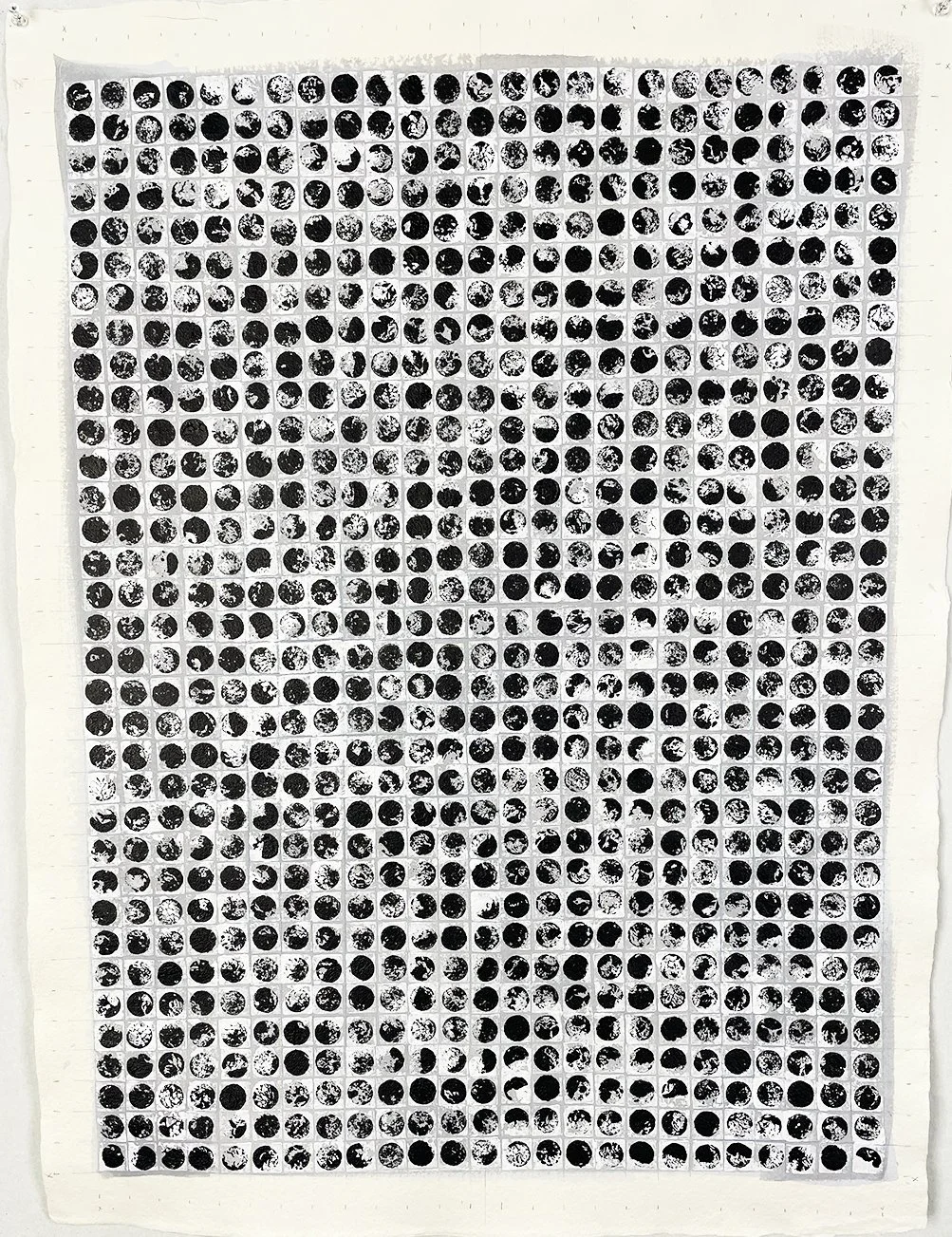
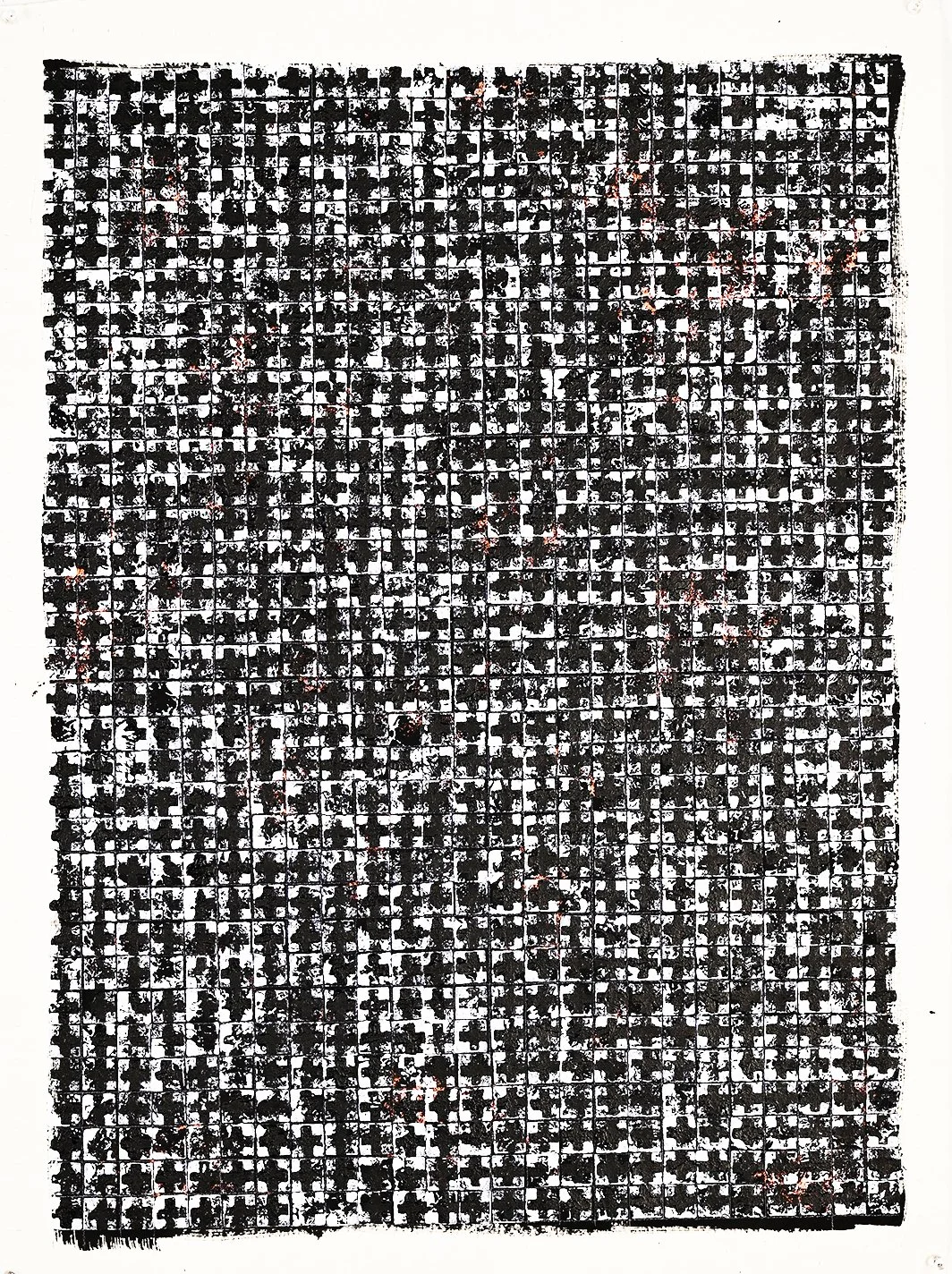
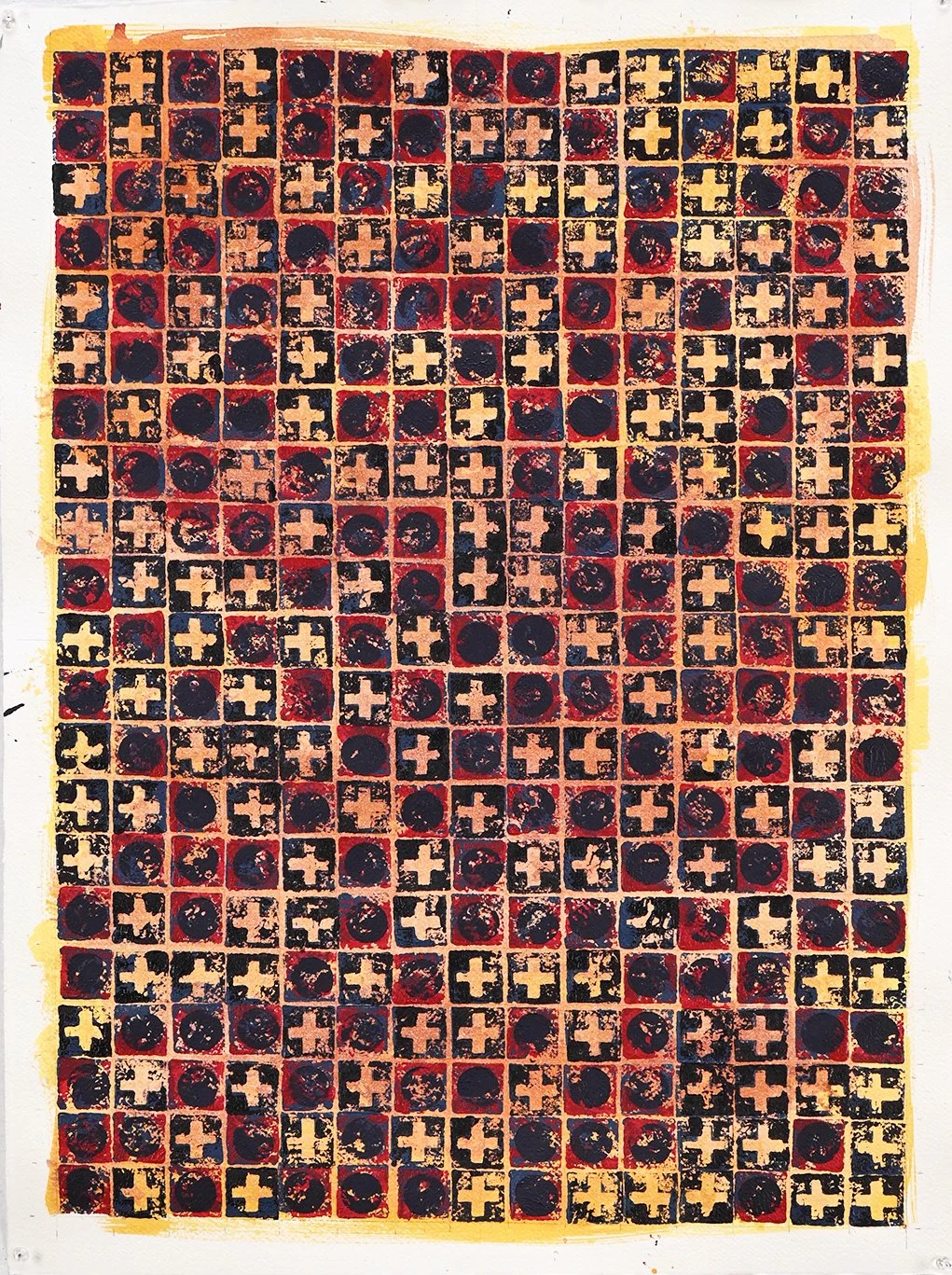
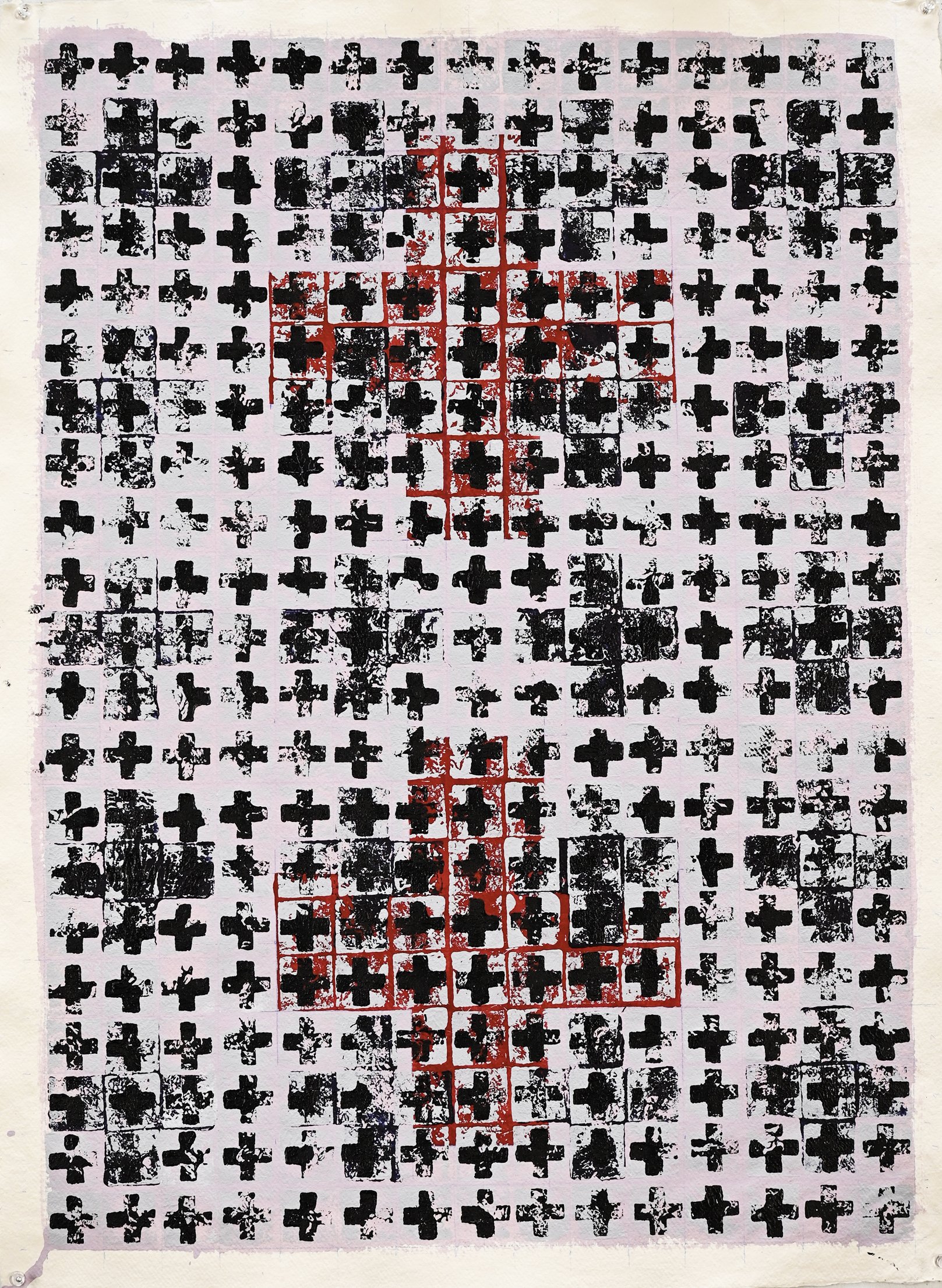
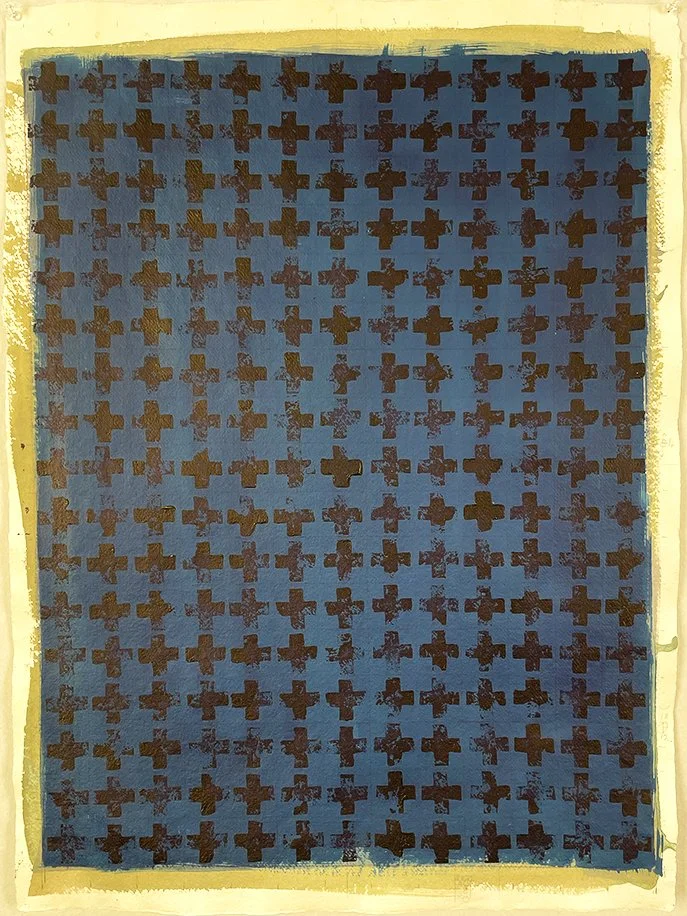
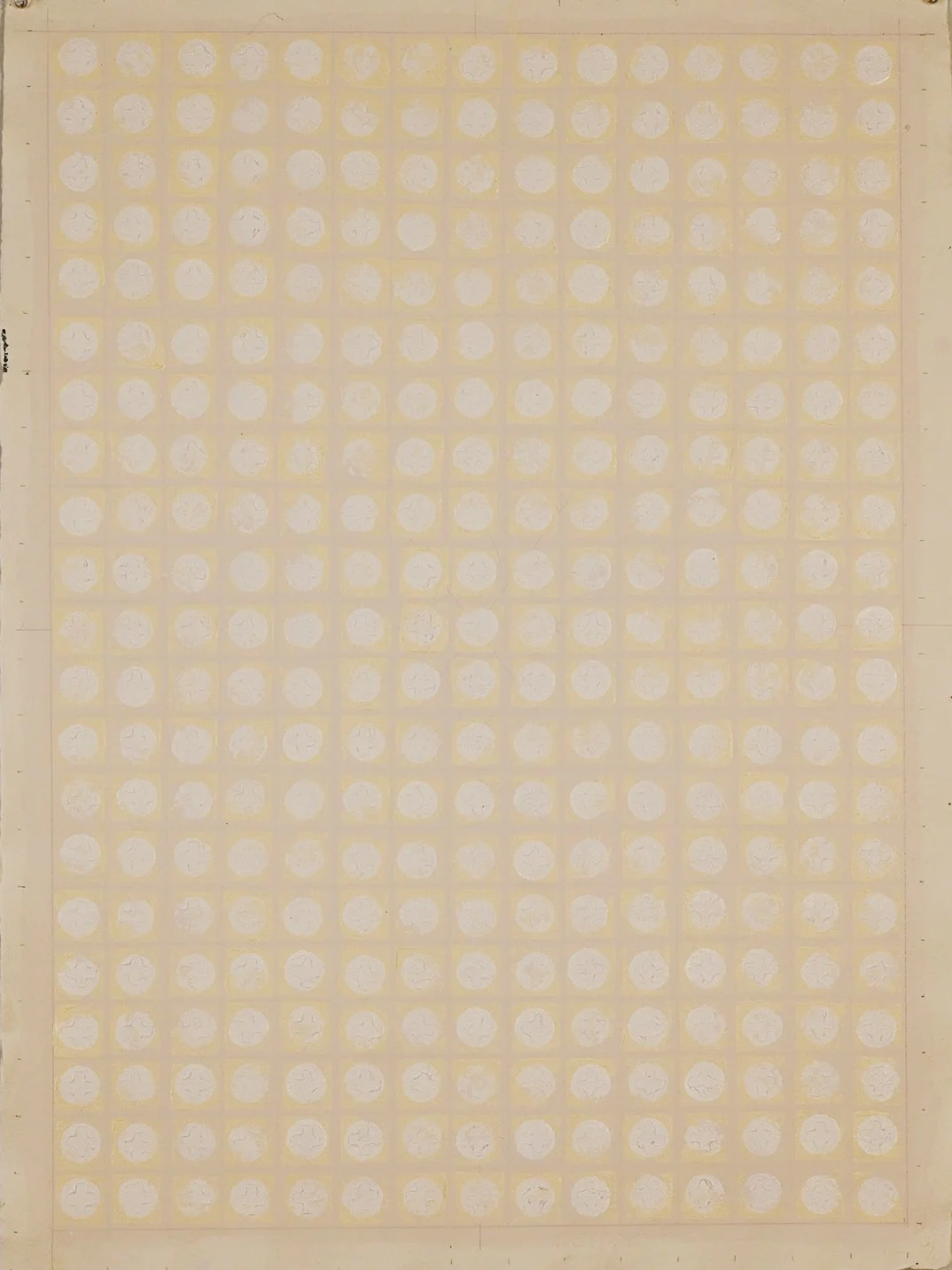
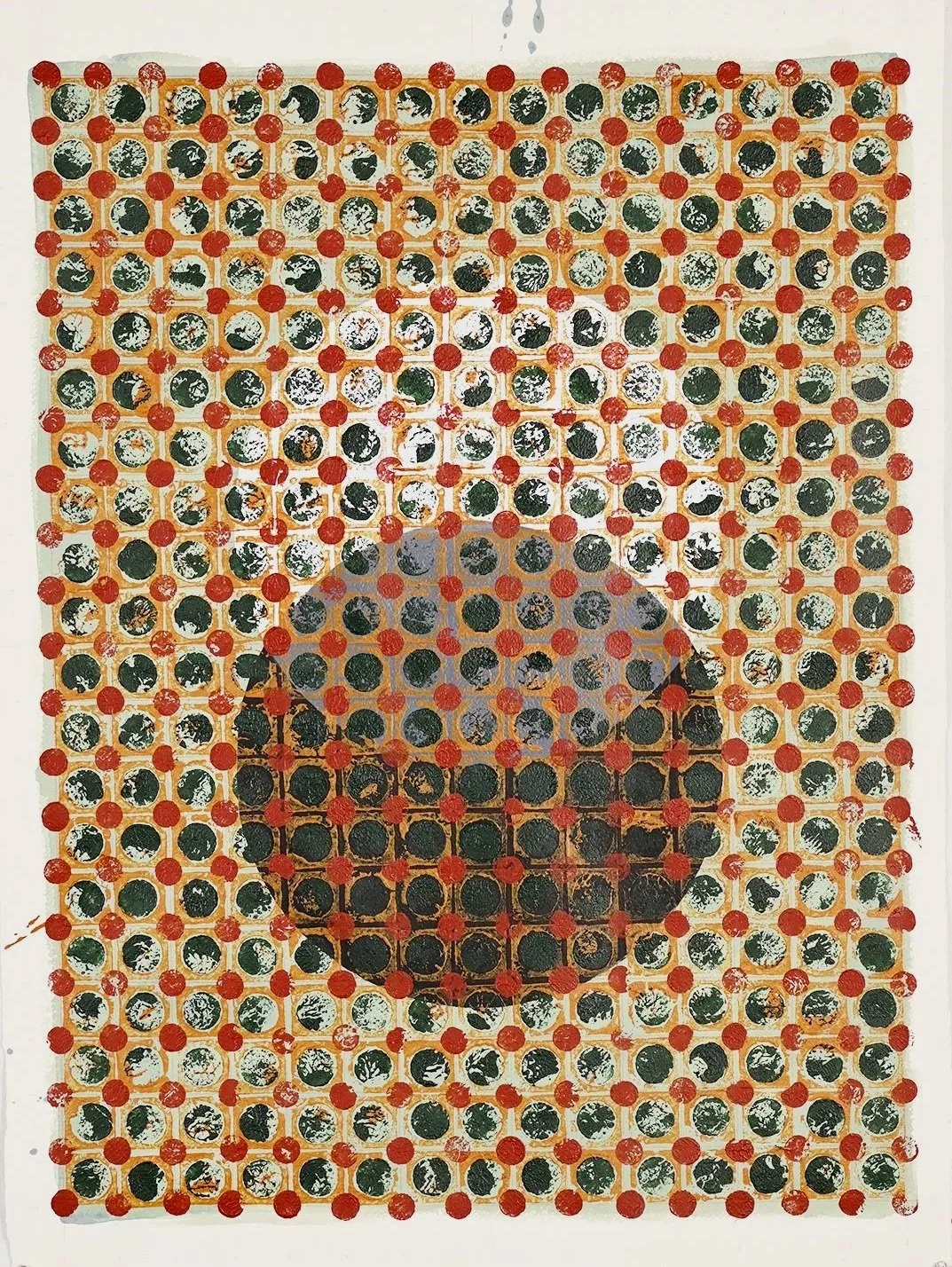
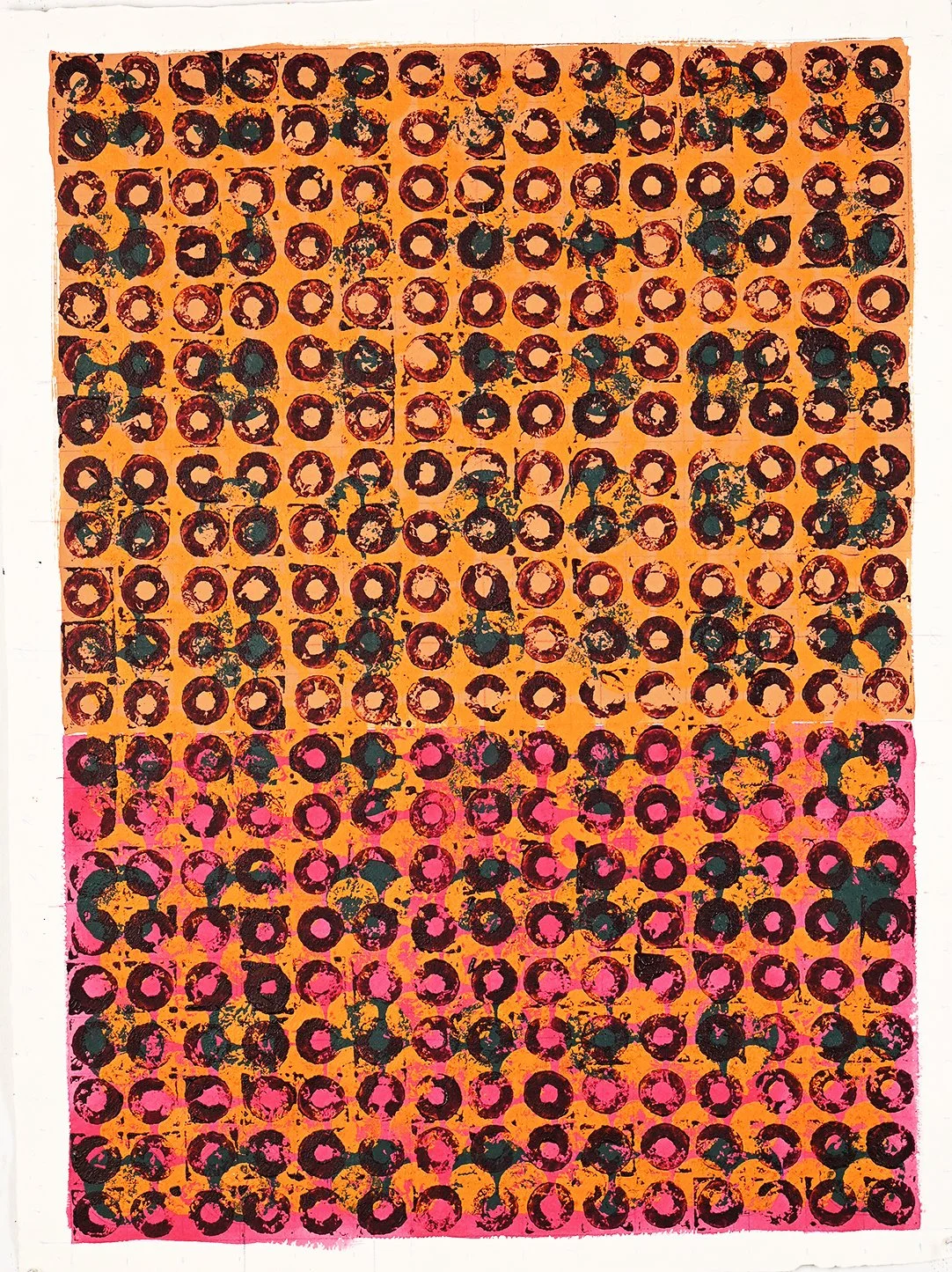
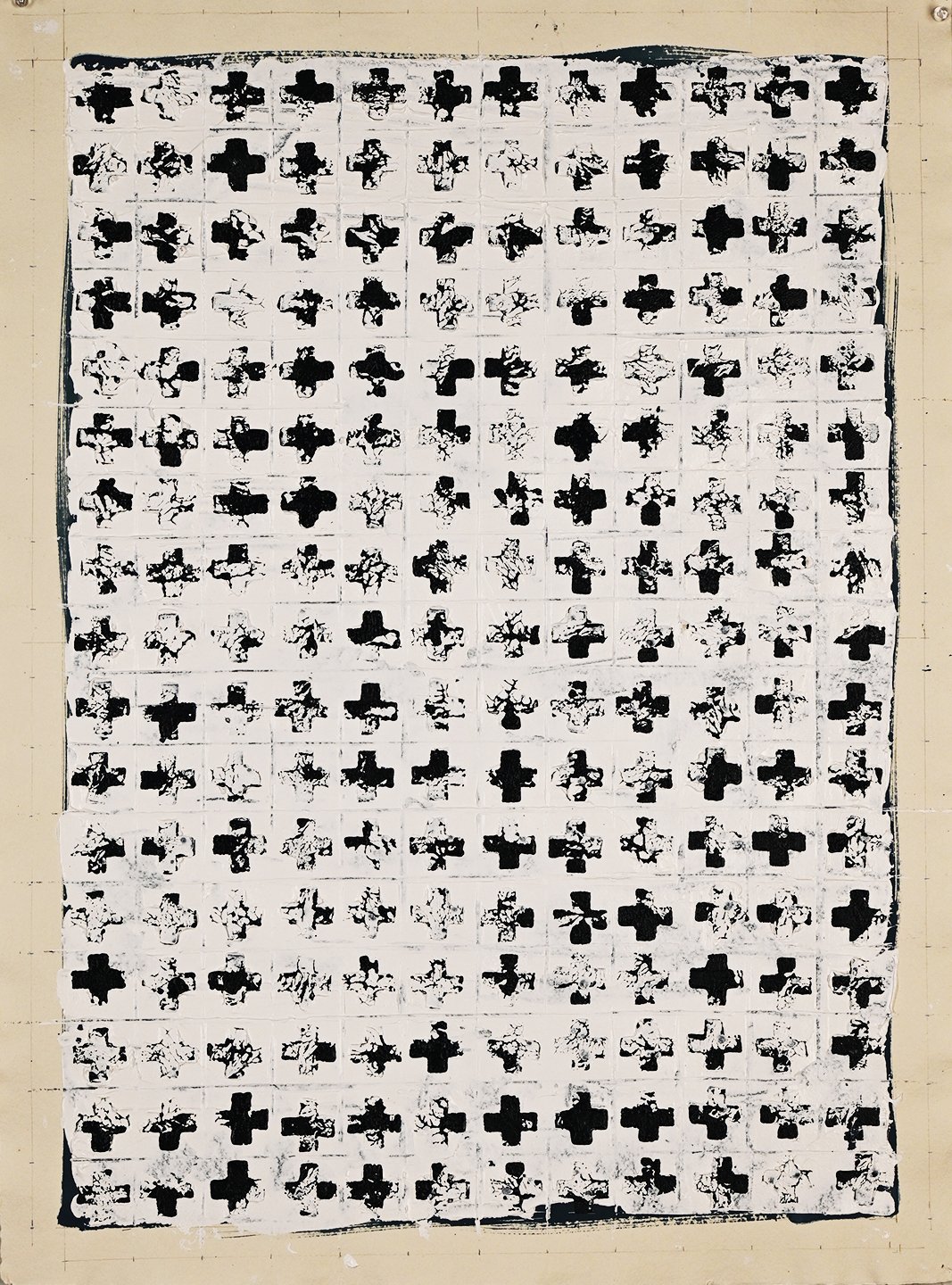
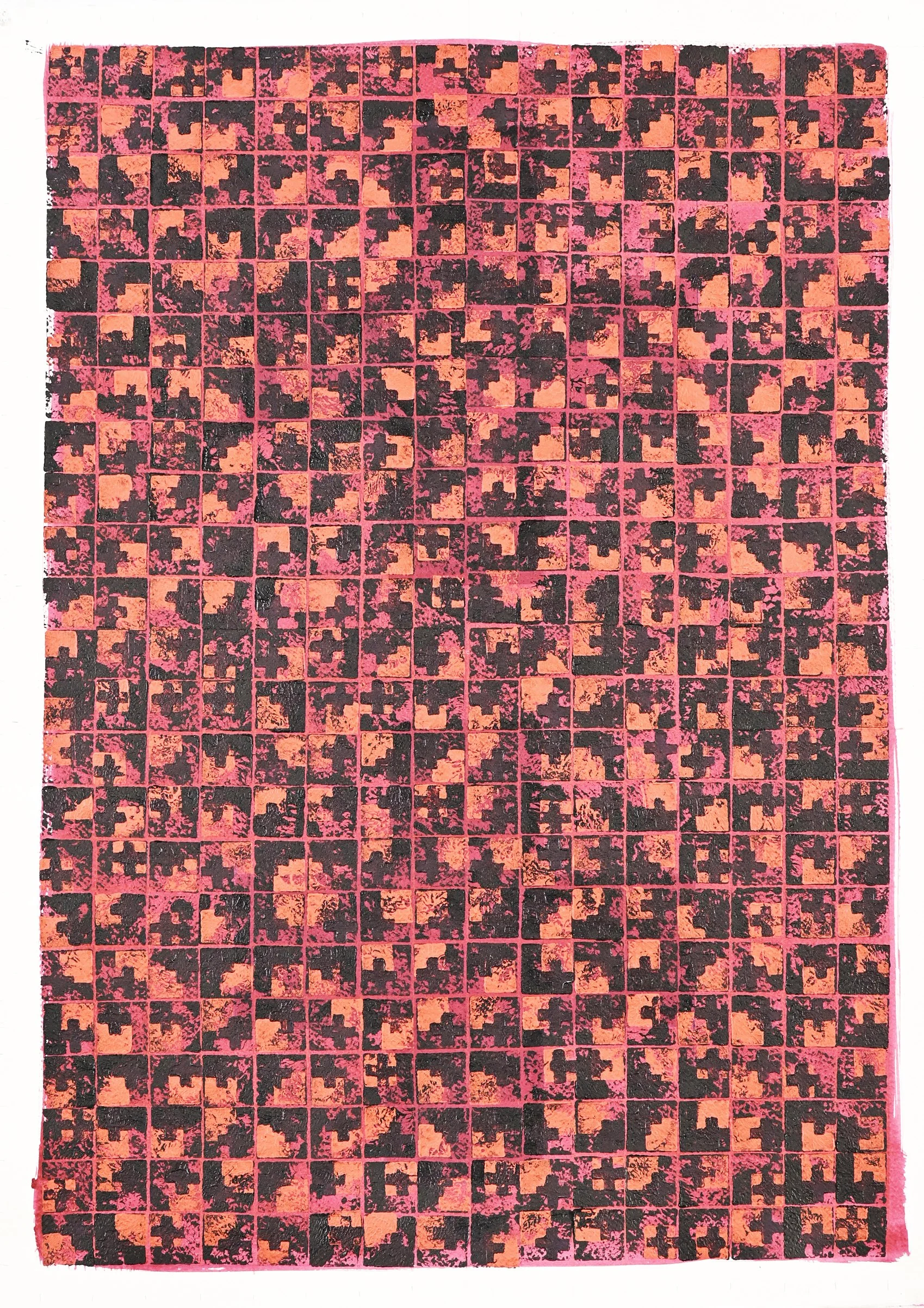
One can only marvel at the intricacies and nuances of the paintings in the series. The sameness of size and the repetition of marks redouble the artist’s efforts to affect an overall symmetry. Newcombe has a long-standing commitment to process painting. There is a degree of conceptualisation to these paintings and a repetition of the grid pattern. Thus, the paintings have a stand-up, wall-painted, trellis-like effect, with a lattice to let light in, and borders loosely edged.
Paul Newcombe’s technique challenges perceptions of abstract painting, but the questions that postwar abstract painting posed remain. At one level, abstract painting appears easy, unencumbered, because appearance is the pursuit of figurative art and relies on recognition. Abstract painting is an uneasy art and if to be successful demands a considered sideways glance and a reasoned take on visuality.
Complexity and sensation are the bywords of this exhibition. Each small square of activity bursts with energy and adds to the greater picture. The world is a wicked place, evinced by Newcombe’s exhibition title and confirmed by our daily reality. Patterns emerge and recede. We grasp each reality and find surety in repetition. It is a resonance that echoes through these paintings, the colour patterns a reassurance, enlivened with light that takes us on a complex journey.
Brett Ballard
Brett Ballard is formerly Head of Art at Menzies Art Brands, Sydney. Prior to joining Menzies, Brett held the position of Senior Specialist, Art, at Sotheby’s Australia (Smith and Singer) for 10 years and was previously Gallery Manager at Rex Irwin Art Dealer in Sydney between 2003 and 2011. Brett works closely with clients, consulting on collection management and the buying and selling of art in the secondary market and at auction. He is an experienced curator who advises on all aspects of collecting both in Australia and abroad. Brett has published numerous articles and has written extensively on art for catalogues and exhibitions.
Q&A with Paul Newcombe
BP: Your work begins with the grid, but it never feels fixed. What happens to that structure over time?
PN: The grid is where every piece begins; it sets the logic of the work in motion. From there, each painting finds its own path. In some works, the grid is gradually submerged beneath layers of the handmade stamps and colour; in others, it holds firm, asserting itself through to the finished surface. Often there's an underlay of paint before the grid is even established, so the structure is already in dialogue with something looser from the very start.
BP: The repetition feels bodily rather than mechanical. How conscious are you of the physical act of mark-making as the work accumulates?
PN: Entirely conscious as it's inseparable from the work. The stamp becomes an extension of my body, and the rhythm of applying marks is as much the subject as whatever appears on the surface. I work in series, and this exhibition represents roughly two years of sustained development. Before any finished piece, there are months of pre-works and drawings that refine both the idea and the physical gesture. By the time I come to a painting, the mark-making carries real knowledge in it.
BP: Each unit resists standardisation. Are you seeking variation, or does that instability emerge on its own?
PN: Both, but I do push it deliberately. I might produce a small run of works with a shared intention, then consciously force a shift, a change in the density, the scale of the mark, the colour logic. I'm constantly drawing alongside the paintings, and those drawings are where I test new directions. Every finished work has preliminary drawings behind it. The variation is pursued, but always within the discipline of the series. The intent stays, the look evolves.
BP: What role does duration, or even exhaustion, play in the work?
PN: Duration is built into the process. Each piece in this series took around seven days, and most carry more than ten layers of paint. I work on several pieces simultaneously, so there's a sustained immersion. Over time, you become deeply competent at the process, and paradoxically, that's usually the signal to stop. When the making becomes too fluent, too easy, the work risks tipping into mere repetition. The end of a series arrives when mastery threatens to replace discovery.
BP: Your motifs hover between sign and noise. Do you resist meaning, or does it dissolve through repetition?
PN: I don't resist meaning so much as refuse to assign it. The cross has been part of my vocabulary for many years — it's a shape that inevitably conjures associations, but I work with it free of ideology. What interests me is its formal character: the intersection, the symmetry, the way it occupies space. The circle is the purest form I know, and I love the quality of mark it produces. Squares help define the grid. These three motifs are all I use. Through repetition, they shed their symbolic weight and become something closer to pure visual experience.
BP: In the darker works, the grid reads as unified at a distance but breaks apart up close. What happens in that shift?
PN: That shift is central to the work. I build in a level of detail that can only be discovered at close range, so that it rewards sustained looking. The darkness itself comes through colour choices and the sheer density of accumulated marks, and it's always deliberate. I want the work to function on both registers: as a cohesive field from a distance, and as a complex, almost teeming surface when you step in close.
BP: The repeated cross carries historical weight. At what point does returning to it risk becoming habit?
PN: I consciously avoid any contextual or symbolic reading of the cross. My work is pure abstraction. I'm not making philosophical or religious statements as the cross is a shape, nothing more. The risk of habit is something I guard against through the series structure itself: once the making becomes automatic, the series ends, and I move on.
BP: Working on paper exposes hesitation more directly. How does the material shape or limit your decisions?
PN: I love paper for its immediacy. Paint behaves differently on paper, there's less forgiveness, which means every mark carries a certain sureness and finality. That directness is what draws me to it. You get an instant definition that canvas doesn't offer in the same way. Rather than limiting my decisions, paper sharpens them.
BP: In the studio, how do you pace a work, continuous, or built through intervals?
PN: It's built through intervals, partly by necessity. After applying a layer of colour, I need to leave it for around twelve hours before laying the next round of marks. That's one reason I always have several works in progress at once. The enforced pauses become part of the rhythm as each return to a piece brings fresh eyes and a slight distance, which keeps the decision-making alert.
BP: For someone living with one of these works, what continues to unfold over time?
The work keeps revealing itself. There's a hypnotic quality to the surfaces, and the repetition draws you in. The longer you look, the more the layers and subtle variations come forward. I think you discover the true complexity of the work gradually, over weeks and months of living alongside it. It doesn't give everything up at once, and that's by design.