OPUS FICTILE : BIANCA BRZEZEK, GUNDARS LUSIS, PAMELA MILLER
29.11 – 20.12.25 RE-OPEN 14.01.26 - 31.01.26

Opus Fictile
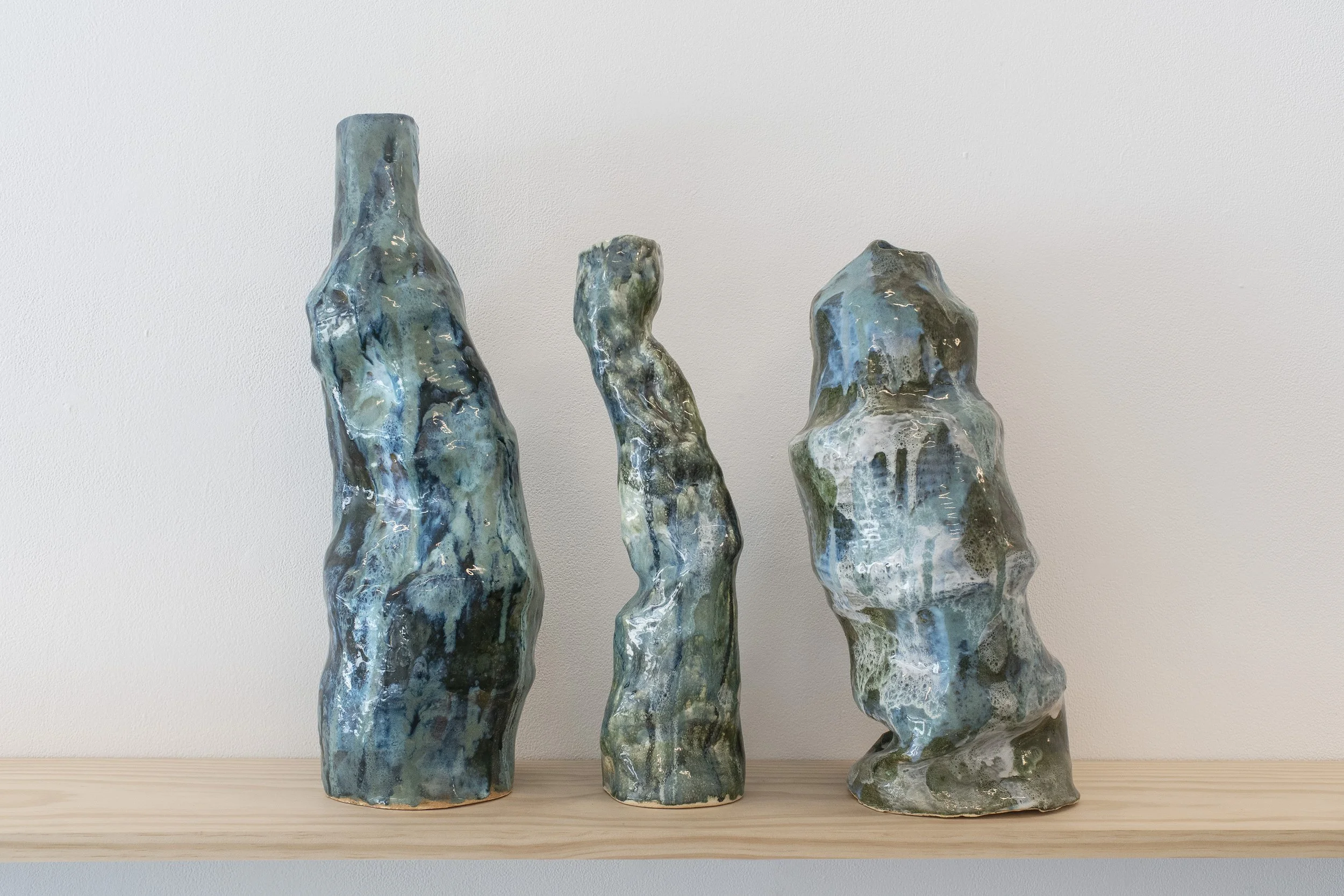
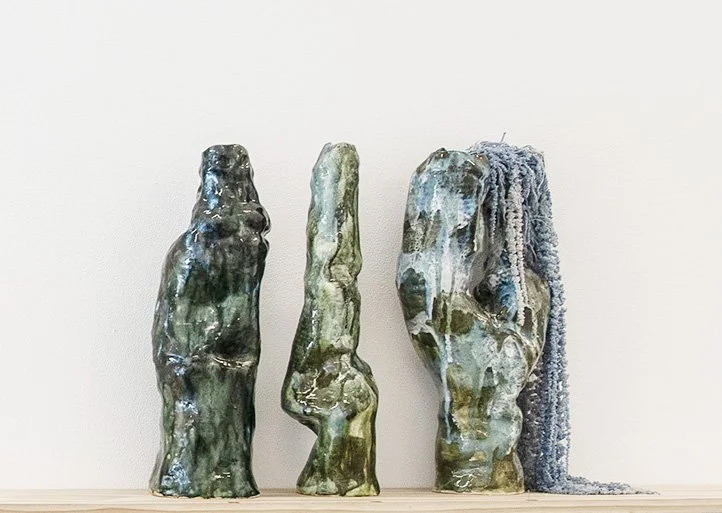
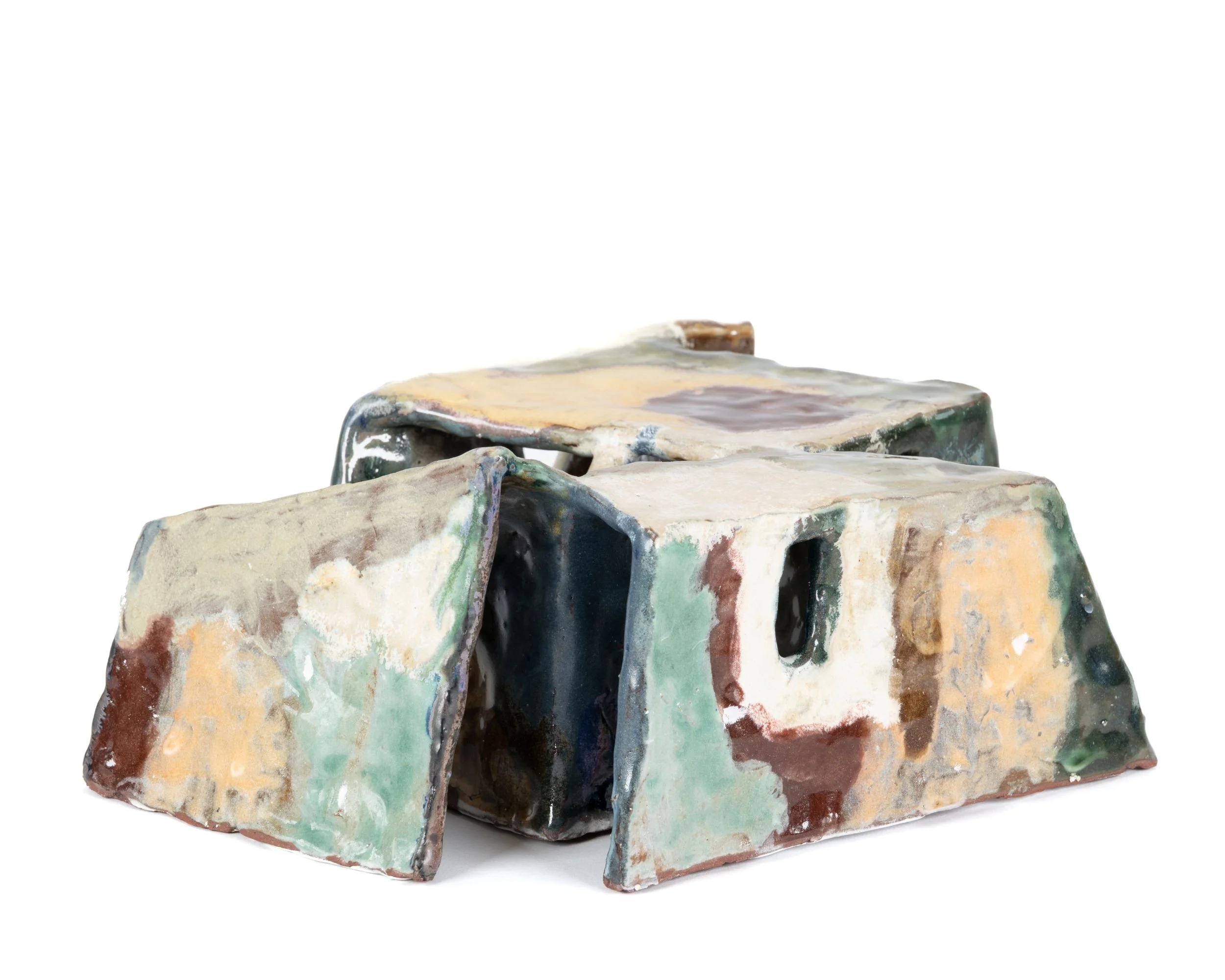
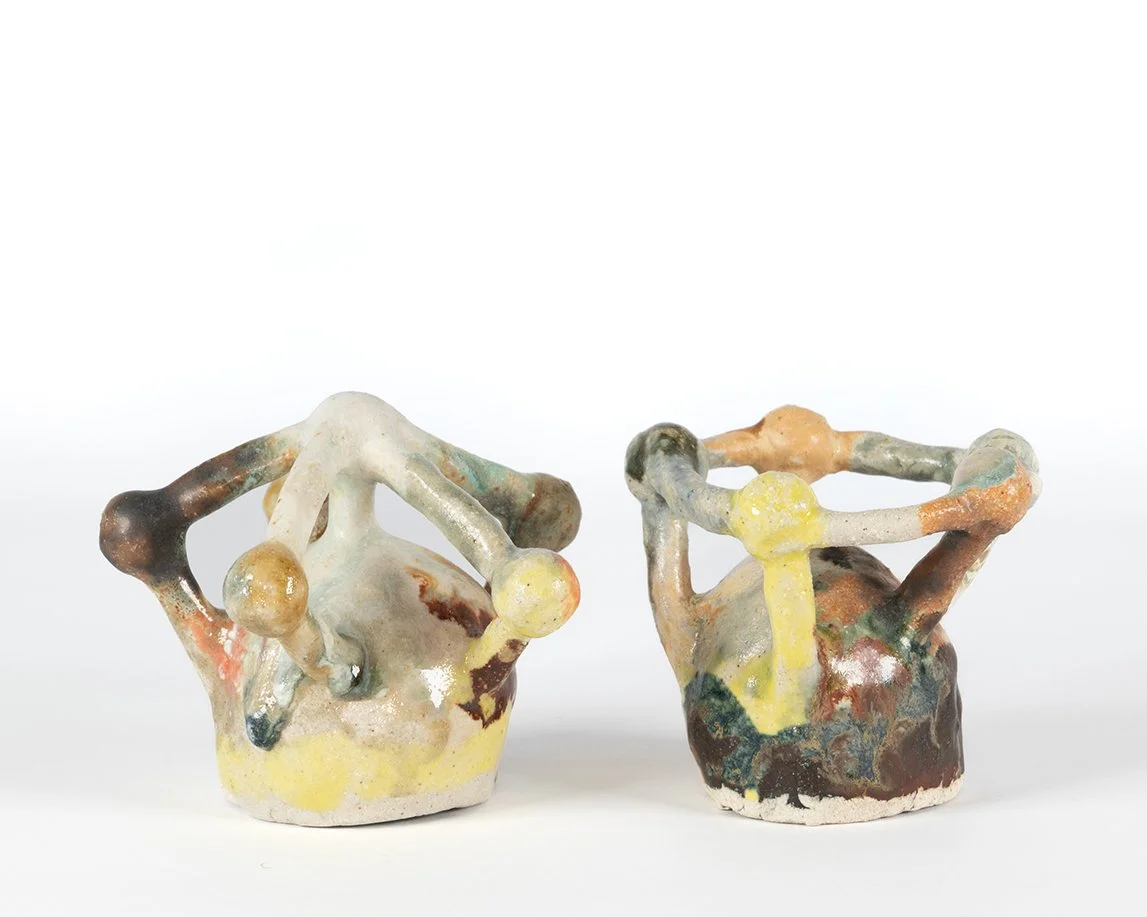
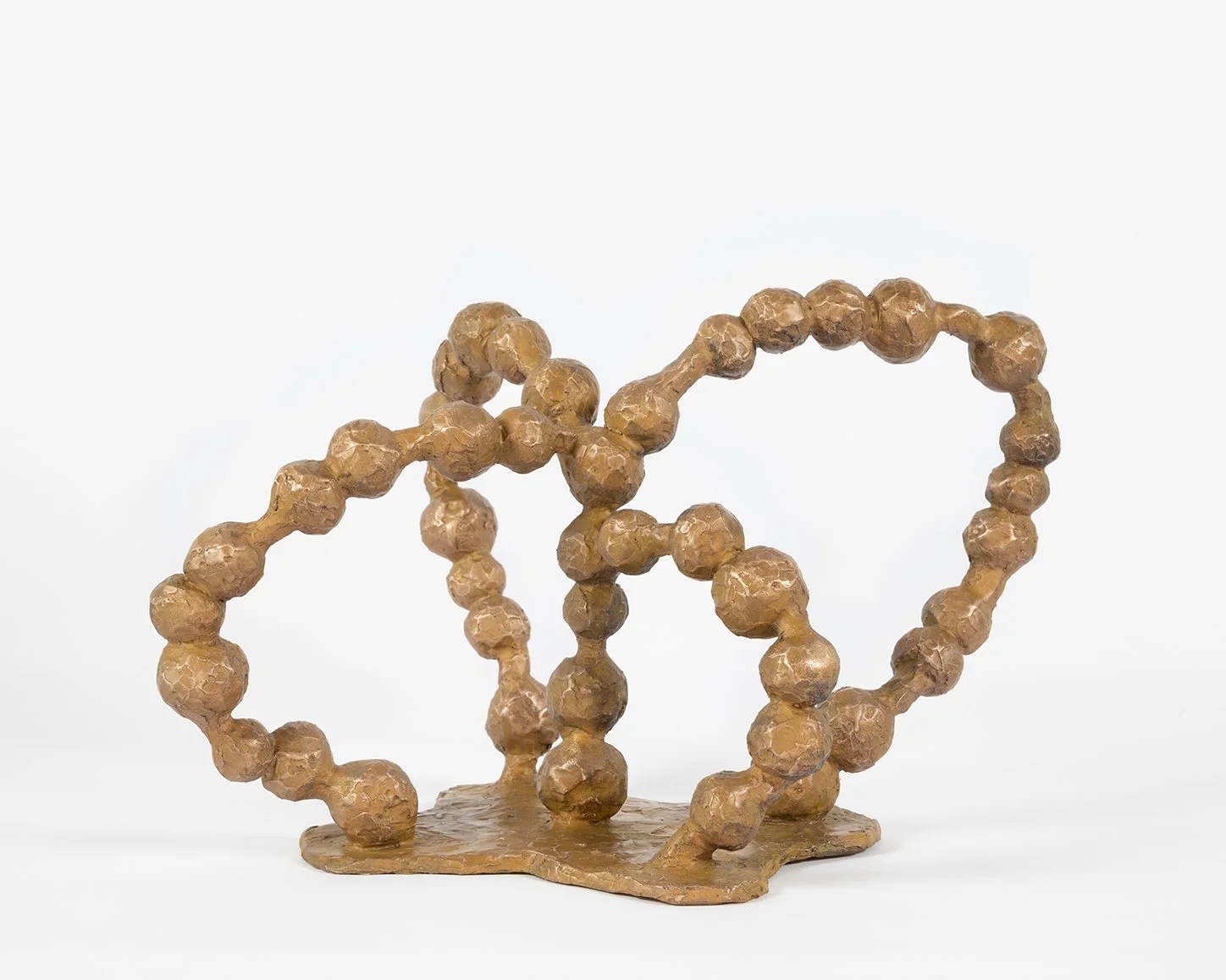
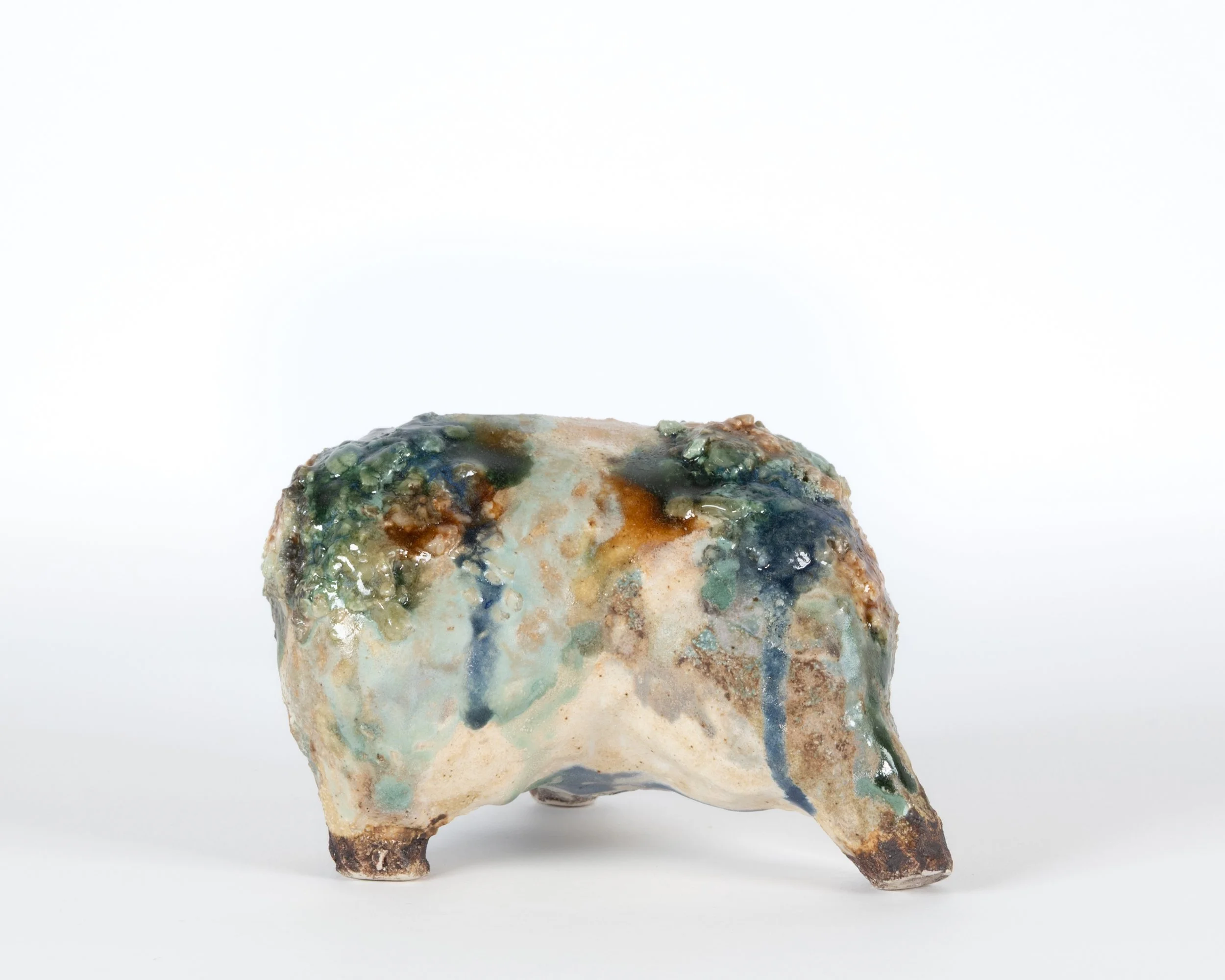
Opus Fictile brings together Gundars Lusis (1928–1996), Pamela Miller, and Bianca Brzezek; three artists connected by their instinctive understanding of clay as both material and idea. From postwar modernism to today’s renewed interest in the handmade, the exhibition traces how form, colour, and touch continue to evolve through this most ancient medium.
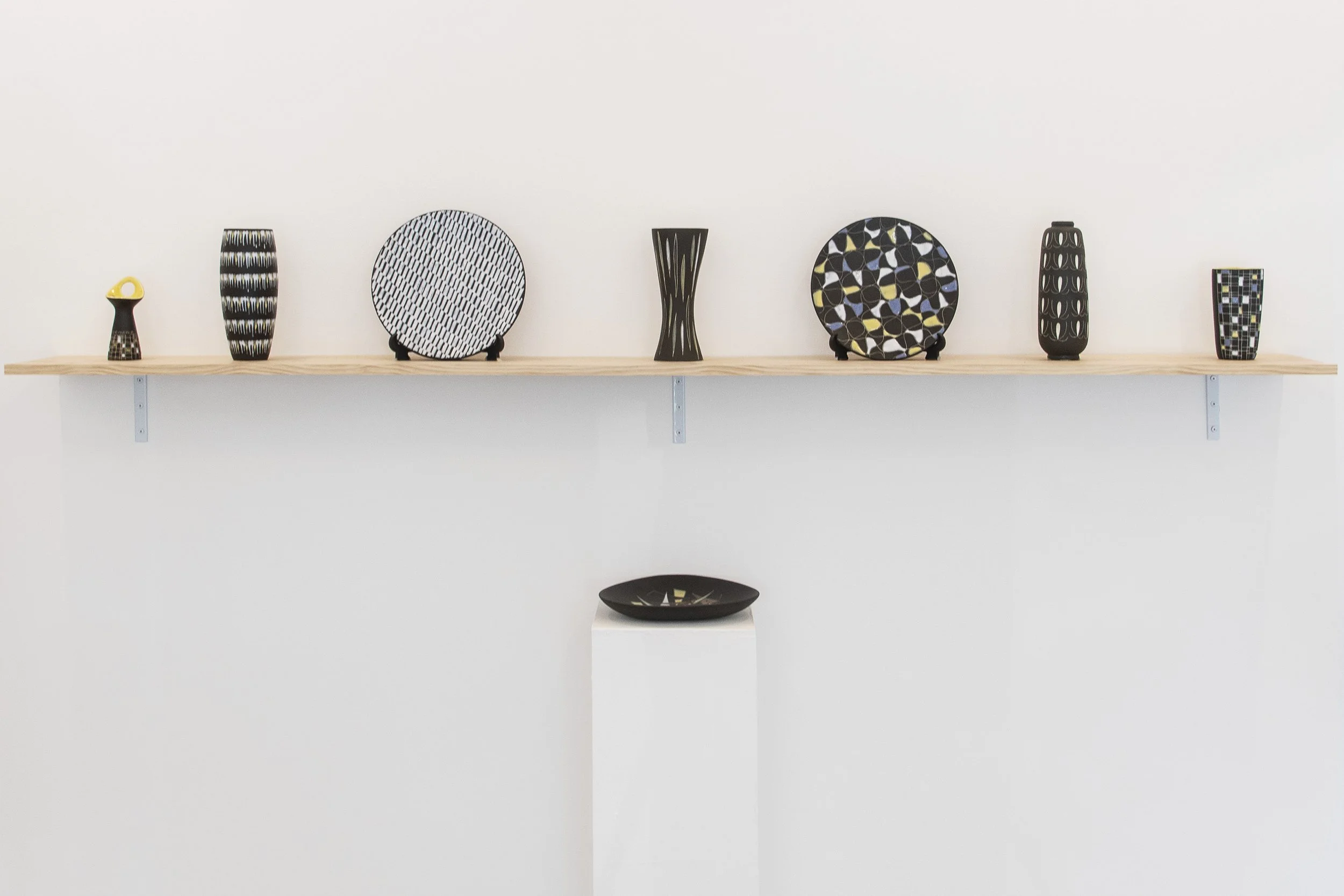
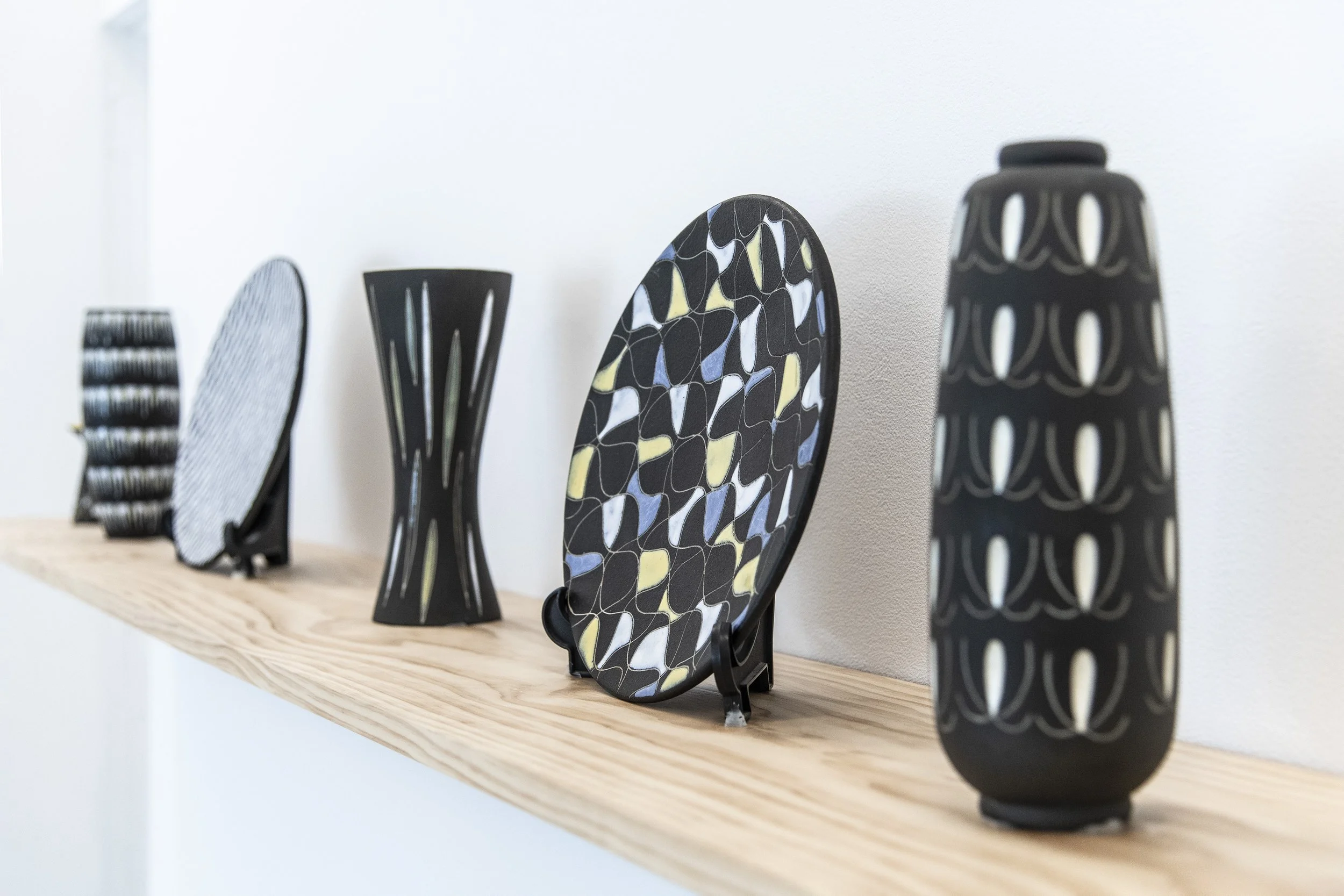
Gundars Lusis arrived in Australia from Latvia in 1949, after years in displaced persons camps in Germany. In 1956, he founded Gunda Pottery in the garage of his family home in Camberwell. Over the next two decades, he produced a wide range of domestic ceramics; vases, dishes, lamps, and tableware that reflected a European modernist approach rare in Australian pottery of the time. Lusis turned away from the prevailing Anglo-Oriental traditions and the decorative romanticism of the Arts and Crafts movement. His work was precise, geometric, and optimistic, shaped by design rather than sentiment.
The Blackware series (1956–c.1964) stands as his defining achievement. More than 150 forms—triform dishes, bowls, and platters were coated in matte black glaze and enlivened with panels of colour and finely incised lines. These pieces combined precision with spontaneity, uniting the modern and the domestic in a single gesture.
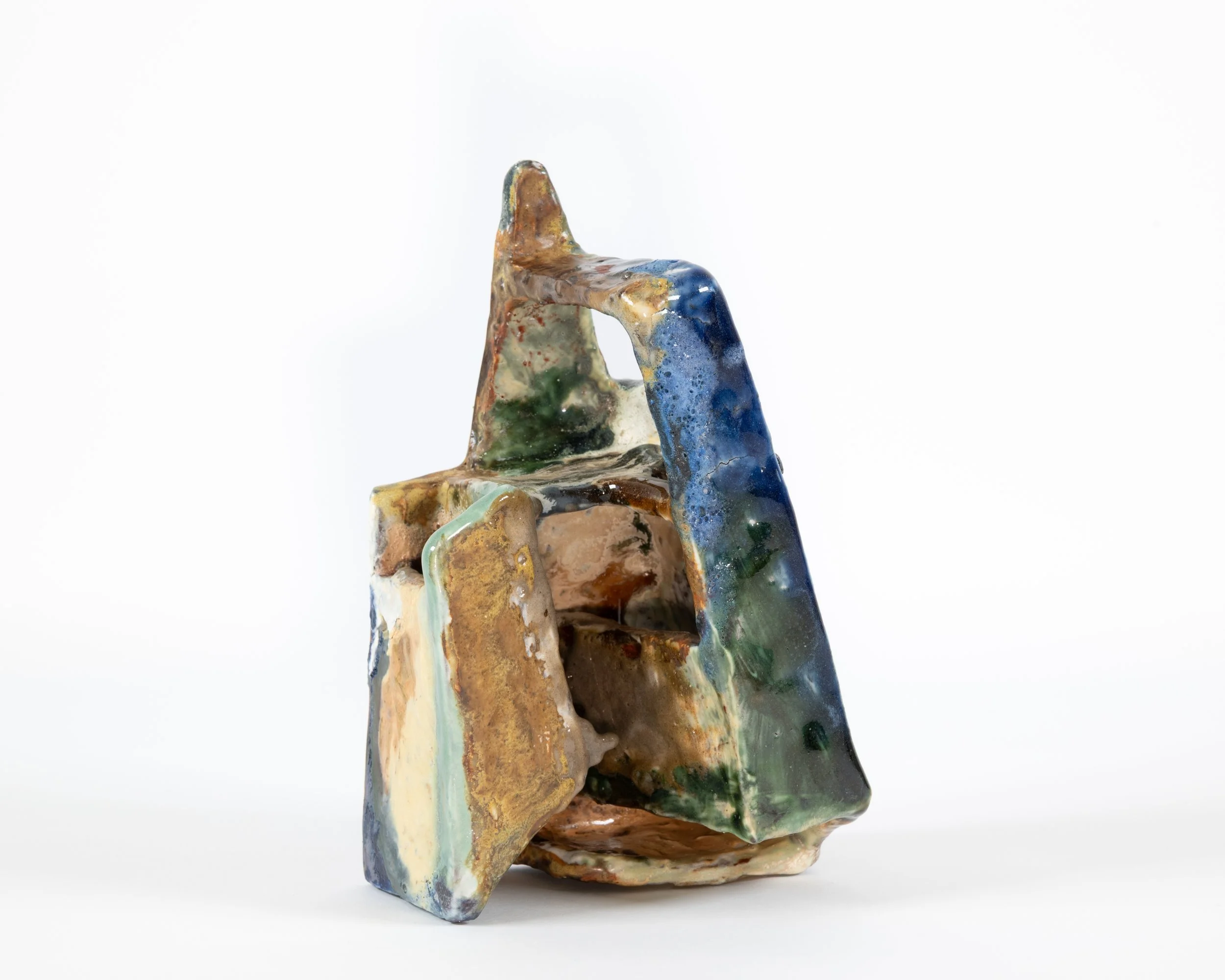
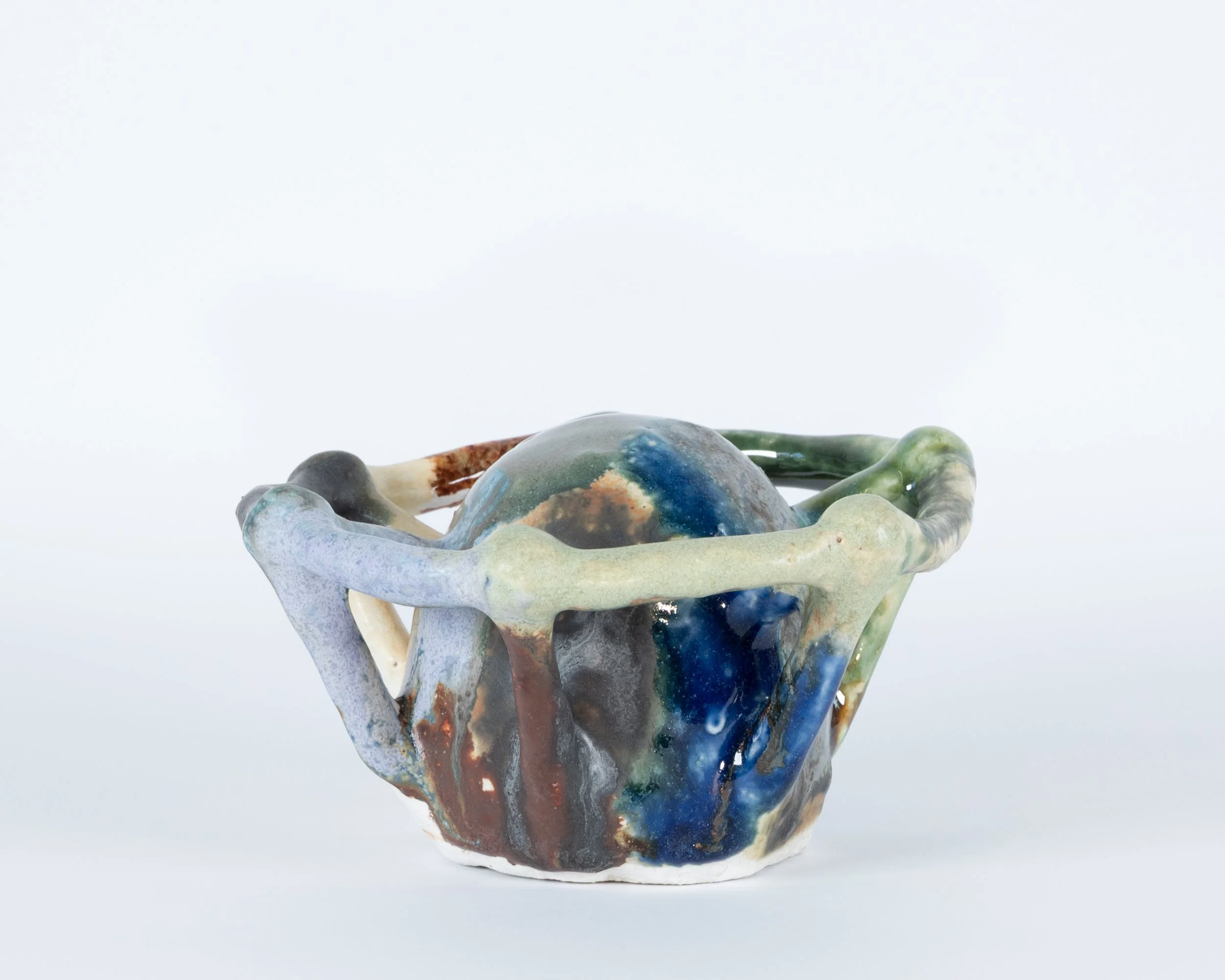
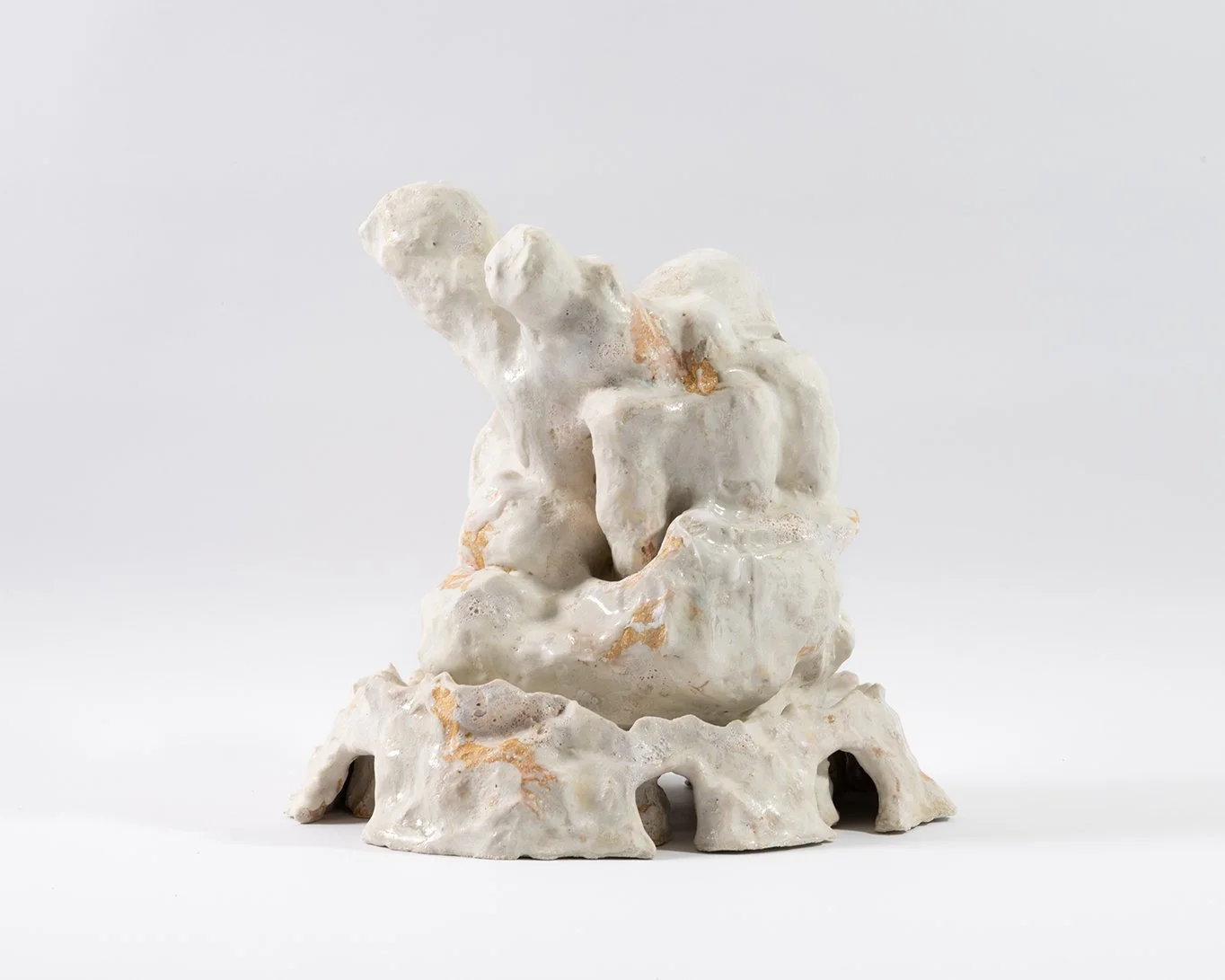
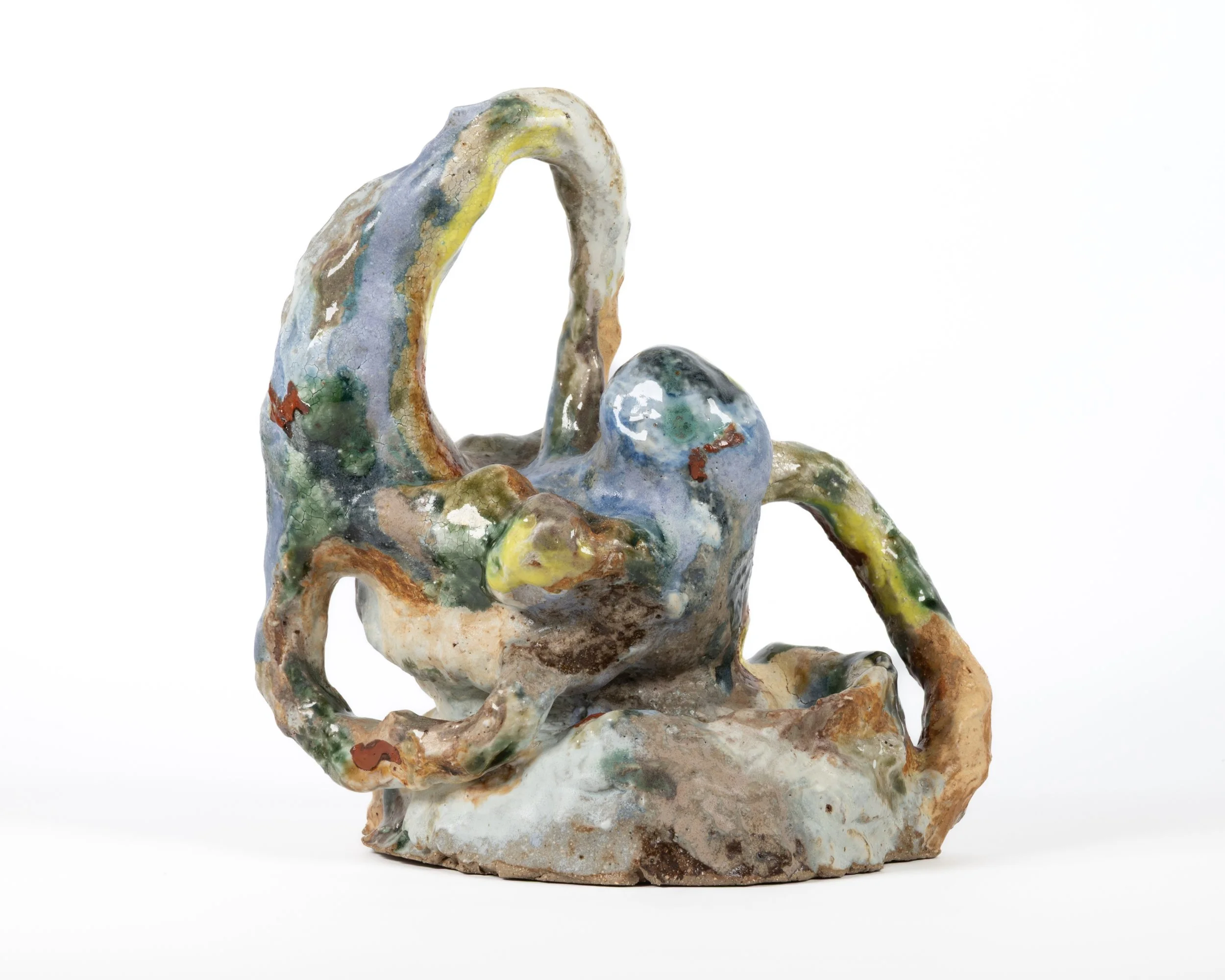
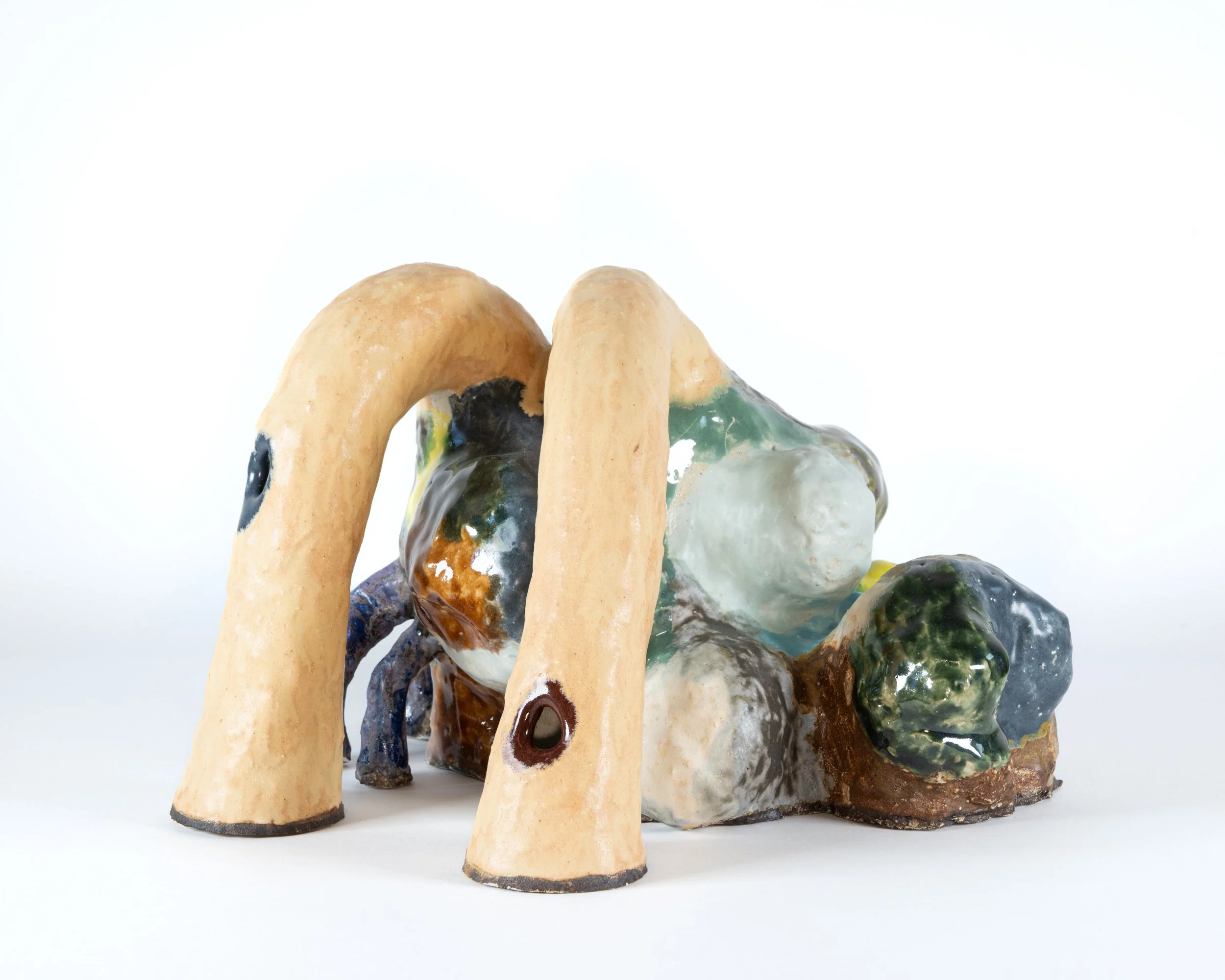
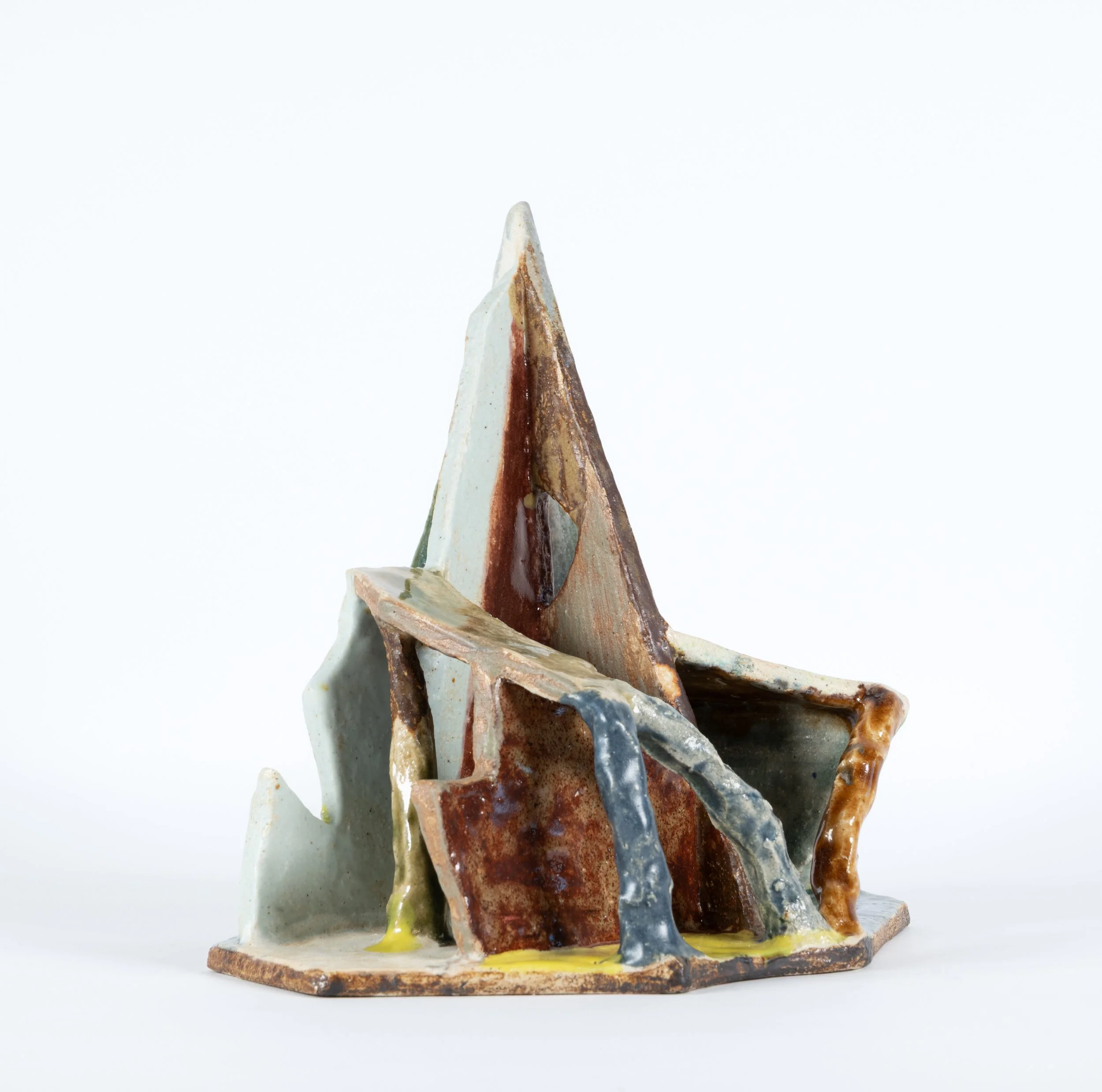
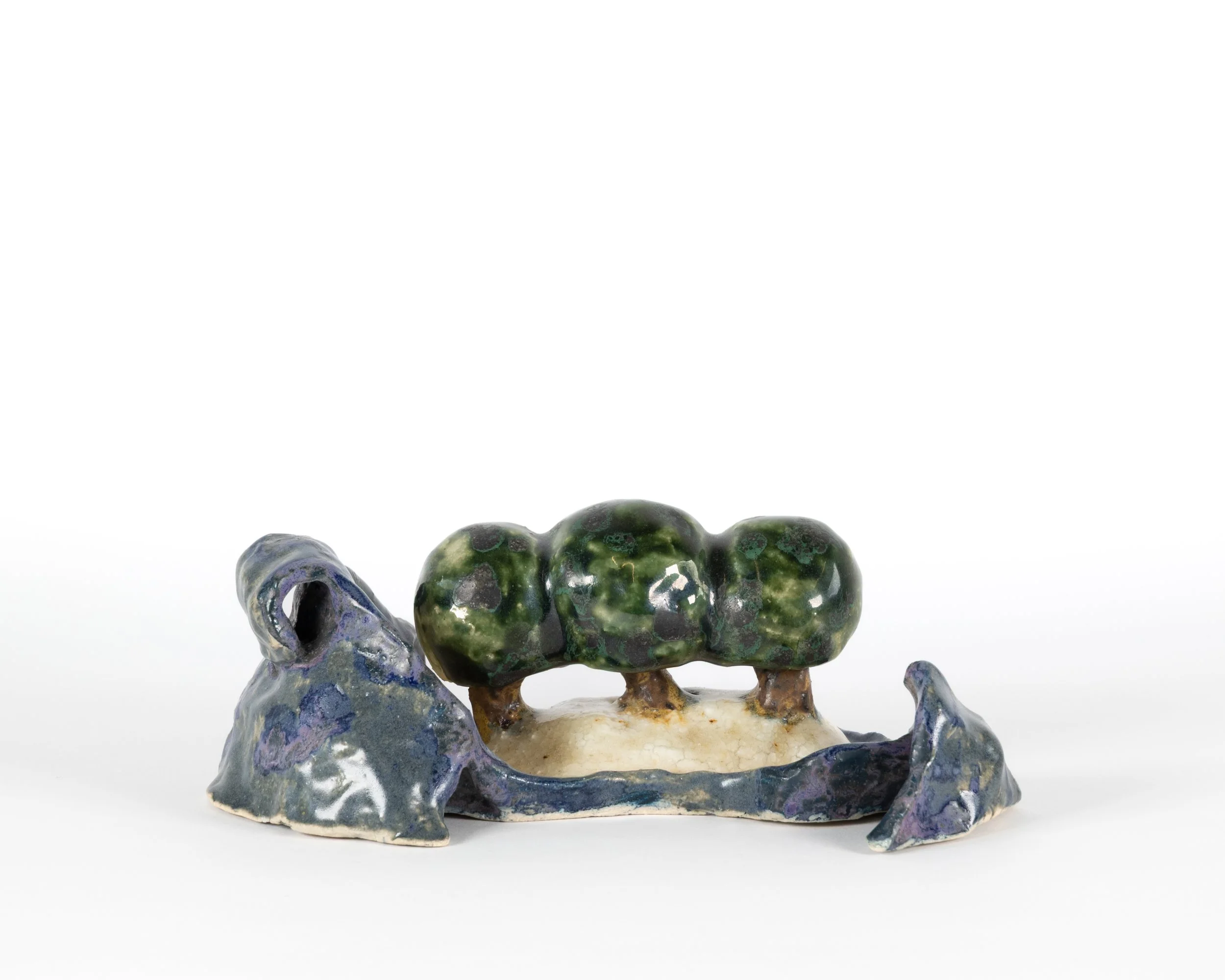
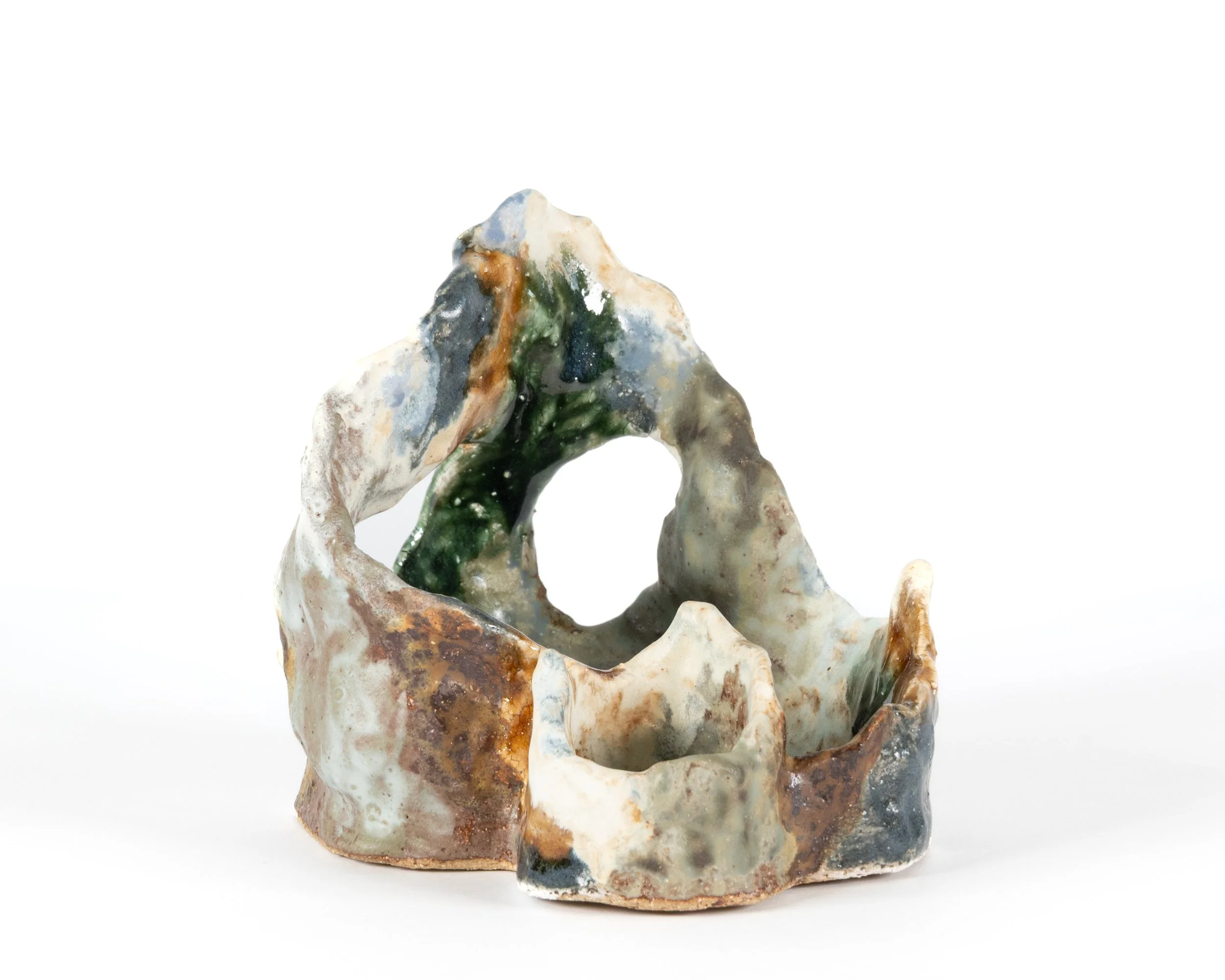
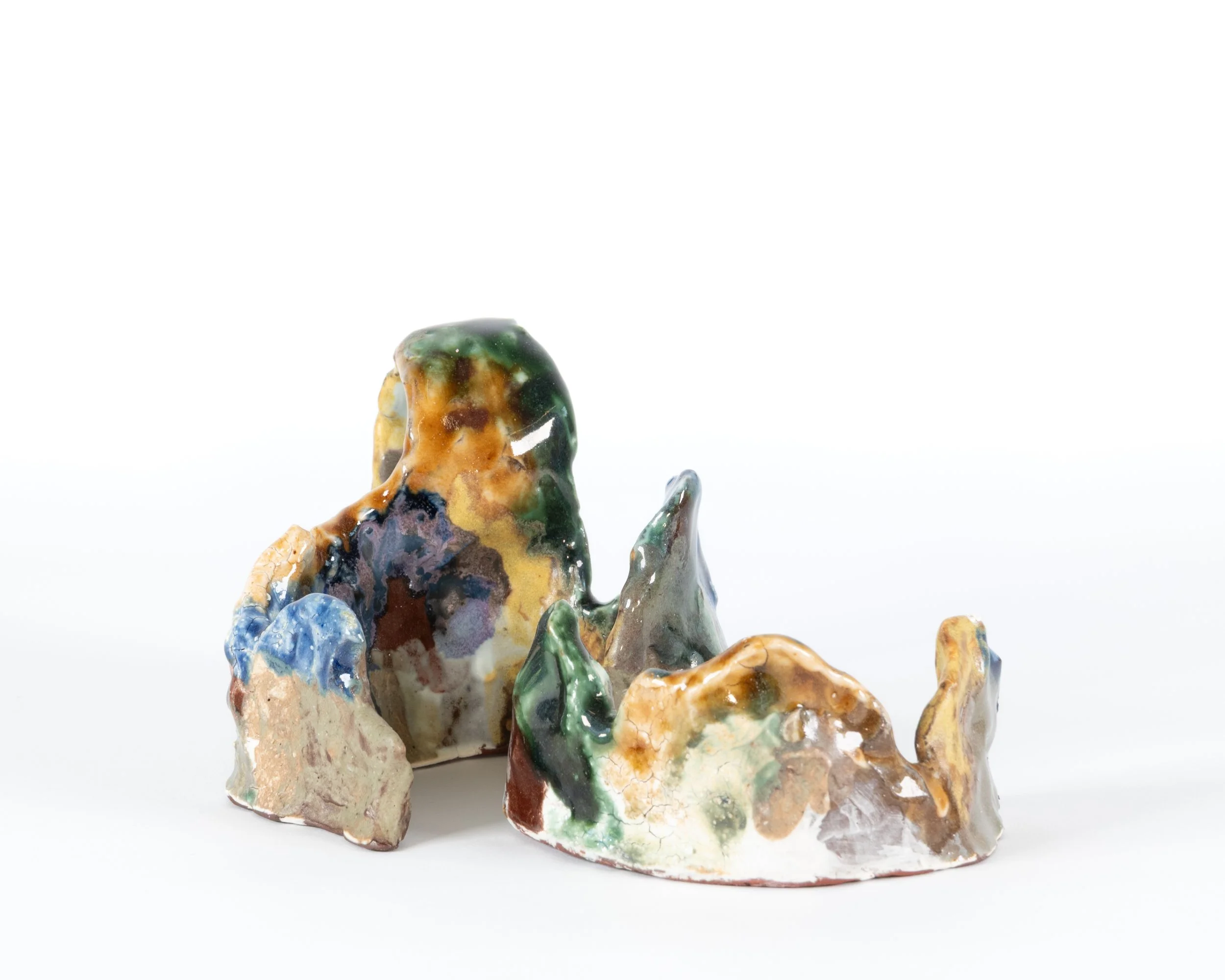
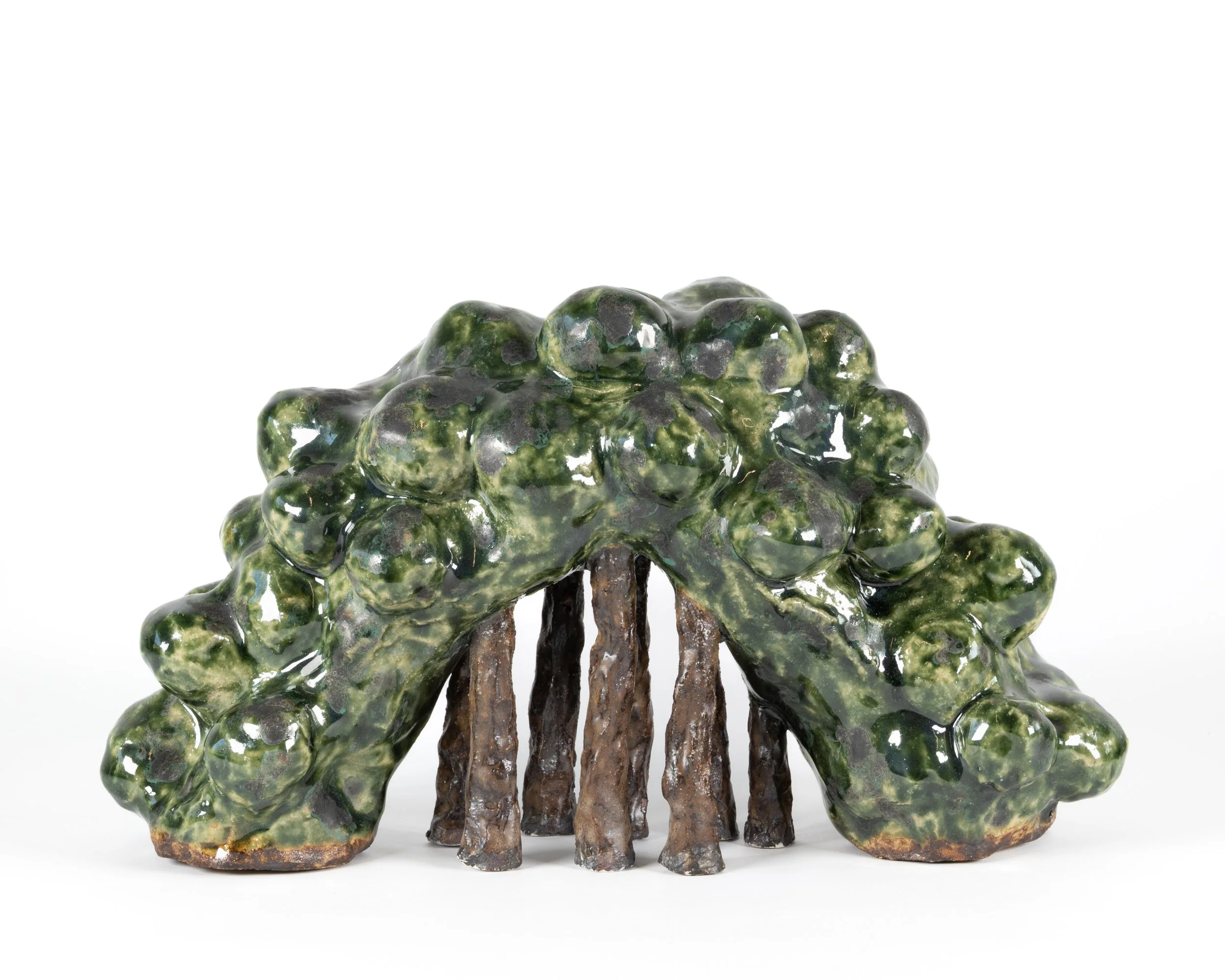
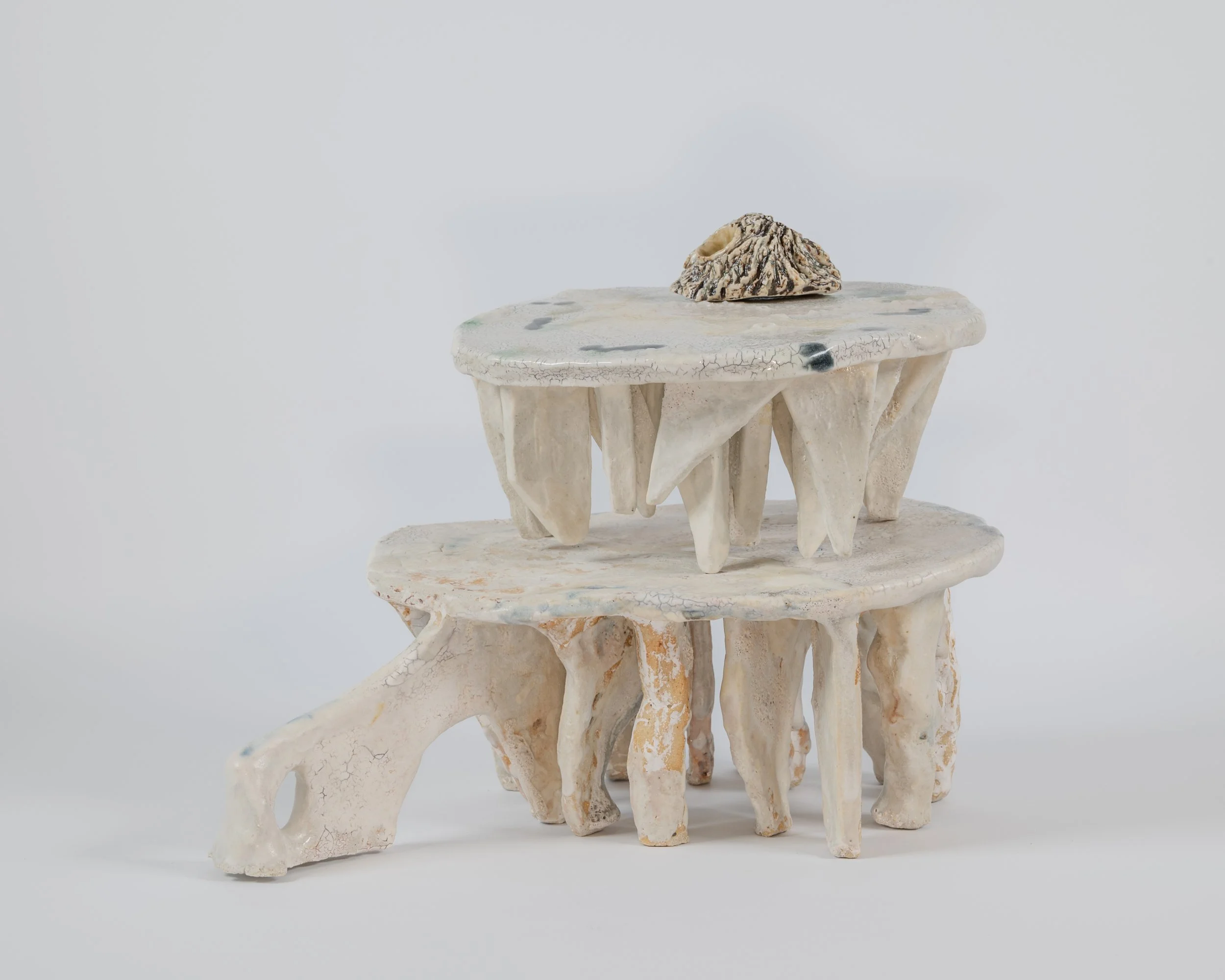
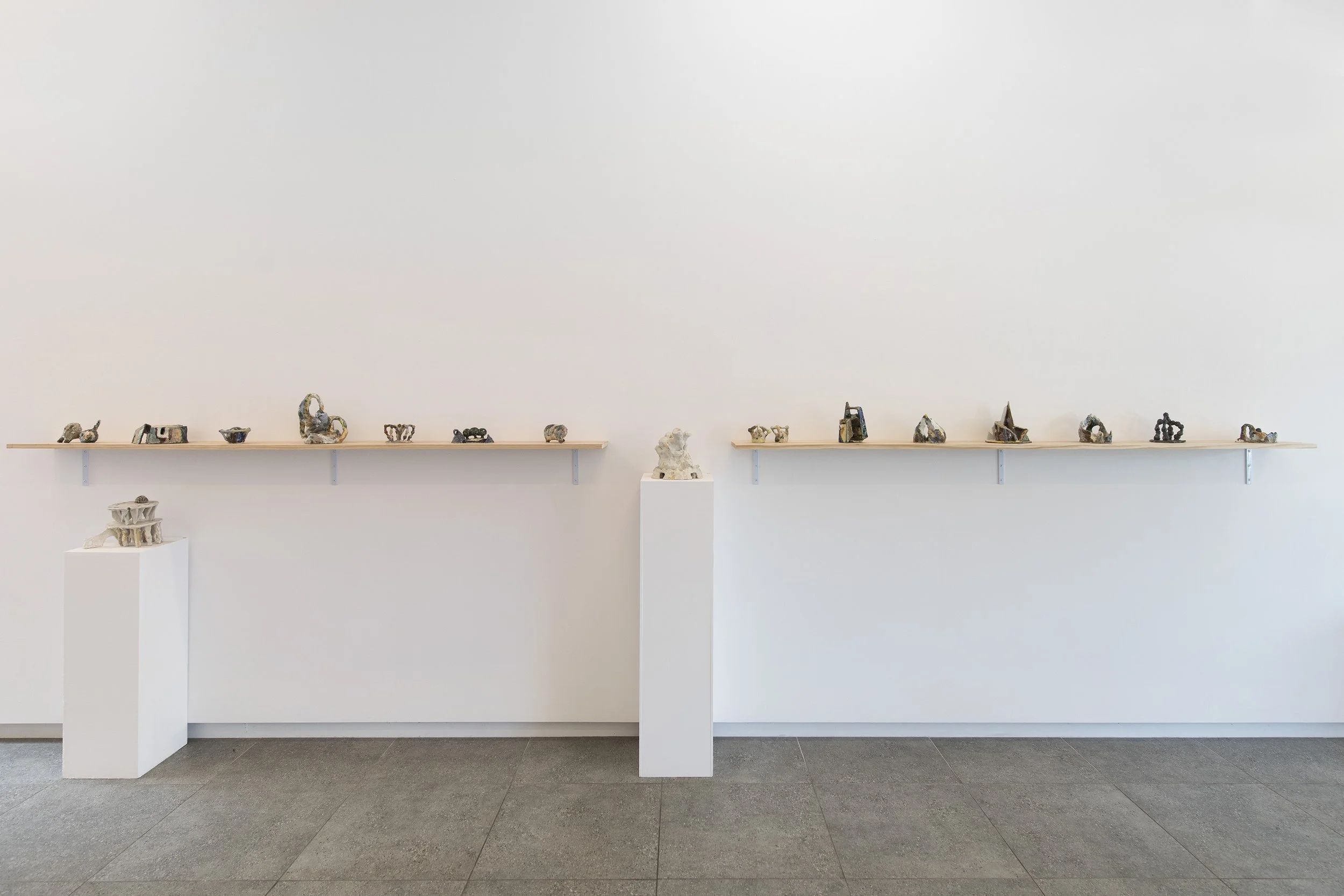
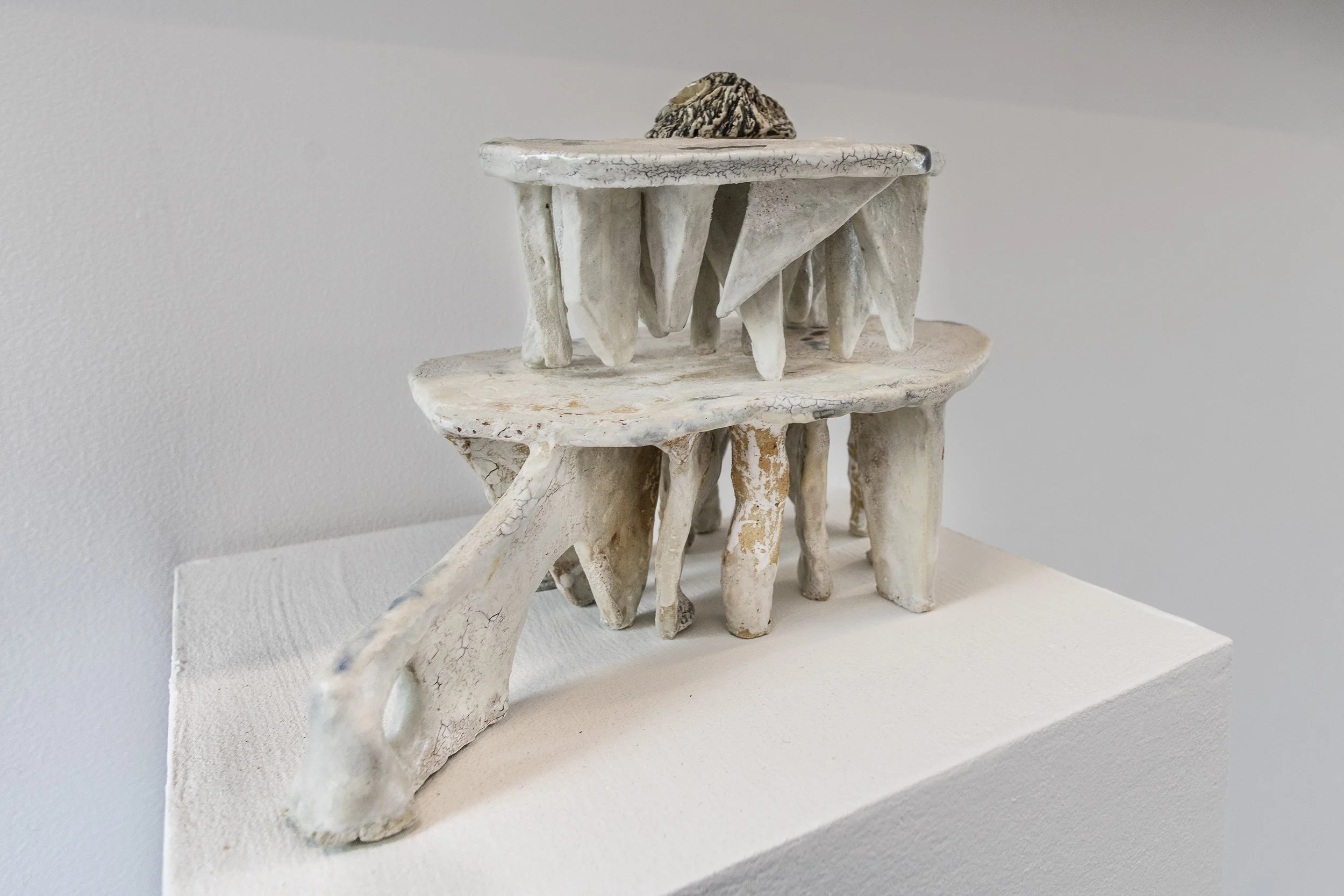
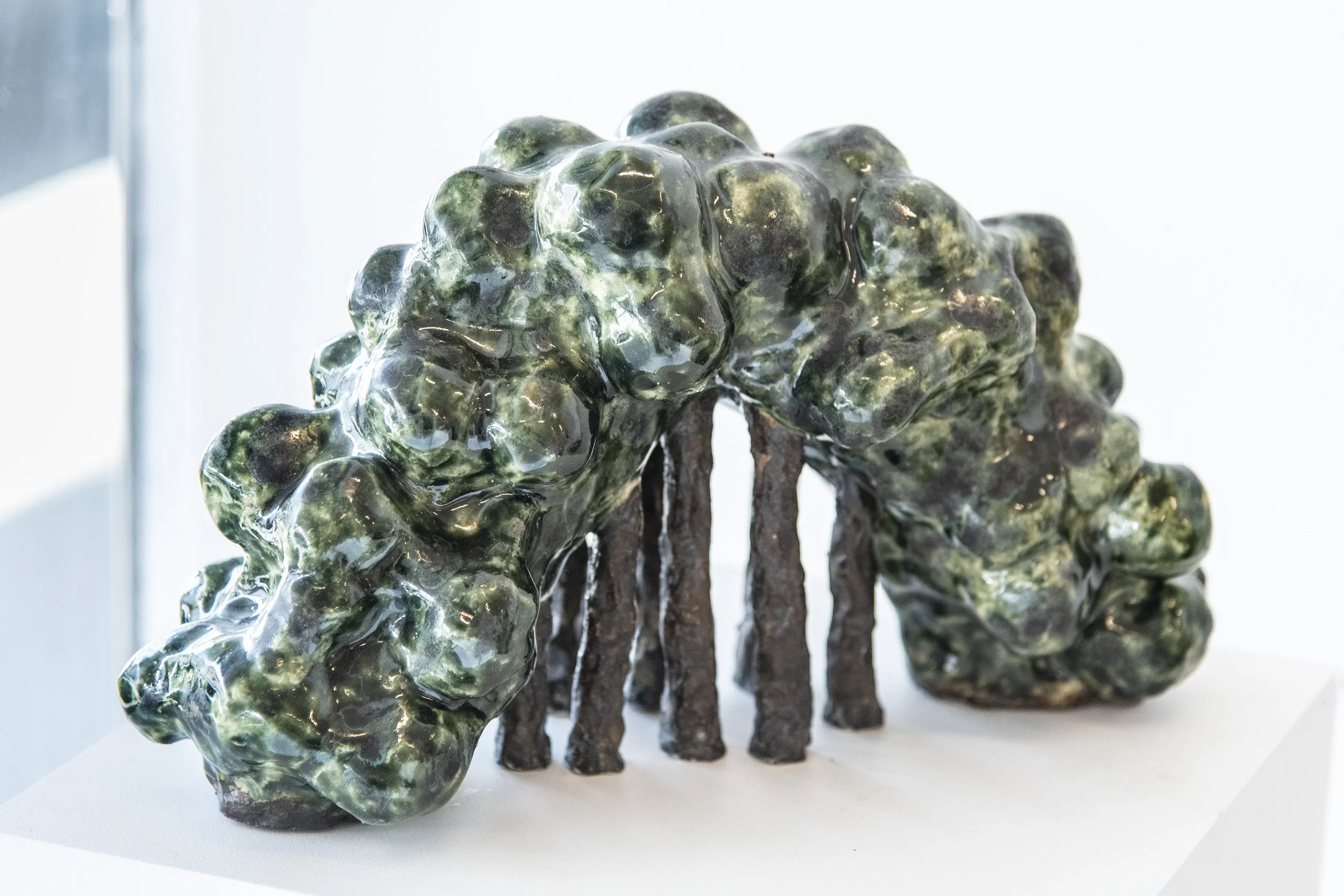
Pamela Miller continues this conversation with calm focus. Working from the School of Creative Arts in Brunswick, she hand-builds her forms and fires them in electric kilns. Layers of slip and glaze are applied, sometimes in several firings, creating surfaces that seem to hold light. Her work speaks quietly but carries strength—a reminder that transformation in clay happens through attention and time.
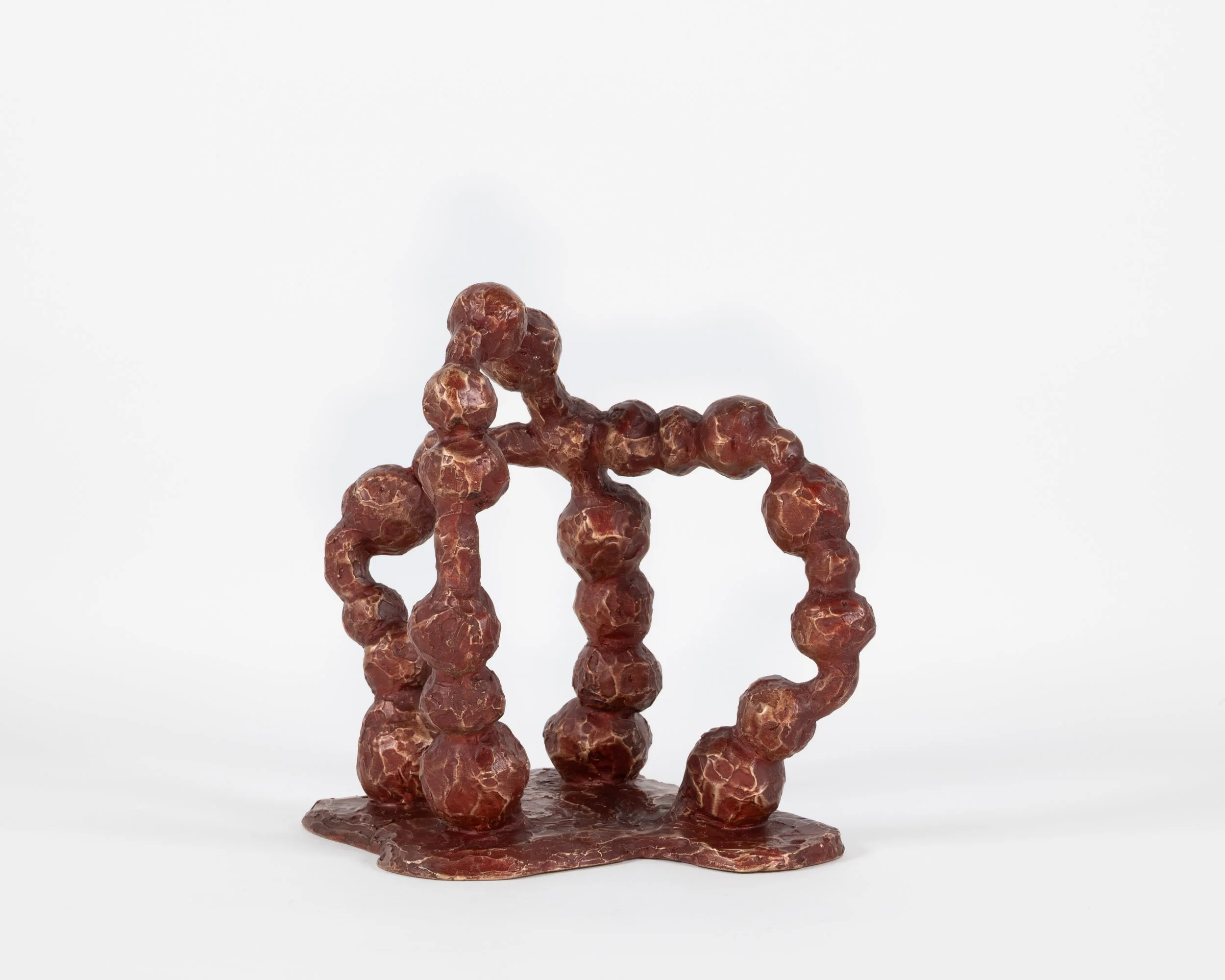
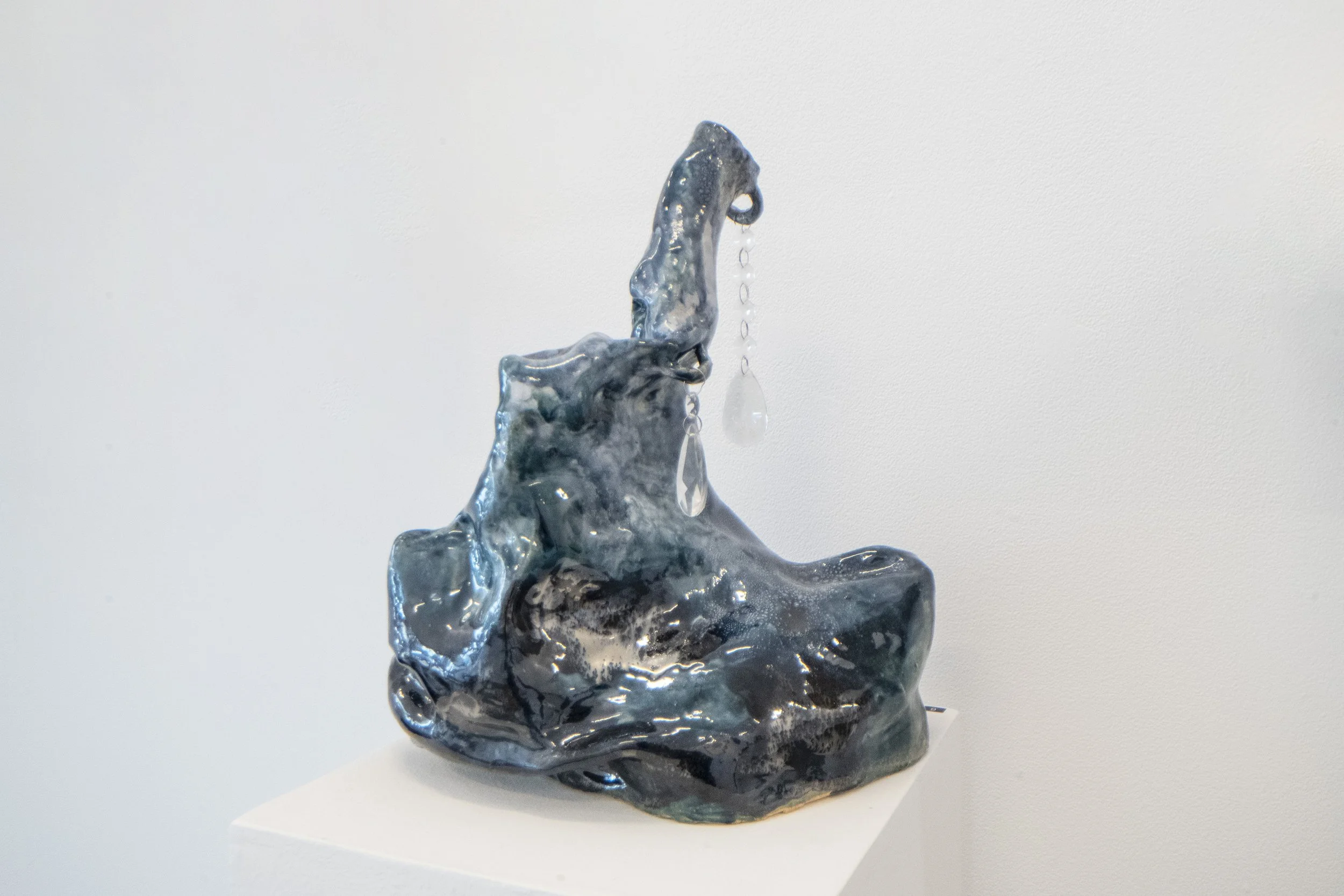
Bianca Brzezek has turned her suburban garage into a studio, much like Gundars Lusis once did in Camberwell. In this small space, she works intuitively, shaping clay through touch and repetition. Her forms evolve from rhythm and instinct rather than plan. Each piece holds the immediacy of its making, clay as both material and reflection, alive to every movement of the hand.
Together, these artists show how ceramics can still surprise. Opus Fictile is a reflection on continuity and change, how earth, form, and imagination meet, and how the language of clay continues to speak across generations.
BLOCKPROJECTS DIALOGUES: Q&A with PAMELA MILLER
BP: Pamela, you previously mentioned that you studied sculpture at VCA in the 80s. What first led you to ceramics?
PM: I spent seven years studying sculpture at four schools, working with a range of materials and processes, and exploring mixed-media work. However, none of those institutions offered ceramics instruction or facilities.
At art school, I learnt to use clay differently, building figures and, later, architectural forms around which I cast plaster moulds. The mould is filled with plaster or cement, then broken. This process works best on a larger scale, for life- or half-life-size figures or heads, and for simple, contained forms that require a mould of five or fewer pieces. This process involves preparing armatures and planning the pose or subject with the mould's parts in mind. It is slow and complex, allowing no major changes during its making.
I became interested in learning ceramics because I could see the potential to make more small objects quickly and directly. This has proved to be fascinating research. The material allows spontaneity and flexibility. It can feel like drawing in three dimensions. I can begin with a vague idea or feeling of what I want, and work in response to it. Within the seasonal drying variability of the clay, I can change and expand the work or turn it and continue building in another direction. The result can be unexpected and exciting
BP: Your surfaces often carry a calm intensity. How do you think about restraint when working with slips and glazes?
PM: When I am building these sculptures, I am seeking to create an intense activation of the space within and around the form. They exist within a small space where much movement and tension happen in the details within the form itself. The calmness is created by their static nature and the coloured spaces working together in harmony with the form. In this body of work, I used stronger colours than I have before. This is part of an experimental study to see what would happen if I used many bright colours on one sculpture and if I could make it work. So, in some ways, I am working against restraint by using complex colour on complex shapes. I tried to be courageous and make something contemporary, moving apart from historic ceramics.
When I started glazing ceramic sculpture, my glazes tended to be plain and even, with little colour. I didn't want to take attention away from the form, yet I found that this sometimes dulled the piece instead. Years of experimentation have helped me find a better balance—neither too much nor too little surface activity for each shape. Yet this remains a constant challenge. Surface possibilities, from rough to smooth, shiny to flat, and light to dark, raise endless questions and choices. Gaining more knowledge only expands these possibilities.
BP: You describe clay as elemental. How does this understanding guide your decisions in the studio?
PM: All clay and glaze ingredients come from the extraction and mining industries. In nature, clays and minerals are seldom found in a pure state; geological processes take millennia to create them. Before use, commercial clays are cleaned and processed, and some contain added pigments. What appears simple and safe is, in reality, precious and can be hazardous.
Hand-building creates less waste clay than wheel throwing, so I use this method to avoid washing away much material. When I reject an unfired form, I can soak and reconstitute the clay. Only firing transforms clay into permanent stone. Afterwards, it cannot return to the earth or pollute the environment. Dust from dry clay is hazardous and must be cleaned with water, as inhaling it is dangerous. Some coloured oxides are also toxic if absorbed through the skin.
Every glaze is composed of ground minerals and elements. When preparing glazes, a fitted mask is essential to prevent breathing in fine powders. Many glaze materials, including coloured oxides, are toxic if released in water, requiring careful disposal.
Awareness of clay’s origins and transformations guides my work, as firing echoes the geological forces that shape the material into art.
BP: Working at SoCA Brunswick gives you access to specific kilns and materials. How has that environment supported or shifted your practice?
Each term, teaching centres on a glazing or building project. Experienced students, like myself, use these projects to explore ideas and techniques. The setting offers ongoing, qualification-free study among peers with diverse experience.
The camping-out series, squiggle, and rock-face works originated from a project that introduced folding and tearing paper. Other projects have included finding a palette of colours within an image of a painting and recreating those colours in glaze. Different glaze recipes and ingredients respond to the coloured oxides in different ways.
I benefit from the school community’s shared research and testing. Group discussions and recipe sharing broaden options, which makes narrowing focus vital. Teachers’ expertise and available resources continually expand possibilities.
BP: How do you navigate the balance between controlled technique and the unpredictability of firing?
PM: Gravity, heat, and clay shrinkage during firing can be anticipated but not completely controlled. Departing from circular forms increases the risks of structural shifts. Each sculpture is an engineering experiment, requiring flexibility and adaptation.
In glazing, I test glazes on small samples before applying them to sculptures. Using multiple glazes on irregular shapes introduces chemical and physical unpredictability, especially at glaze intersections.
All ceramics, and especially glazing, is an exercise in acceptance.
BP: Each piece becomes its own glazing project. What does your testing process look like, and how do you record what works?
PM: Most of the glazes in this body of work are satin or clear glazes with a pigment added. These are either a mineral oxide powder or a commercial stain powder.
During testing, I impressed a slab of clay onto a plaster block, creating a grid of 35 squares separated by low ridges for glaze testing. I test five dilutions of seven glazes by starting with a strong colour, then adding uncoloured glaze to lighten it. Ingredients are measured to 100g dry weight, with pigment included in this amount. When I measure the ingredients, the mixture should have a slightly gritty texture, providing resistance when stirred with a spoon. I may first add 10% more pigment by dry weight, then dilute by wet volume, measuring with a teaspoon or syringe. During this step, the mixture becomes smoother, resembling thick cream, which ensures it's ready for application. All measurements are recorded and referenced after firing.
The desired shade is recreated mathematically, but testing and adjustment are usually needed, as the process can be inexact. Test results with another tile or a simple object reveal interactions between glaze and clay. Some glazes behave differently when layered or on varied surfaces. Test pieces should use shapes and surfaces similar to the final work. Detailed notes are essential to make testing meaningful.
BP: Light distinctively interacts with your surfaces. Do you plan this early on, or does it emerge during the firing process?
PM: This series primarily uses clear, shiny, or satin glazes, with some drier variants. Fired crystals in each type interact distinctively with light.
Most pieces have a coloured, shiny, clear glaze. This uncoloured would allow the viewer to see directly to the surface of the clay. I use colours within these glazes to deflect this clarity and yet allow the light to penetrate and reflect on the surface. This internal light gives these colours brightness. The satin glazes are less immediately reflective, becoming white and crystalline if used without colour. The white base creates softer colours that still have some satin sheen through the crystals on the surface, and can be made darker with the addition of more colourant.
I consider light’s impact before glazing. Reflective surfaces enhance visually solid forms. For example, in one piece, the glossy upper part stands out, while dark satin glazes define the 'legs.'
If used on a more open form with spaces, such as ‘root’, colour and shine can become a distraction from seeing the shapes and shadows created within the form. I used a series of white glazes on ‘root’ and ‘the hypnotist’ as they are complex forms. They create their own shadows. The different surfaces and slight variations within the whites create complexity yet still allow the form to be seen as a whole. These are just some examples.
BP: What artists, potters or thinkers have influenced the way you approach material transformation?
PM: Making sculpture begins with a material or substance and visually or physically transforming it in every work. Just the making of an object that did not exist before transforms nothing into something unfamiliar and unknown, which exists in the same space as the viewer and confronts the viewer with its material nature. The mutability of matter and the transformation of material are inherent in all sculptural practice.
I have a longtime love of sculpture and have admired many sculptors and installation artists working in diverse materials and scales.
I appreciate sculptors who work over a long career in a diverse range of materials, such as Louise Bourgeois, who worked in textiles, plaster, wood, stone, bronze, and steel, yet strangely never in ceramics. Her work may be a small, embroidered fabric book or a room-sized installation made of steel and stone. Tony Cragg’s later sculptural works are very mysterious in their transformative qualities. His large metal works are cast from originals which are made in wood. I like Linda Marrinon’s plaster and ceramic figures and landscape sculpture. Her skill with plaster shows her years of understanding this transformative material. It begins as powder, becomes a liquid and then a solid. Her work is so mysterious to me because I don’t know exactly how she makes them. This applies to much of the artwork that I like the most. It has an origin and evolution that are a mystery to me.
I have always liked sculpture made from found objects. Taking these forlorn and unwanted objects, rejected by our society and then reforming them into an artwork takes a special kind of imagination. To make something that has its own kind of beauty yet carries the story of its first purpose and then abandonment. Contemporary artist Isadora Vaughn combines this with ceramic works to create lyrical installation projects.
During my childhood, I learnt about and loved early modernist art. The bright colours of painters such as Edvard Munch and the Fauve, Nabi and Constructivist groups inform some of my glazing and the early abstract sculpture of Constructivism and Surrealism inspires with its formal inventiveness and mystery.
The large-scale installation art of Phyllida Barlow uses industrial and generic materials combined with traditional materials such as plaster and paint to transform and fill huge open spaces, working with the surrounding architecture in galleries and public spaces. Within this collection of materials, some are recognisable, and some are not, yet together they are altered by their context and juxtaposition.
Much of contemporary ceramic sculpture is either restrained and figurative, often referring to ancient cultures and traditions, or large, simple forms created through material exploration and the mixing of stones into the surface, exposing their rocky nature, or shapes disguised by the experimental application of large amounts of glaze. My work is neither of these; the creation of a mysterious new form is important to me, and my use of glaze is more like painting, close to or part of the surface rather than used to change the form.
BP: As your practice evolves, what directions in form, surface or scale are you most interested in pursuing next?
Since completing the works for this exhibition, my most recent pieces are small, experimental, complex and landscape-ish. In glazing the first two, I introduced a new flat dry glaze, coloured with bright stains, alongside some of the ones I know. I am yet to see the results. As I mentioned earlier, I find that a less reflective glaze can help to see more complex forms with uneven surfaces and spaces in them. I have begun research into this flat glaze to apply to these new pieces. I will also test this same glaze with oxides to create a large range of different colours to combine with the bright stain colours I have already made.
The new works are made with a blend of cream and red clays, some of which will be left exposed unglazed as part of the surface treatment.
My practical research often involves different building and glazing projects going in different directions at once. Over the years, I have made works that combine geometric elements with slabs and more organic, modelled sections. They are often elevated, stand on legs, and have activity both below and above a horizontal surface, creating the atmosphere of a landscape on a stage. These works have proved difficult to make and even harder to glaze due to their complexity. I will continue with this project, as I think it has more potential, both in form and surface, than I have yet resolved.
Whenever I make new glaze colours, I will incorporate them with the surfaces I know into experimental projects. Small pieces can be made quickly, and their size allows less distortion from gravitational and atmospheric forces during firing than occurs with a larger form. I find that the larger a ceramic object is, the greater the forces of change within the firing. Even a round form, such as a pot, is harder to build and more likely to fail if it is large, because these forces are greater on the weight within the object. The constraints of the material and process mean that the larger a form, the more it must be contained within a vertical and rounded profile. Any horizontal projections will collapse and slump in the kiln under their own weight if they are heavy. What does too large and heavy look like? This can depend on the clay, shape and temperature of the firing and is a continuing exploration.
BP: What kind of music do you listen to in the studio, and how does it shape the rhythm or atmosphere of your making?
PM: Much of my making occurs in the school environment. I work within the imagined silence in my head while ignoring the ambient noise of a room full of people at work. Glazing projects require my complete concentration, and I try to ignore conversations I am not part of, people hitting their work with a paddle for hours, the hiss of the decompressing pugmill, and the occasional clink of ceramic falling to the ground and breaking, along with the accompanying exclamation. At home, I do much of my building. This may be in silence, listening to music, or listening to a podcast, which is mostly ignored. Background noise that helps stop distracting thoughts. I don’t think that it has much influence on the work.
Firing and material development SOC Brunswick