julia powles: born with the moon in taurus
03.06.26 - 27.06.26
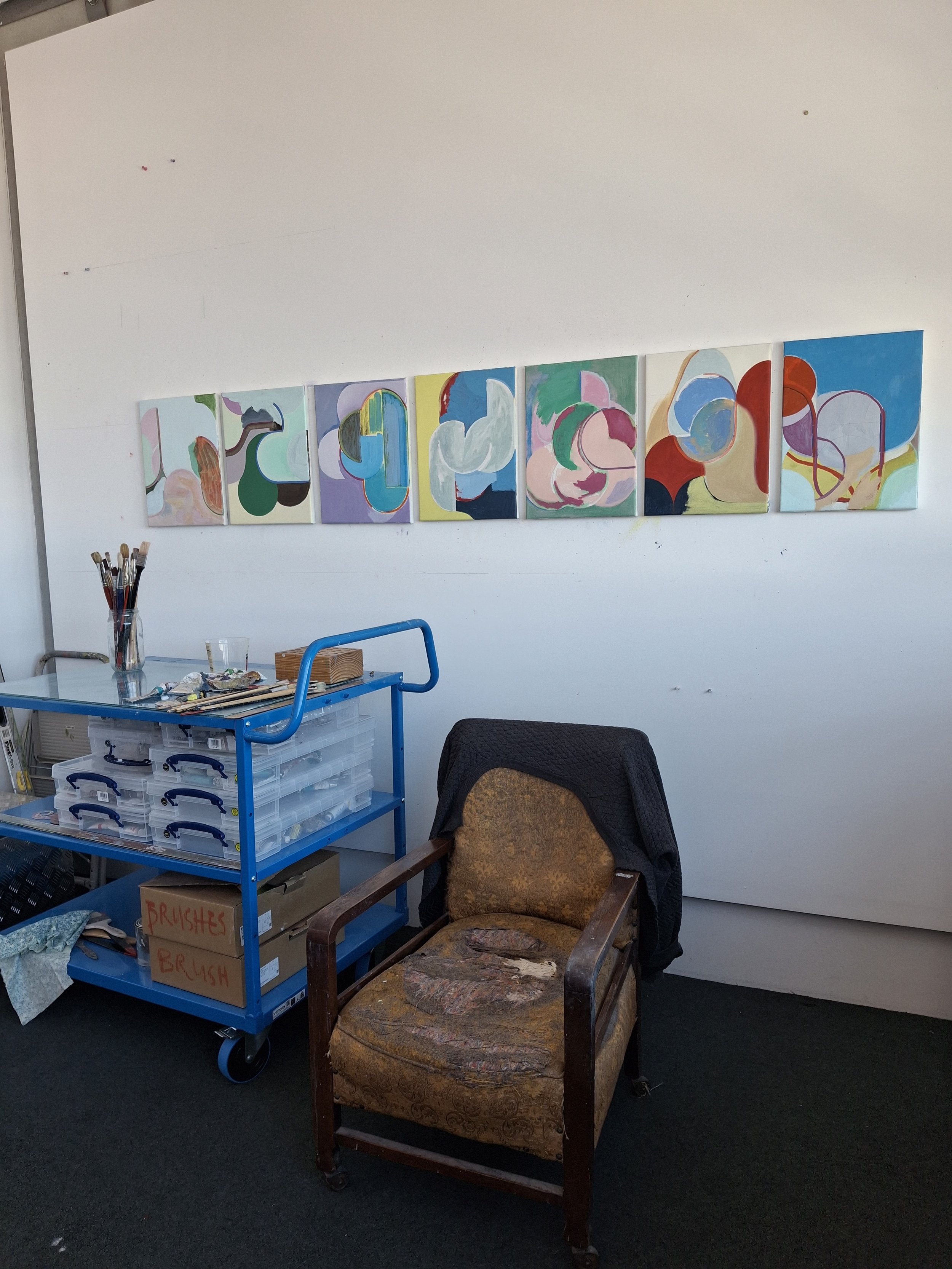
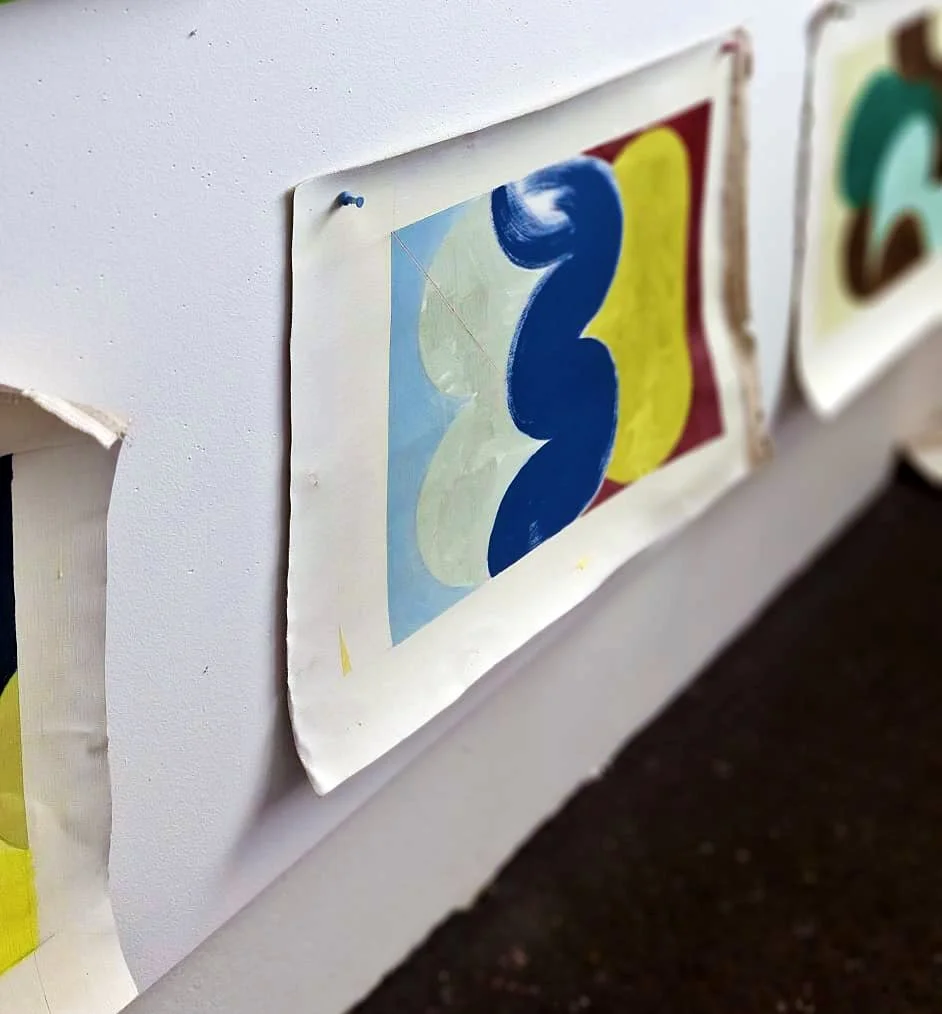
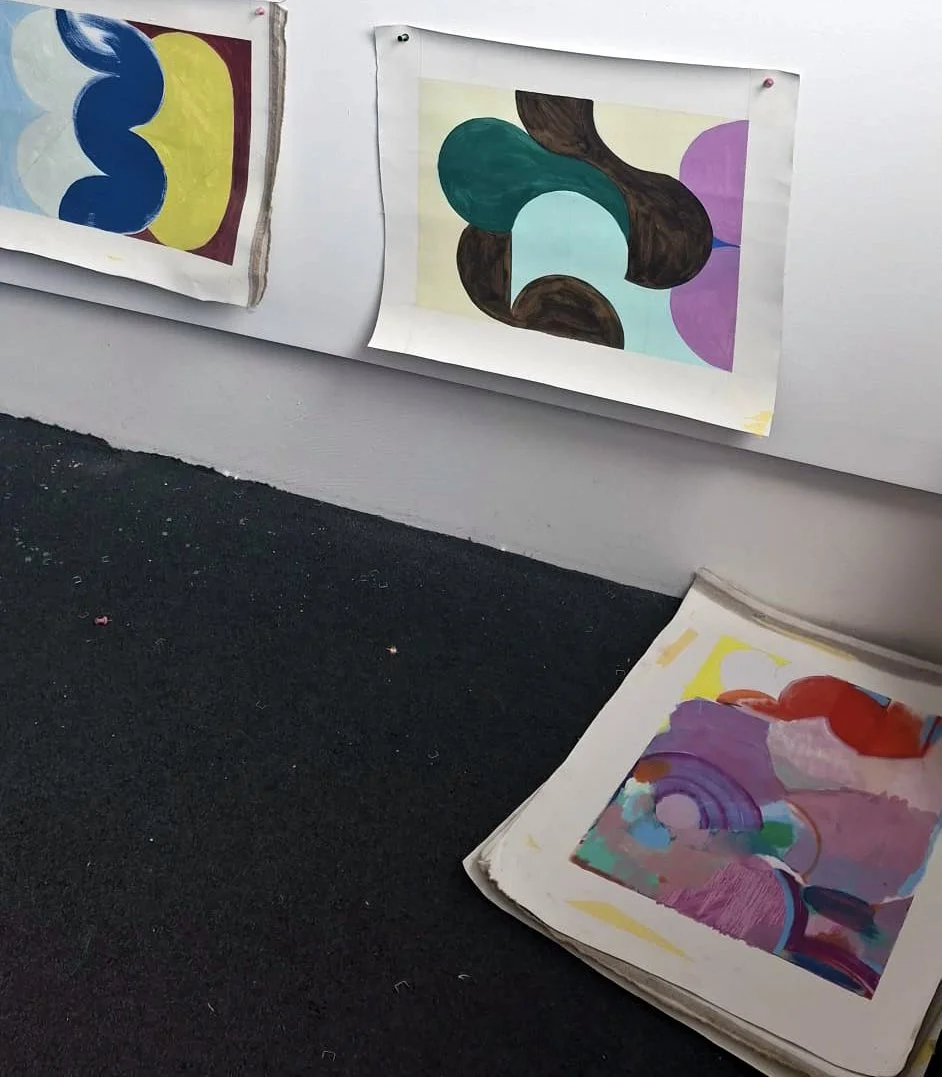
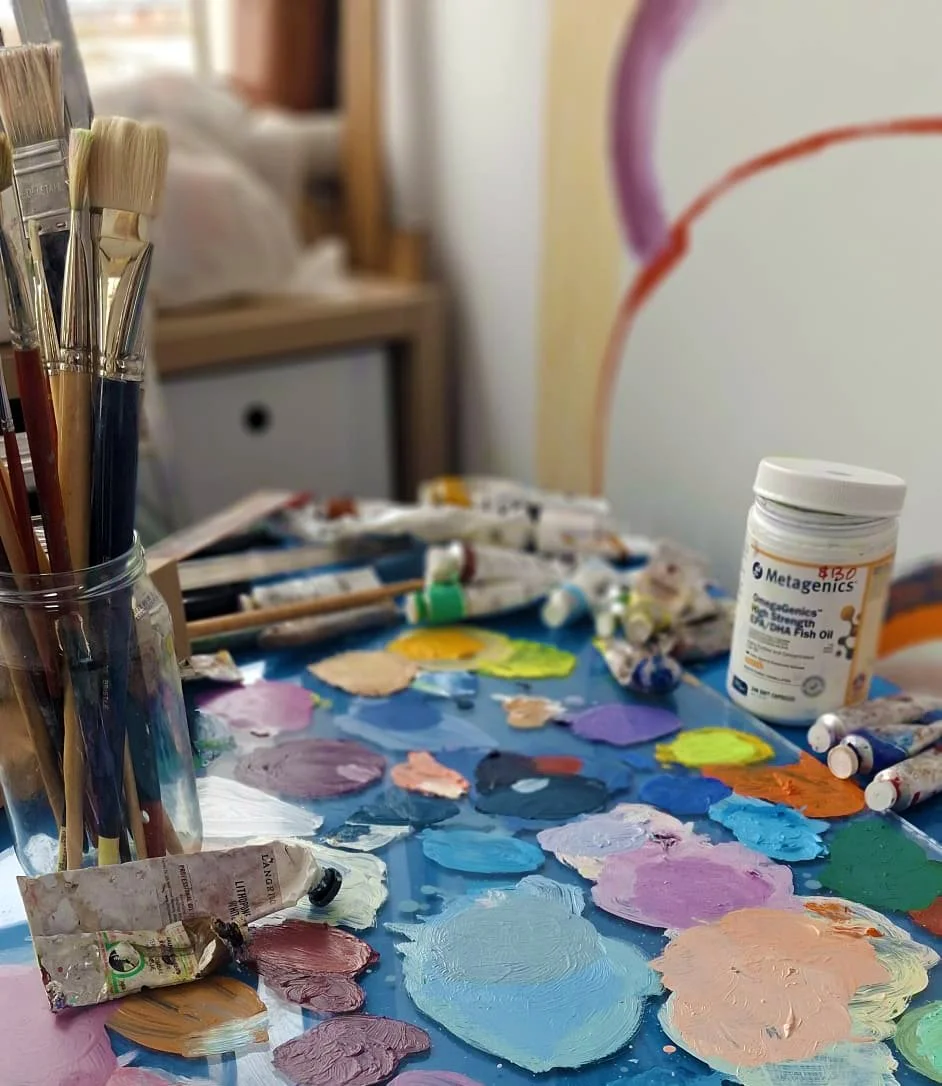
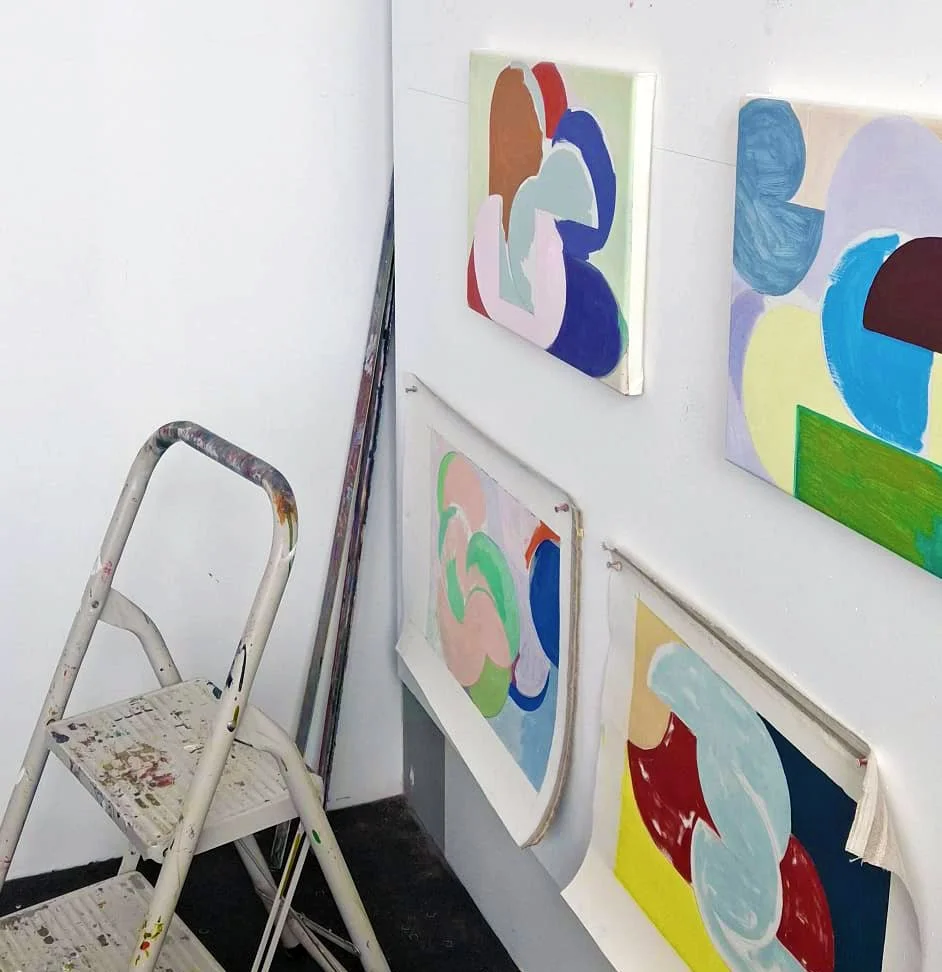
JULIA POWLES STUDIO IMAGES
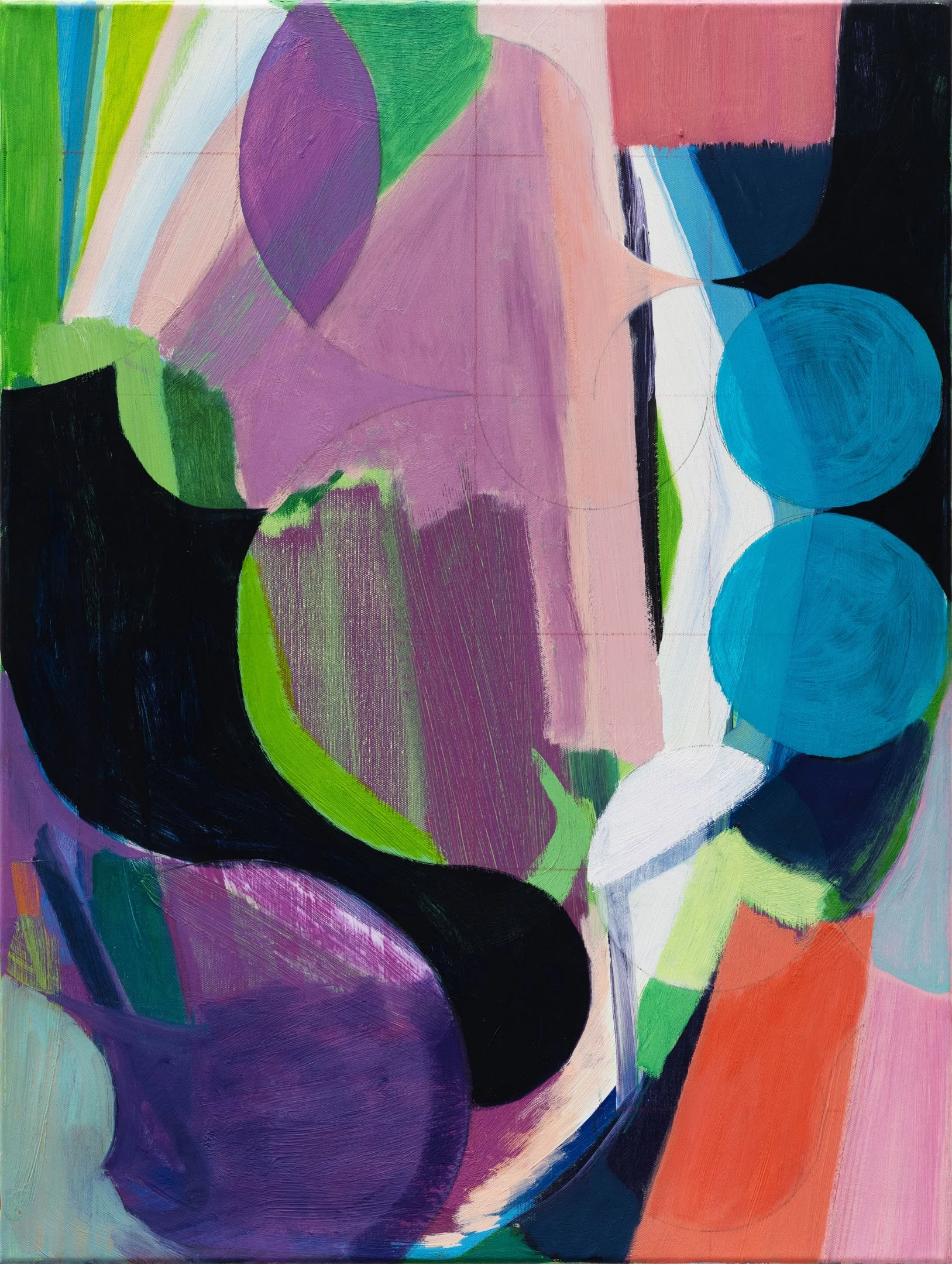
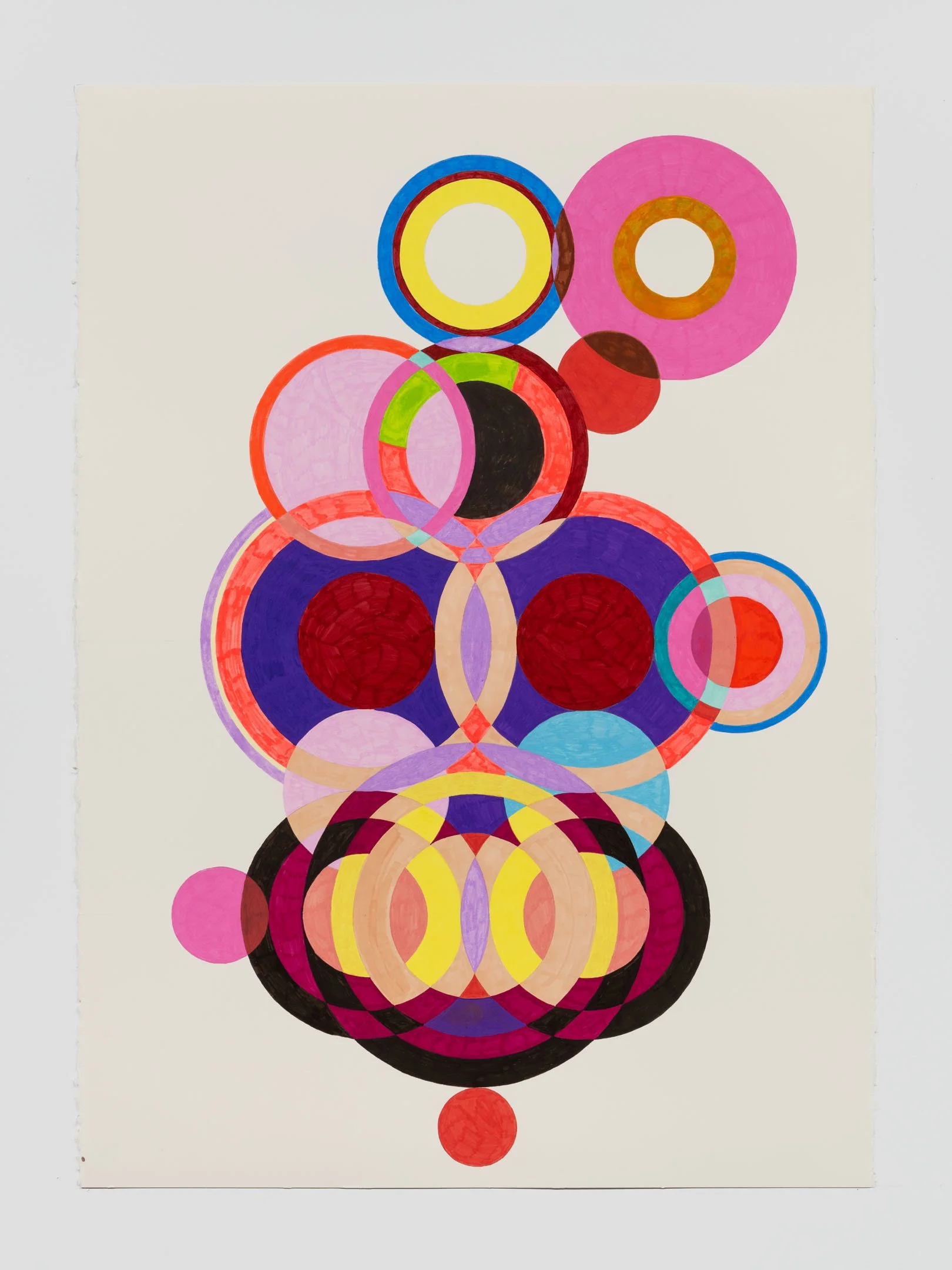
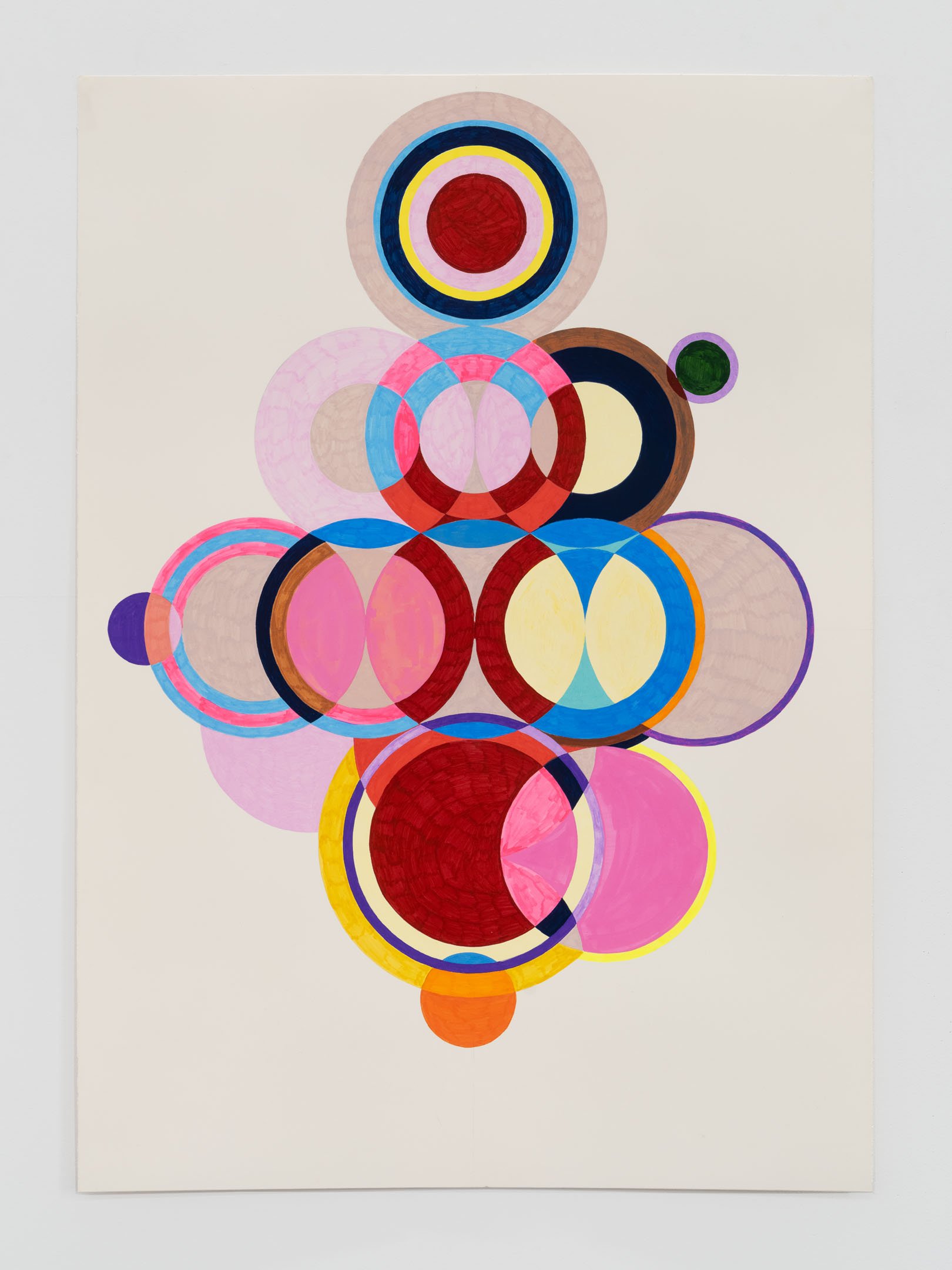
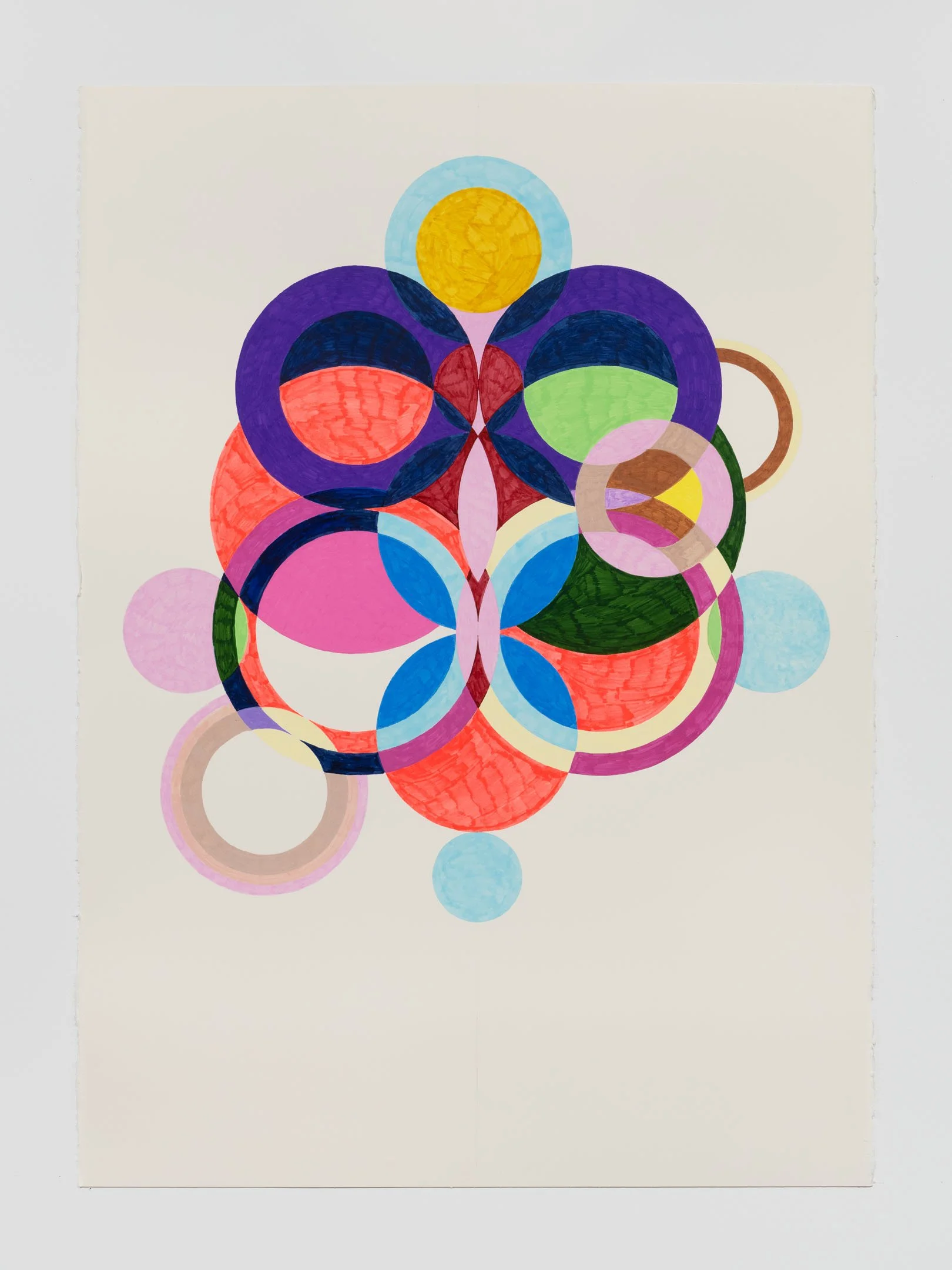
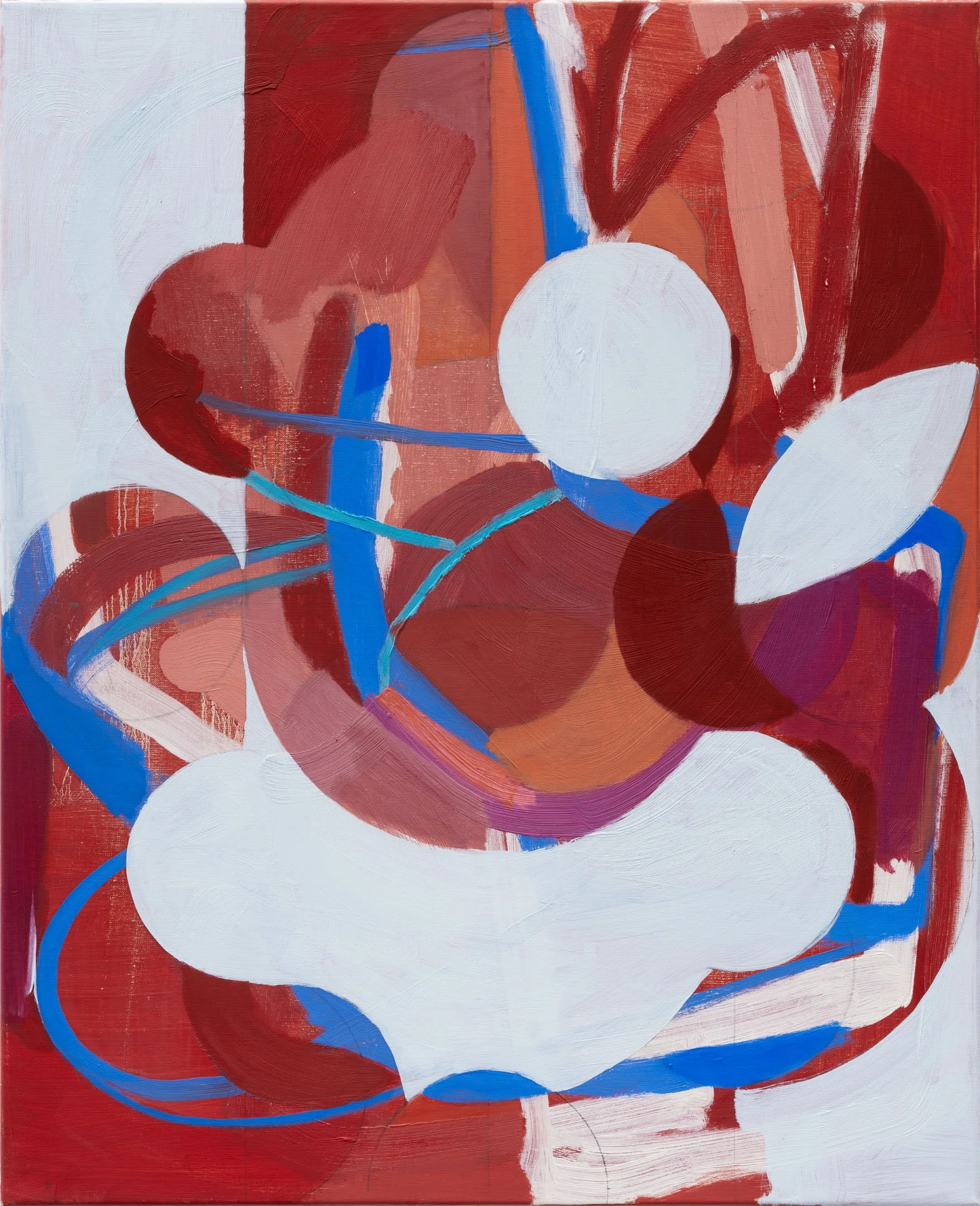
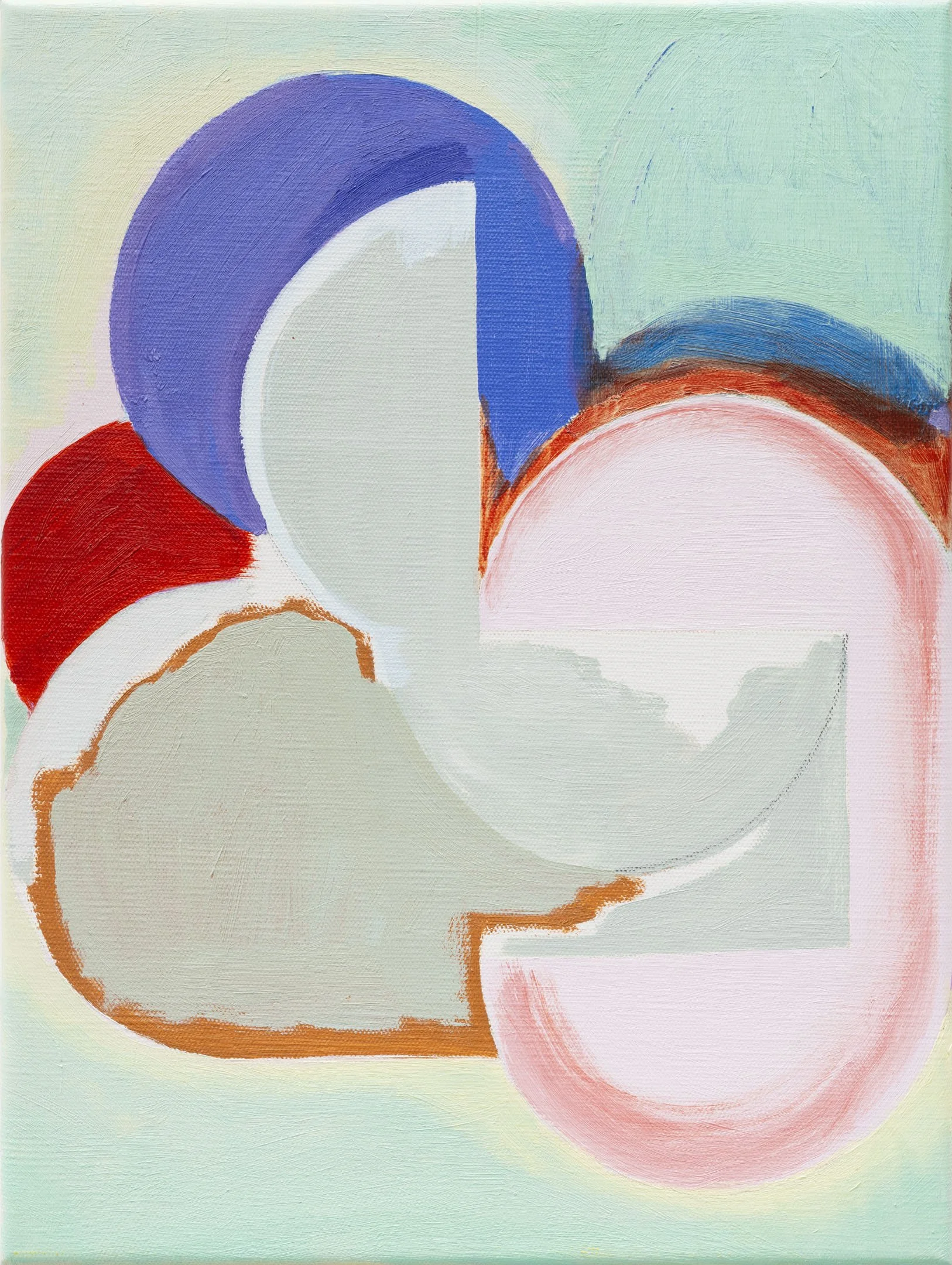
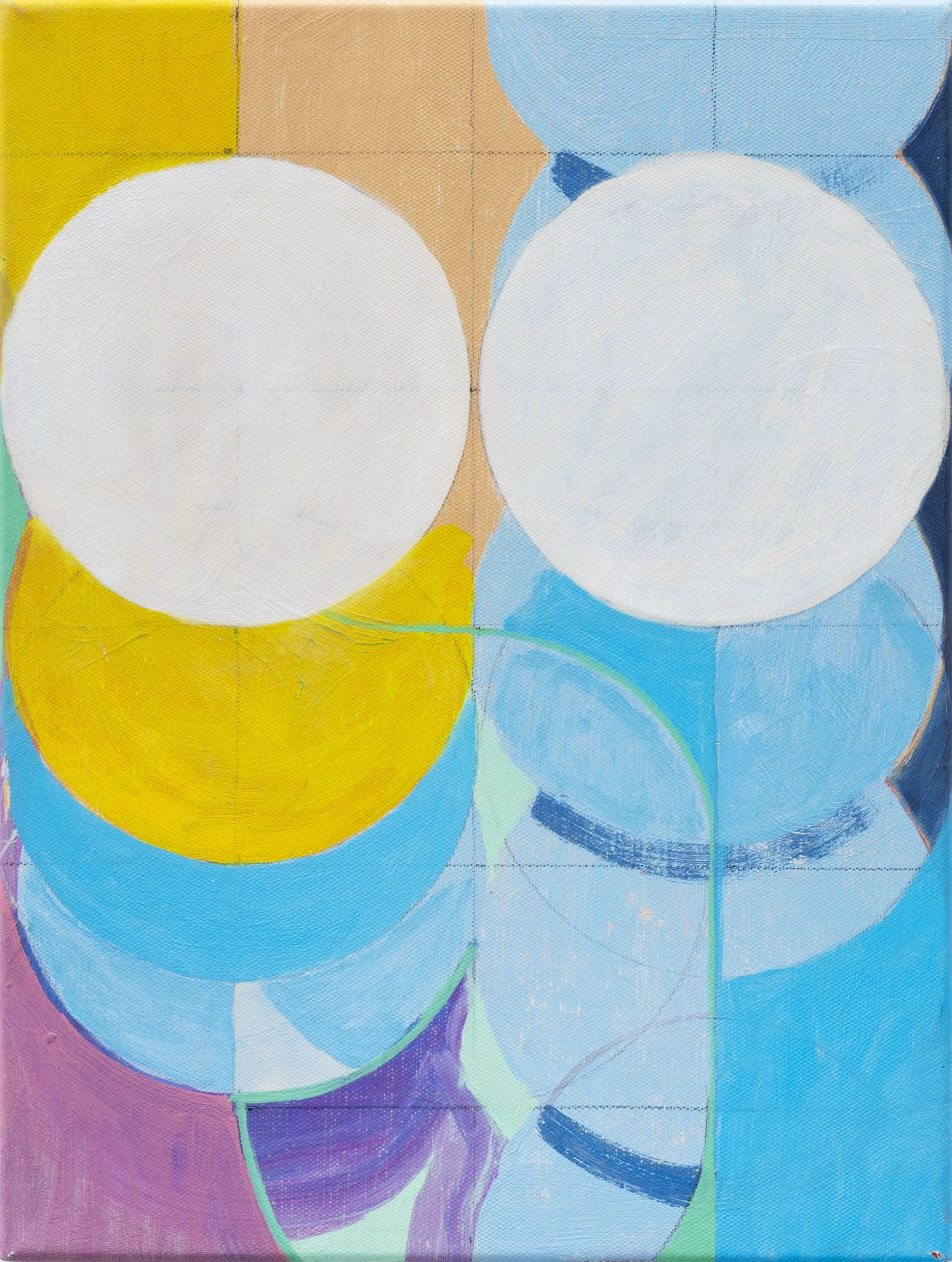
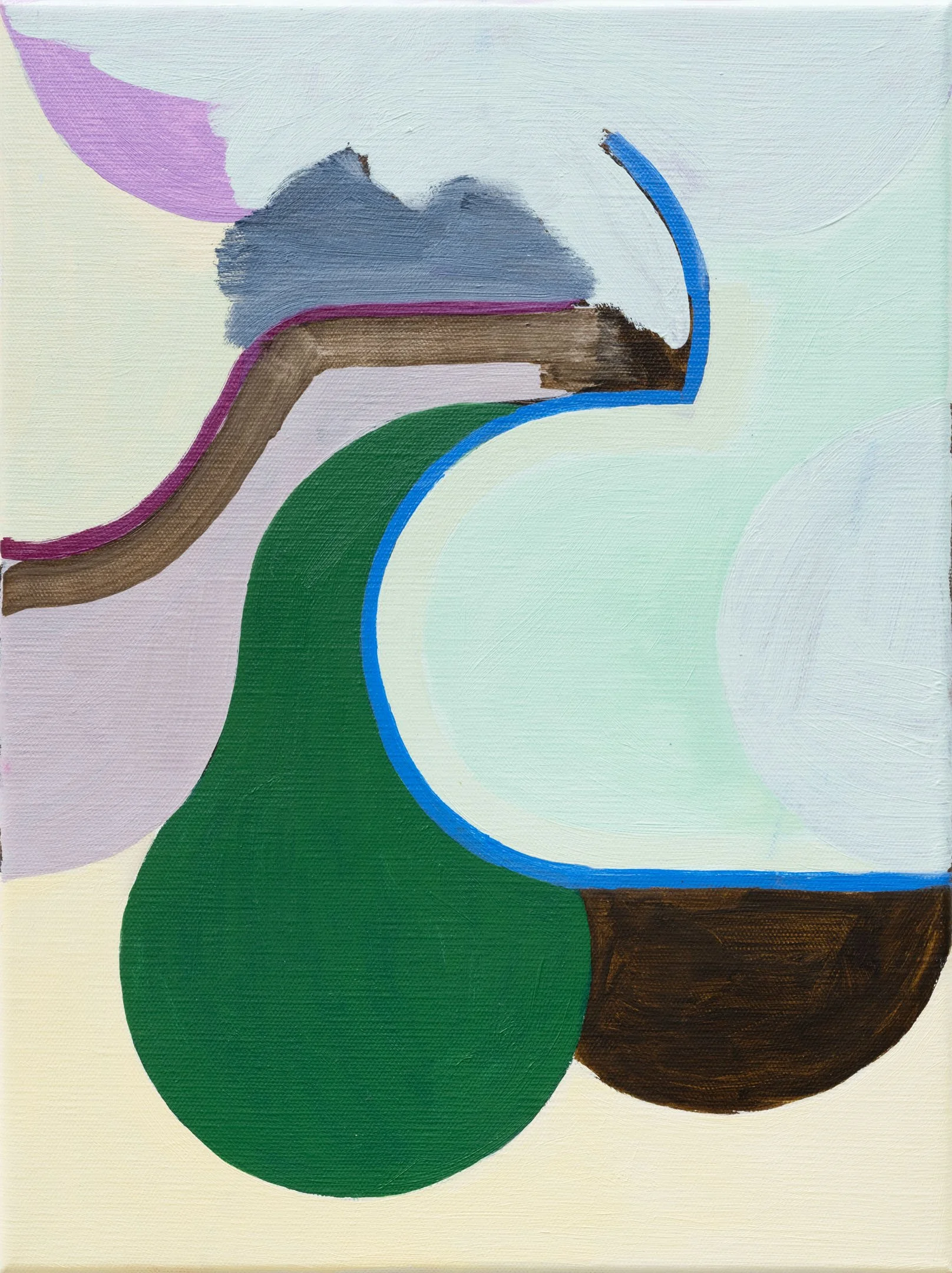
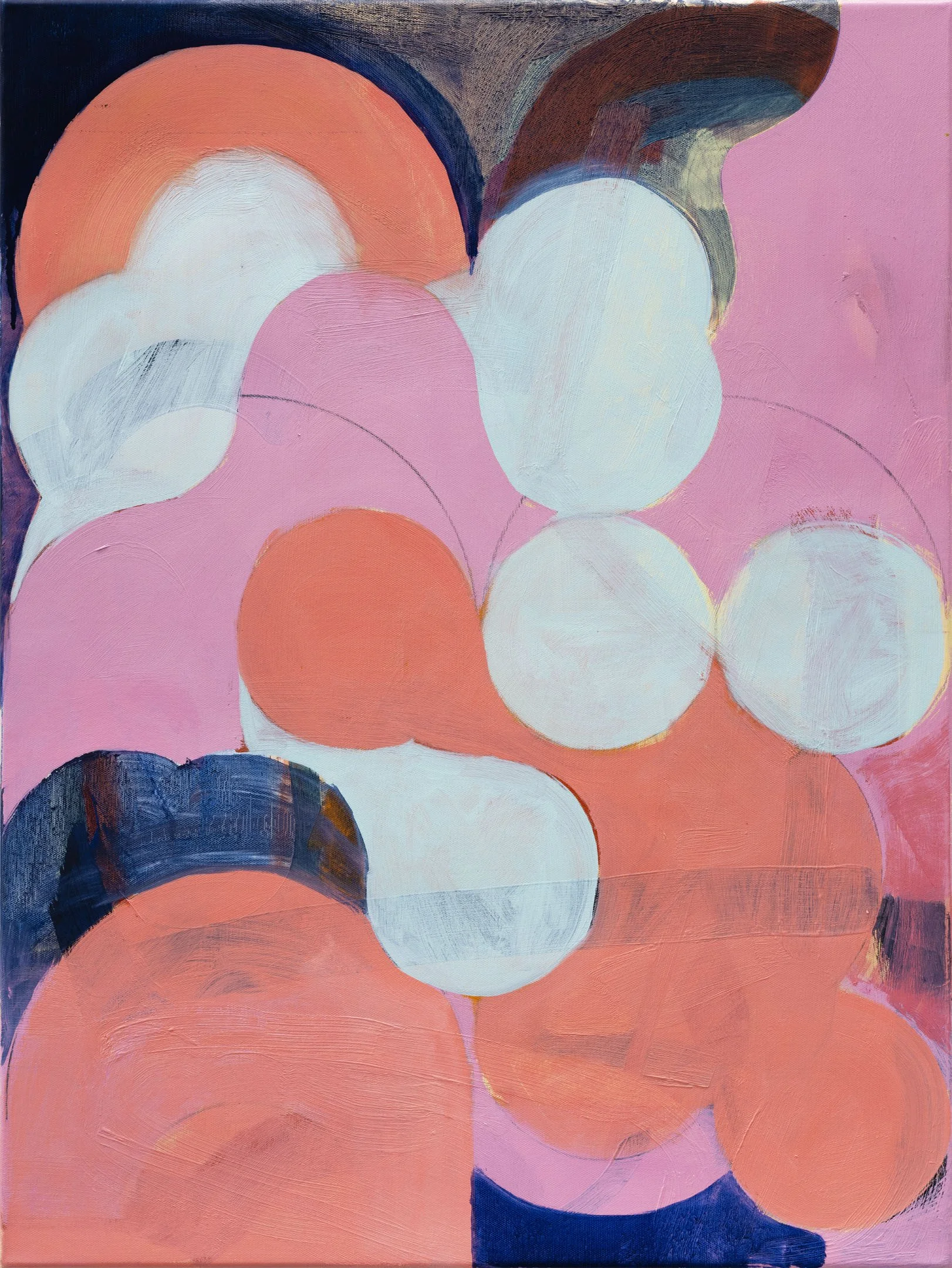
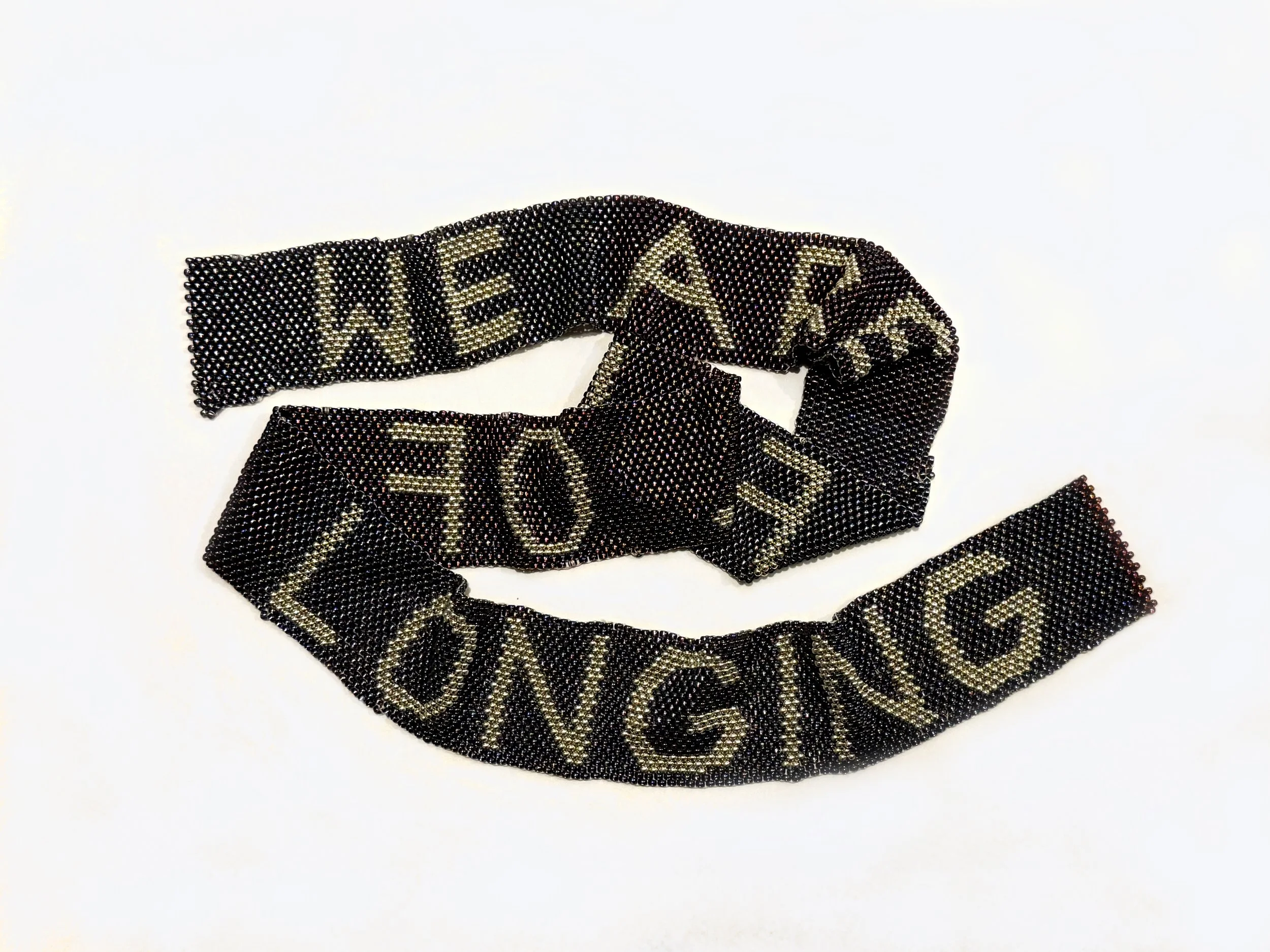
The body of work that forms the exhibition Born with the Moon in Taurus comprises a series of coloured pen drawings, paintings and a woven textile. The exhibition title refers to the astrological date, time and location of the artist’s birth. The position of the moon in an astrological birth chart is said to govern our subconscious mind, instinctive reactions, and our emotional needs.
Feeling is an important part of the way Julia Powles thinks about her work. Feeling, aligned with intuition and subjectivity – traditionally considered female qualities – is often contrasted against the more masculine theory of rationalism that posits an understanding of the world based in factual reasoning. The idea that feeling and reasoning are oppositional forces fascinates Powles as she works to integrate both sense-making systems in her artworks.
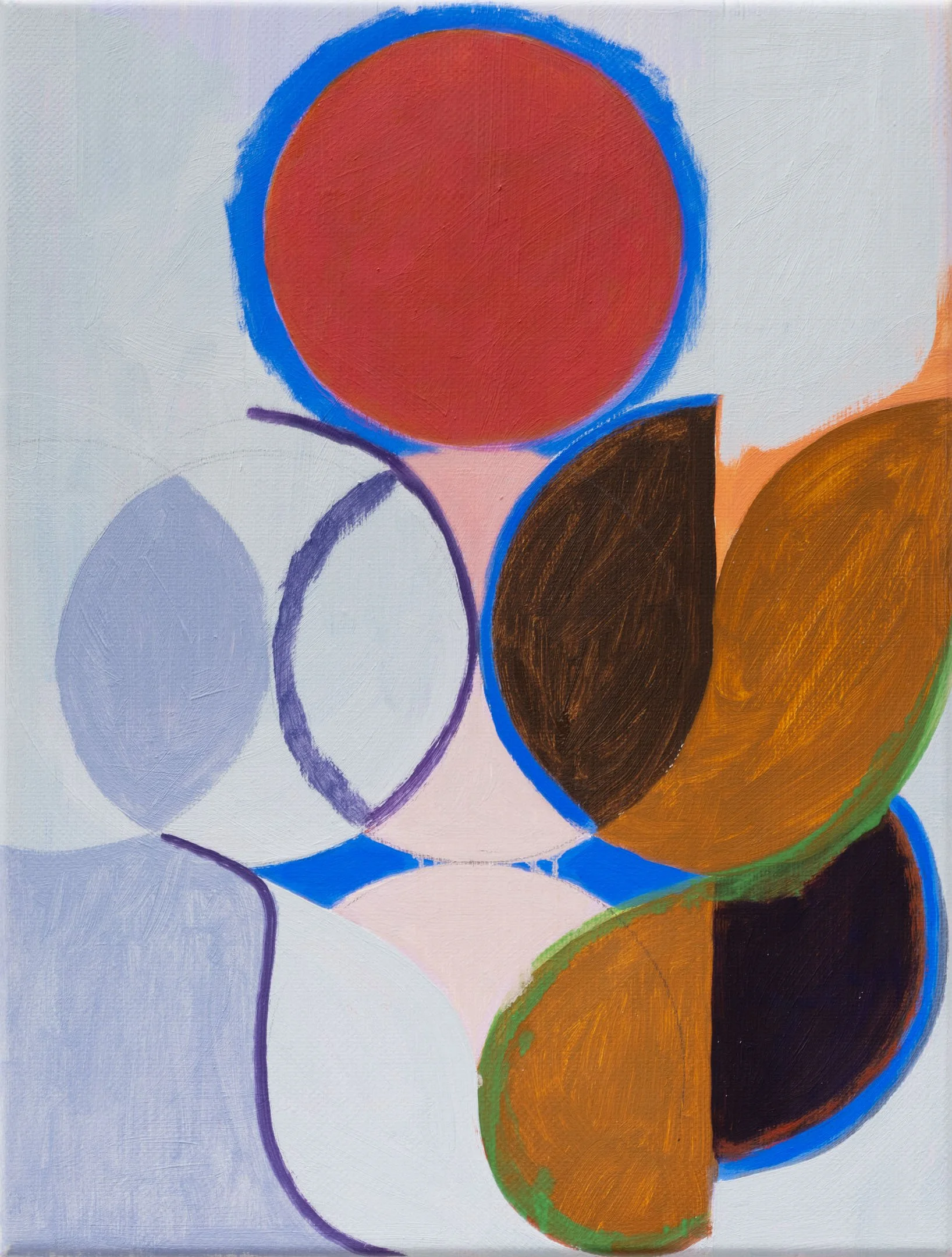
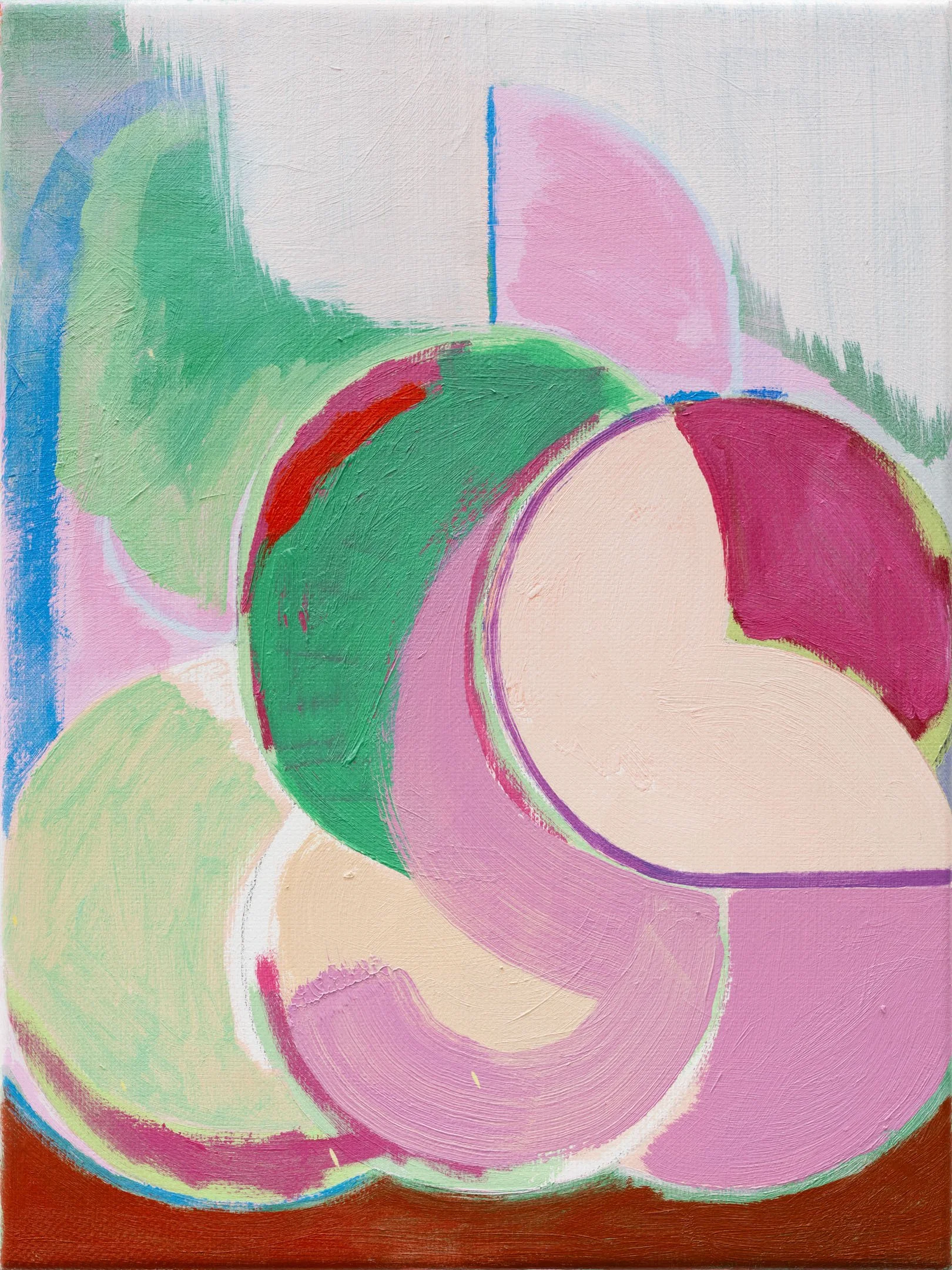
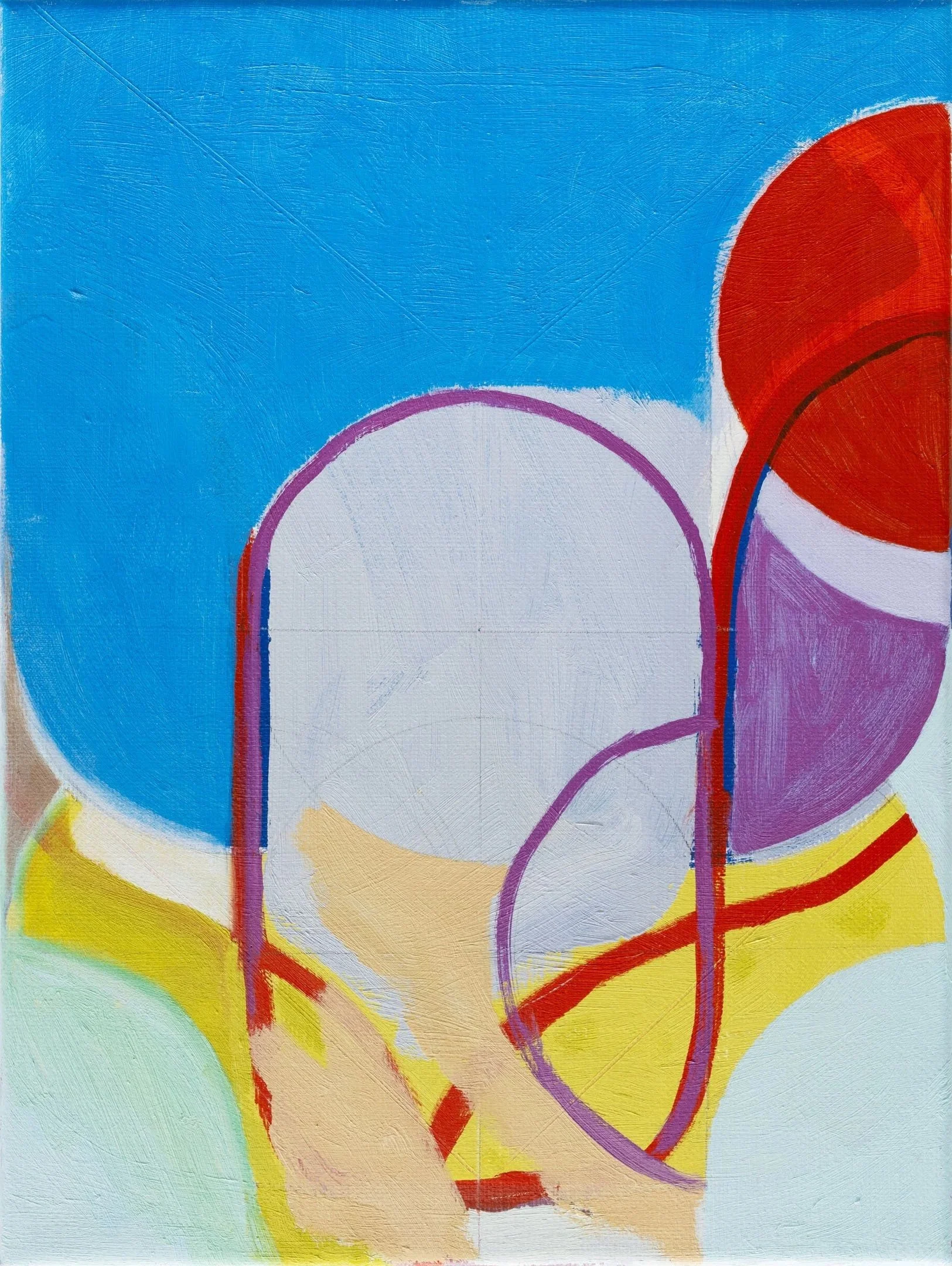
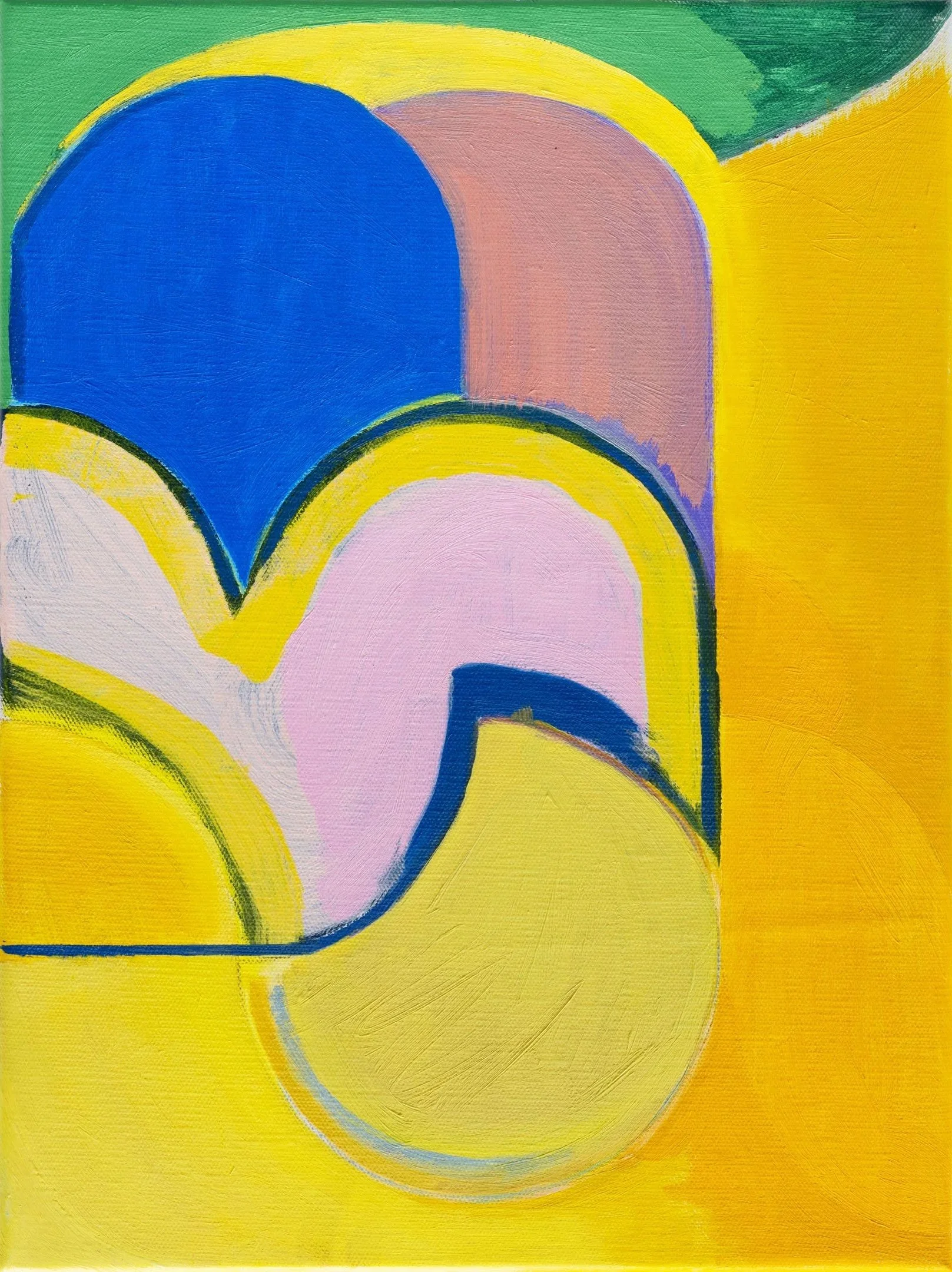
Her series of drawings, Born with the Moon in Taurus, is comprised of Venn diagrams that map her own family history. Adopted as a baby, she grew up with the knowledge that another, alternative version of her family could have existed. Each circle represents an individual: mother, father, brother, sister or child. In this, characteristics are inherited intergenerationally in much the same way as secrets and sorrows are covered up and later revealed. In these ‘charts’, individuals are examined in relation to the impact they have on each other. Moving across and through time, the different circles in these drawings coalesce into fecund female forms – part ancient fertility goddess, part microscopic cell division.
In the paintings, a grid structure is placed onto a canvas and then overlaid with irregular circles. Drawn using rulers and compasses, the forms are then hand-painted in an intuitive and direct manner. As circles and squares merge into new, irregular shapes, the formal merges with the subjective. In the same way, her drawings of circles form patterns and chart a topography of family relationships, each one a version of Powles’s own family history.
Made from glass seed beads painstakingly woven by hand We are full of longing is a declaration of a universal human feeling. Longing forms a fundamental part of our human condition, generating a desire for connection, but equally as an emotion that motivates us from within. To long for something or someone is to experience a particular type of ache, where both pain and pleasure coexist, and the individual finds themselves navigating the range of emotional complexities that ultimately unite us all.
BLOCKPROJECTS DIALOGUES: IN CONVERSATION WITH JULIA POWLES
BP: What can painting reveal that language cannot?
JP: Well, language can of course, reveal a lot. But painting operates across several sensory systems simultaneously; it is predominantly felt before it is thought. A different kind of understanding occurs through the sensation of experiencing painting. Words can often be fixed or definitive, while painting opens us up to overlapping emotions and complex ideas that can be many things – immediate, delayed, certain and contradictory. In this sense, painting echoes our engagement with the world, as something we can only really know as a sequence of ever-changing vantages.
BP: Looking across this exhibition, what do you see as the central question driving the work?
JP: How do we form connections to others?
BP: The circle appears repeatedly throughout these paintings. What continues to draw you back to that form?
JP: The circle has so many associations – unity, completeness, endlessness. So these thoughts are in my mind when I work. I think of the circle as a kind of body, where it curves like the human form against a grid or more rigid structure.
BP: Many of the works resemble maps, diagrams, or charts. What is being mapped?
JP: I map out my family structures across time or generations, and in terms of the consequences of being within a family. In this, I ask questions of myself like: What are the consequences of actions and individuals within families? What are the legacies we all carry within us?
BP: Your paintings feel highly structured, yet they never feel rigid. How do you balance system and intuition in the studio?
JP: They usually start with a system which then becomes corrupted through the making process via mistakes or changes. This assists me to retell a story or narrative more subjectively about the depth of interrelated human lives.
BP: Do these works begin with an idea, a feeling, a memory, or a form?
JP: Yes, often with all of those in mind.
BP: Family, relationships, and connection seem to move through much of your practice. When did these concerns first emerge in your work?
JP: I think it’s always been there, just increasingly so.
BP: Astrology is present throughout the exhibition. What role does it play within your thinking and making?
JP: I love astrology as an alternative way of understanding the world. I’ve been fascinated by astrology since I was a child, along with telepathy and other ways of communicating that are considered alternative. While I am devoted to science and reason, I recognise that what we consider to be knowledge is constantly in the process of being refined, cross-checked and amended, so astrology stands for intuition, or a different, older sort of knowledge.
BP: What interests you about systems of orientation, whether they are personal, familial, psychological, or astrological?
JP: I think we all need to make sense of who we are in the world. How we are orientated. In my case, because I am adopted and have recently made contact with one of my birth parents, I have had to reorient myself. My own map of the stars has changed, so I need to find a new way to navigate
BP: Your background spans making, curating, and education. How have these different roles shaped the way you approach painting?
JP: It’s impossible for me to separate out painting from everything else, they all seem to be part of the same life-long experiment, which is how do I answer the question who am I? How do I exist and how can I be connected to others?
BP: Looking at these works, I am aware of a tension between what can be known and what remains uncertain. Is uncertainty something you actively seek to preserve?
JP: Absolutely, yes. For me, for most of my life, there was so much that could never be known. I think it’s a fundamental human need to know one’s origins, and I was excluded from that knowledge, so I had no option but to make ‘non-knowing’ a companion. ‘Not-knowing’ was a kind of starting point from which I sprang forth, so not really knowing is very important to me.
BP: Certain forms recur throughout the exhibition. At what point does a shape become more than a compositional device?
JP: I never think about composition, as least not consciously. The shapes start out as forms that are intuited into being – they kind of just ‘feel’ their way into existence, then the compositional problems emerge.
BP: How important is memory within your practice?
JP: Very important. My own memory holds me prisoner at times. I wish I could forget certain things, but I can’t, so instead I use the memories in the work, but not literally, more as prompts for problems. For example, I remember being told as a child that I did not look like anyone else in my family, so that memory, which is on one level very slight and another level very painful, can be used to contemplate shapes and how they correspond with each other. Does this shape look like it fits in?
BP: What did you learn from these paintings that surprised you?
JP: Always, the paintings themselves surprise me. How the colours and forms and textures bump up against each other is a constant surprise -cs sometimes it’s quite shocking actually.